Photography Tour FAQ: Answers to the Questions We Get Asked Most
Straight answers to the questions people ask most before booking a photography tour: cost, fitness, gear, solo travel, non-photographer partners, and when to book.
Photography Tour FAQ: Answers to the Questions We Get Asked Most
I answer some version of the same dozen questions almost every week, usually by email, sometimes on a call, and every so often from someone standing at our booth at a photography trade show holding a printed brochure and looking a little nervous about the price tag. Over the past few months I have written full, detailed answers to most of these questions as standalone articles, because each one deserves more than a two sentence FAQ blurb. But I also know that most people considering a Tuscany photography tour are not going to read twenty four separate articles before they decide whether this is right for them. They want the short, honest version, with links to the longer version if a particular answer raises a follow up question.
So this is that page. I pulled together the questions that come up most often, whether by email, in our contact form, or in the comments under other posts on this site, and answered each one the way I would if you called our office and asked directly. Cost, fitness, gear, traveling solo, bringing a partner who does not shoot, and when to actually pull the trigger on booking. If you read nothing else on this site before deciding whether to join a photography tour, this page should get you most of the way there.
A quick note on where these numbers come from. I am using our own Val d'Orcia tour as the working example throughout, because I know its details cold, but the structure of the questions and answers here applies to almost any reputable small group photography tour, not just ours. If a number below is specific to our trip, I say so.
Key Takeaways
Here is the short version of every question below, with a link to the full answer if you want more detail than a one paragraph summary can give you.
| Question | Short answer |
|---|---|
| How much does it cost? | $4,800 to $5,000 per person for 7 days / 6 nights, all lodging, meals, and guiding included; flights and insurance are extra |
| Do I need to be an experienced photographer? | No. The itinerary and guiding adapt to every skill level, from full manual to auto mode |
| How fit do I need to be? | Moderate. Expect early mornings and uneven farm tracks, not technical hiking |
| What camera gear do I actually need? | Any interchangeable lens camera and a tripod; everything else is a nice to have |
| Can I travel solo? | Yes, and it is one of the easier ways to visit Italy alone; a single supplement applies |
| What if my partner does not take photos? | Non-photographer partners are welcome at a discounted rate and have their own way to spend the day |
| When should I book? | Six to nine months out for popular departures like spring and fall, since those sell out first |
Table of Contents
- How much does a photography tour actually cost?
- Do I need to be an experienced photographer?
- How fit do I need to be?
- What camera gear do I actually need?
- Can I travel solo?
- What if my partner is not into photography?
- When should I book?
- What about travel insurance?
- How do I know I'm picking a legitimate operator?
- Questions at a glance
- Still have a question?
How much does a photography tour actually cost?
Our Val d'Orcia tour runs $4,800 to $5,000 per person depending on the departure, and that covers seven days and six nights of villa or agriturismo lodging with a pool, every meal, ground transport, two professional photographer guides, and structured post-processing sessions and image reviews built into the itinerary. It does not cover your flight to Italy, travel insurance, wine tasting or drinks beyond what is served with meals, or personal spending. I went through this line by line, including an honest DIY comparison, in How Much Does a Tuscany Photography Tour Really Cost, and I broke down exactly what is and is not bundled into that price in What's Actually Included in a Photography Tour Price.
The short version people usually want first: a 30 percent deposit holds your spot on a specific departure, with the balance due before travel. If you want to know exactly what happens to that deposit if your plans change, I covered deposits and cancellation terms in a separate piece, since that question deserves its own honest answer rather than a buried line in the terms and conditions.
Pro Tip: When you compare tour prices across operators, check the group size and guide ratio before you compare dollar figures. A cheaper tour with fourteen guests and one guide is not actually a better deal than a slightly more expensive one with seven guests and two guides, once you count how much shooting time you spend waiting your turn for feedback at golden hour.
Do I need to be an experienced photographer?
No, and this is genuinely the question I want to put to rest more than any other, because I think it talks more people out of booking than the price does. A well run photography tour is built to adapt to whoever shows up. On a typical departure we have guests shooting full manual with a decade of landscape experience standing right next to someone who upgraded from their phone six months ago and is still finding the aperture dial. The guiding changes shot by shot depending on who needs what. Someone shooting manual might get a quick suggestion to stop down to f/11 for more depth of field on a wide hill composition. Someone still on aperture priority might get a five minute walkthrough of why the histogram on their camera's rear screen matters more than what the image looks like on that small display in bright sun.
I wrote a full breakdown of exactly how the itinerary and the guiding style adapt across skill levels in Do You Need to Be a "Serious" Photographer to Join a Photography Tour, and if you are truly starting from zero, our Beginner's Guide to Photographing Tuscany is a good primer to read before you even land, just so the first morning's briefing makes sense faster.
How fit do I need to be?
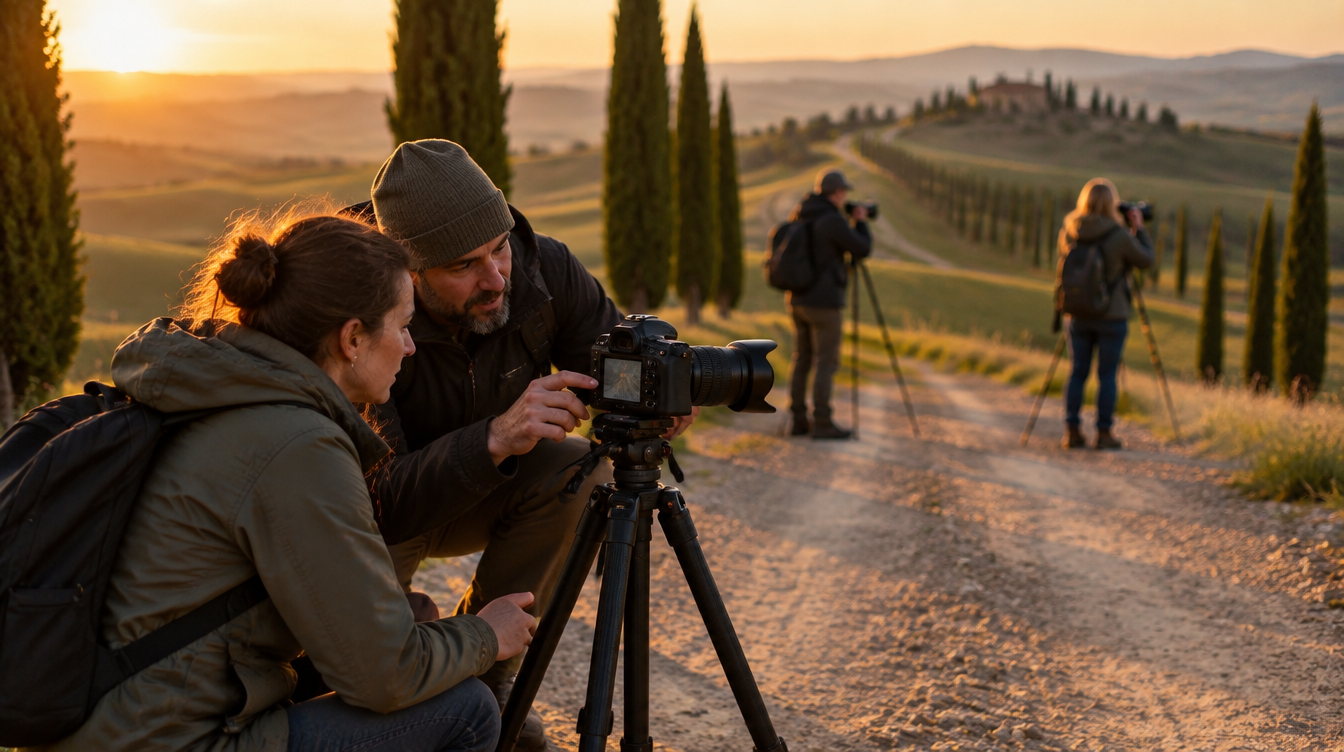
This one deserves an honest answer rather than a marketing one, because I would rather someone book with accurate expectations than show up surprised on day two. Expect early wake ups, often 4:30 or 5am to catch first light, followed by walking on uneven farm tracks and gravel roads that are not paved or groomed. You are on your feet for stretches during golden hour shoots, sometimes standing in one spot for twenty or thirty minutes waiting for the right light while carrying a camera bag and a tripod. None of this is technical hiking. There is no scrambling, no elevation gain that would challenge a reasonably active adult, and no shoot that requires more than a comfortable walking pace for fifteen to twenty minutes to reach a viewpoint.
If you can comfortably walk for thirty to forty minutes on uneven ground, carry a daypack, and handle an early alarm clock without it ruining your day, you are fit enough for this trip. I go into more specifics, including how this compares to more physically demanding trip types, in How Fit Do You Need to Be for a Tuscany Photography Tour, along with what a representative day actually looks like hour by hour in A Day in the Life on a WeShoot Val d'Orcia Photography Tour.
What camera gear do I actually need?
Gear anxiety keeps more people off a booking page than it should. What you genuinely need is an interchangeable lens camera, mirrorless or DSLR, any brand, any sensor size, and a sturdy tripod that can hold your setup steady in a light breeze. That is the actual minimum. You do not need a full frame body, you do not need the latest generation of anything, and you do not need to own a graduated ND filter or a polarizer before you arrive, though both are genuinely useful and easy to buy or borrow before the trip if you want to add them.
A standard zoom in the 24 to 70mm range covers most of what you will shoot in Val d'Orcia, and if you own a wider lens down around 16 to 24mm, bring it for the rolling hill compositions where a wide angle exaggerates the sense of depth between foreground and background. A short telephoto in the 70 to 200mm range is useful but genuinely optional, mainly for compressing layers of hills or isolating a single farmhouse on a distant ridge. I go much deeper on the actual lens tradeoffs, with real example shots, in Which Lens Should You Bring to Photograph Tuscany, and I cover the specific filters worth owning, and which ones you can safely skip, in The Filters Every Tuscany Landscape Photographer Should Own.
For a full, honest breakdown of what is required versus what is optional, aimed specifically at people worried their current kit is not good enough, read What Camera Gear Do You Actually Need to Join a Photography Tour. The short version: if you own a camera you can change lenses on and a tripod, you have what you need. Everything past that is optimization, not a requirement.
Pro Tip: If you are buying a tripod specifically for this trip, prioritize a stable head and legs that lock quickly over shaving off the last few ounces of weight. You will be setting up and breaking down on uneven farm roads in low light more often than you think, and a tripod that fights you at 5:45am costs you shots that a slightly heavier, faster one would have saved.
Can I travel solo?
Yes, and solo travelers make up a meaningful share of every departure, not a rare exception. A small group photography tour is genuinely one of the easier ways to see Italy alone, since the logistics that make solo international travel stressful, where to eat, how to get between towns, whether you picked a safe area to wander after dark, are already handled. You will not be forced to share a room; a single supplement applies if you want a private room, and it is worth asking about directly since it varies by departure. The group itself tends to be social by nature of shooting sunrise and sunset together every day for a week, so solo travelers typically end up eating dinner and comparing photos with the same small group of people by day two or three, rather than eating alone.
I answered the specific concerns solo travelers raise most often, single supplement costs, roommate pairing, and the actual social dynamic of a seven person group, in Traveling Solo on a Photography Tour: What to Expect. If group size itself is what you are weighing, I also compared what changes between a small group like ours and a much larger tour in Small Group vs Large Group Photo Tours.
What if my partner is not into photography?
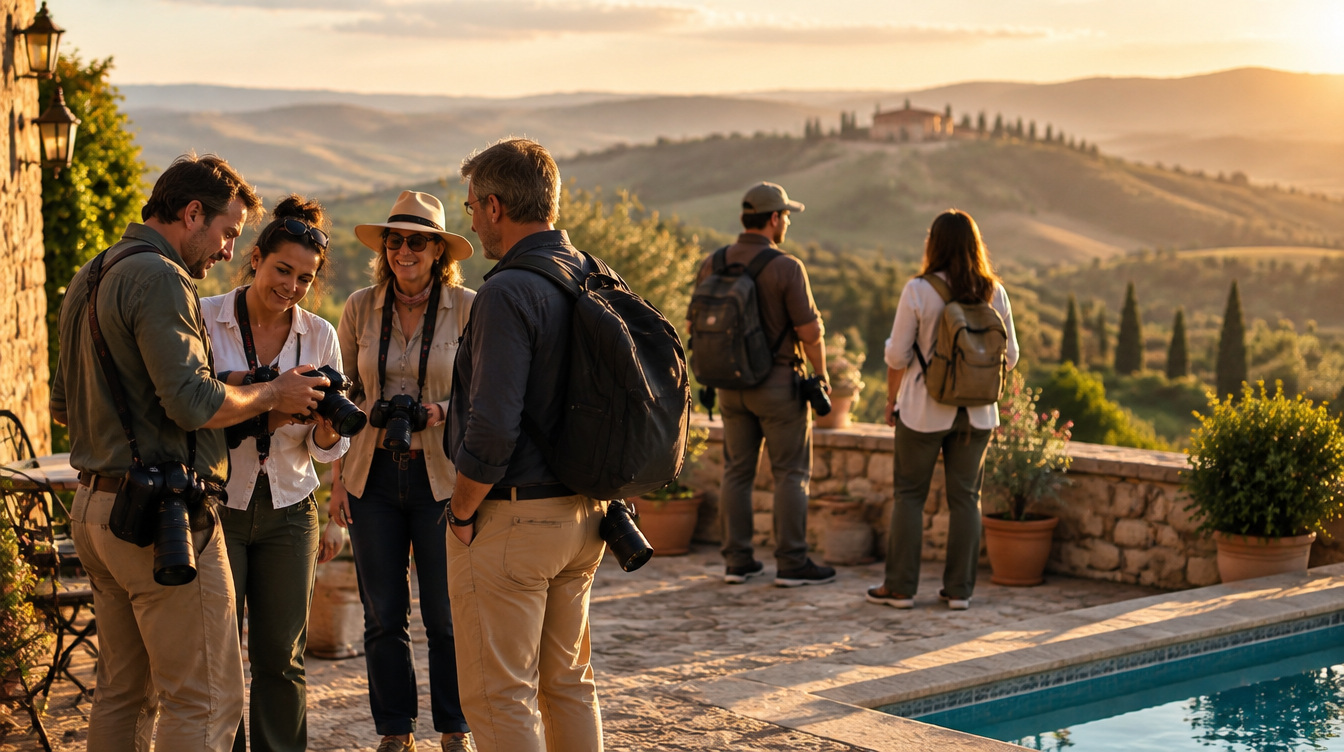
This comes up more than you would think, and it is a normal booking pattern rather than an edge case we have to accommodate reluctantly. Non-photographer partners join at a discounted rate, and they spend the shooting blocks differently than the rest of the group, exploring the town on their own, relaxing at the villa by the pool, or joining the wine tasting and food stops that are part of the trip anyway. Golden hour shoots typically run forty five minutes to an hour and a half, which is a manageable stretch of independent time rather than an entire day spent waiting around.
Meals, the wine tasting at Tassi, and the villa itself are shared experiences the whole group enjoys together regardless of who is holding a camera, which is where a lot of the actual bonding on these trips happens anyway. I go into the specific rate structure and how a typical day splits for a mixed couple in What If My Partner Isn't Into Photography, and if food and wine are a big part of why you are both interested in this trip in the first place, the food and wine planning angle in Val d'Orcia is its own worthwhile read too.
If a mixed group of photographers and non-photographers in your own life is what has been holding you back from booking, this is genuinely one of the easiest objections to resolve, and it is worth reaching out directly with your specific situation so we can walk you through exactly how a particular departure would work for both of you. Our Val d'Orcia photography tour page has the current partner rate listed alongside the standard pricing.
When should I book?
Book earlier than feels necessary, particularly for spring and fall departures. Late April through May sells out first because of the green hills and scattered poppy blooms, and September through October follows close behind because of harvest color and the fog window that opens up once the summer heat breaks. A 30 percent deposit reserves your spot, and departures are genuinely limited by the seven person group cap, so a popular window filling up is not a scarcity tactic, it is a real constraint of running a small group tour at a fixed guide ratio.
A practical rule of thumb: if you know roughly which season you want, start looking at least six to nine months ahead, both because of departure availability and because flight prices from the US to Italy are generally friendlier the earlier you book them. I laid out the full booking timeline, including why certain months fill up faster than others, in When Is the Best Time to Book a Tuscany Photography Tour. And if you are trying to work out how a full week away fits around a US vacation schedule once you add travel days on either end, that question gets its own dedicated answer as well, covering realistic PTO planning for a 7-day tour plus flights.
What about travel insurance?
Travel insurance is not required to join the tour, but I would treat it as close to mandatory for any international trip that involves several thousand dollars of camera gear plus a non-refundable deposit. There are really two separate things worth insuring: the trip itself, in case you need to cancel or cut it short, and your camera equipment specifically, since a standard trip cancellation policy often caps gear coverage well below what a serious photographer is actually traveling with. I walked through what to actually check in a policy, gear coverage limits, which cancellation reasons are covered, and medical coverage abroad, in Travel Insurance for a Photography Tour: What to Actually Look For. The U.S. Department of State's travel site is also a solid general reference for what to consider before any international trip, insurance included.
If you are still deciding whether a guided trip makes more sense than planning Val d'Orcia yourself, I ran the real numbers, both in money and in the hours it actually takes to plan a comparable DIY trip, in Photography Tour vs DIY Trip: A Real Cost and Time Comparison for Tuscany. It is the single most useful article on this site if the decision you are actually stuck on is guided versus solo, rather than any of the questions above.
This is also usually the point where I make an actual pitch rather than just answering questions, so here it is. If everything above sounds like it fits, the fastest way to get real answers about a specific date, the current price for that departure, and whether it works for your travel plans is to look at our Val d'Orcia photography tour page directly, where current departures, pricing, and availability are always kept up to date rather than relying on a number you read somewhere months ago. Reach out with your specific situation, solo, a mixed couple, a beginner with a six month old camera, whatever it is, and we will tell you honestly whether a particular departure is the right fit.
How do I know I'm picking a legitimate operator?
This question rarely gets asked directly, but I think it is behind a lot of the hesitation people feel before filling out a booking form, especially for a first international trip with a company they found online rather than through a friend's recommendation. There are a handful of concrete things worth checking on any operator's site before you commit a deposit: a hard, stated group size cap rather than vague language about "small groups," a clear cancellation and refund policy you can read before you book rather than one buried in fine print you only see after paying, and reviews that read as specific and lived in rather than generic five star praise that could describe any trip anywhere.
I put together a fuller vetting checklist, covering guide credentials, what happens if weather wrecks a planned shoot, and how transparent an operator is about pricing before you ask, in How to Choose a Photography Tour Operator, and the flip side of that same coin, the specific warning signs that should make you pause, in Red Flags to Watch for When Booking a Photography Tour. If you want to see what that looks like in practice rather than in the abstract, we pulled real, attributed feedback from past guests, organized by what they actually cared about, into What Past Guests Say After a WeShoot Tuscany Tour.
Questions at a glance
| Topic | Full guide |
|---|---|
| Cost breakdown | How Much Does a Tuscany Photography Tour Really Cost |
| What is included | What's Actually Included in a Photography Tour Price |
| Skill level required | Do You Need to Be a "Serious" Photographer |
| Fitness and physical demands | How Fit Do You Need to Be |
| Required camera gear | What Camera Gear Do You Actually Need |
| Traveling solo | Traveling Solo on a Photography Tour |
| Non-photographer partners | What If My Partner Isn't Into Photography |
| When to book | When Is the Best Time to Book |
| Travel insurance | Travel Insurance for a Photography Tour |
| Vetting an operator | How to Choose a Photography Tour Operator |
Still have a question?
I tried to cover the questions that come up most often, but every trip and every traveler is a little different, and I would rather you ask a question that feels too small or too specific than book something that turns out to be a poor fit for what you actually want out of the trip. If you are trying to decide between a scheduled small group departure and a private tour built around your own dates, that comparison deserves its own read too, since the right answer depends entirely on your budget and how much flexibility you want. Whatever is still unclear after reading through this page, our full Tuscany Photography Guide covers the destination itself in depth, and the team behind our Val d'Orcia tour is genuinely happy to answer anything specific to your situation before you commit to a deposit.