How Fit Do You Need to Be for a Tuscany Photography Tour?
An honest look at the real physical demands of a Tuscany photography tour, from early wake ups to uneven farm tracks, so you know exactly what to expect before you book.
How Fit Do You Need to Be for a Tuscany Photography Tour?
This is one of the first questions I get from people who are on the fence about booking a Val d'Orcia trip, and it usually comes wrapped in a little bit of embarrassment. Nobody wants to be the person who holds up the group, and nobody wants to spend $4,800 or more on a trip only to discover on day two that their knees, or their lungs, or their general stamina, were not part of the plan. It is a fair worry, and it deserves a straight answer instead of the vague reassurance most tour pages give you.
So here is the honest version. A Tuscany photography tour is not a trekking expedition and it is not a spa holiday either. It sits somewhere in the middle, closer to "active sightseeing" than "athletic challenge," but with a few specific demands that are worth understanding before you book, mostly because they happen at times of day when your body is least cooperative. Early mornings, uneven ground, standing around waiting for light, and doing all of that while carrying a camera bag. Let me walk through exactly what that looks like so you can decide for yourself, rather than trusting a marketing page that just says "moderate fitness required" and leaves it at that.
Key Takeaways
A Val d'Orcia photography tour asks more of your sleep schedule than your muscles, but a few specific physical demands are worth planning around.
| Point | Details |
|---|---|
| Fitness level required | Moderate. If you can comfortably walk one to three miles over uneven ground on a normal day, you are fine |
| Biggest physical demand | Early wake ups, not distance. Most shoot days start well before sunrise |
| Terrain | Gravel farm tracks, packed dirt, occasional slopes, cobblestone streets in the hill towns |
| Standing time | 20 to 45 minutes at a stretch while waiting for light, sometimes on an incline |
| Gear weight | A daypack with camera, one or two lenses, and a compact tripod, typically 8 to 15 pounds |
| What is not required | Running, climbing, technical hiking, or any specific athletic background |
Table of Contents
- The short answer
- What a real shoot day actually asks of your body
- The early mornings are the real challenge
- What "uneven farm tracks" actually means
- Standing and waiting: the part nobody warns you about
- How much you are actually walking
- Carrying your gear without wrecking your shoulders
- How this compares to other kinds of trips
- If you have a knee, hip, or mobility concern
- Frequently asked questions
- The bottom line
The short answer
Yes, you can do this trip. If you can walk a mile or two on flat-ish ground without stopping, climb a flight of stairs without your legs complaining, and stand around comfortably for twenty or thirty minutes at a time, you already meet the bar. This is not a technical trekking trip. Nobody is scrambling over rocks, fording streams, or climbing anything you would need a harness for. The physical load on a Val d'Orcia photography tour is closer to a long day of city sightseeing than it is to a backcountry hike, and it is spread out over a 7 day, 6 night itinerary rather than compressed into one brutal push.
What trips people up is not distance, it is timing. The hardest part of this trip on your body is not your legs, it is your circadian rhythm.
What a real shoot day actually asks of your body
I wrote a separate piece walking through an entire day on tour hour by hour, so I will not repeat all of it here, but the physical shape of a typical day looks something like this. A pre-dawn wake up, usually somewhere between 4:30 and 5:30 depending on sunrise time and the location. A short van ride or a walk from the villa to the shoot location. A period of setup and waiting for light, which is where most of the standing happens. The shoot itself, which involves some walking to reposition as the light changes. A return to the villa for a proper breakfast and a rest block. A second, less demanding outing at midday for locations or a masterclass. A second shoot at golden hour in the evening, structurally similar to the morning. Dinner. An image review session before bed.
None of those individual pieces is hard on its own. What makes people underestimate the trip is stacking two shoot windows into one day, every day, for a week. It is less like a single hard workout and more like training camp: manageable in isolation, cumulative if you are not sleeping and eating well in between.
It also helps to know that the schedule is not rigid in a way that punishes an off day. If the forecast rules out a sunrise shoot entirely, that morning becomes a slower one, sometimes a later coffee and a village walk instead of a 5 AM alarm. Our guides read the weather the night before and adjust, which means the physical demand of any given week is not a fixed number, it flexes with conditions. A week with three genuinely spectacular fog mornings in a row asks more of you, physically, than a week with more overcast, lower stakes light. Neither is a bad outcome for the photography, they are just different in terms of how tired you will feel by Thursday.
The early mornings are the real challenge
I want to be blunt about this because it is the thing almost nobody asks about and it is the thing that actually wears people down. A 5 AM alarm, six days in a row, on a schedule shifted six to nine hours from home, is a real demand on your body regardless of how fit you are. Jet lag compounds it for the first two or three days. Marathon runners and total beginners struggle with this in exactly the same way, because cardiovascular fitness does not help you sleep on a different clock.
Pro Tip: Start shifting your sleep schedule two or three days before you fly, going to bed thirty to sixty minutes earlier each night. It sounds small, but it meaningfully softens the first three mornings of the trip, which are the ones where fatigue and unfamiliar terrain combine to actually cause stumbles.
The practical fix is not fitness, it is pacing. Take the midday rest block seriously. It exists specifically so you can nap, shower, or just sit still for ninety minutes between the two shoots. Skipping it to go explore a village on your own is a completely reasonable choice on day four when you are adjusted, but it is a mistake on day one.
What "uneven farm tracks" actually means
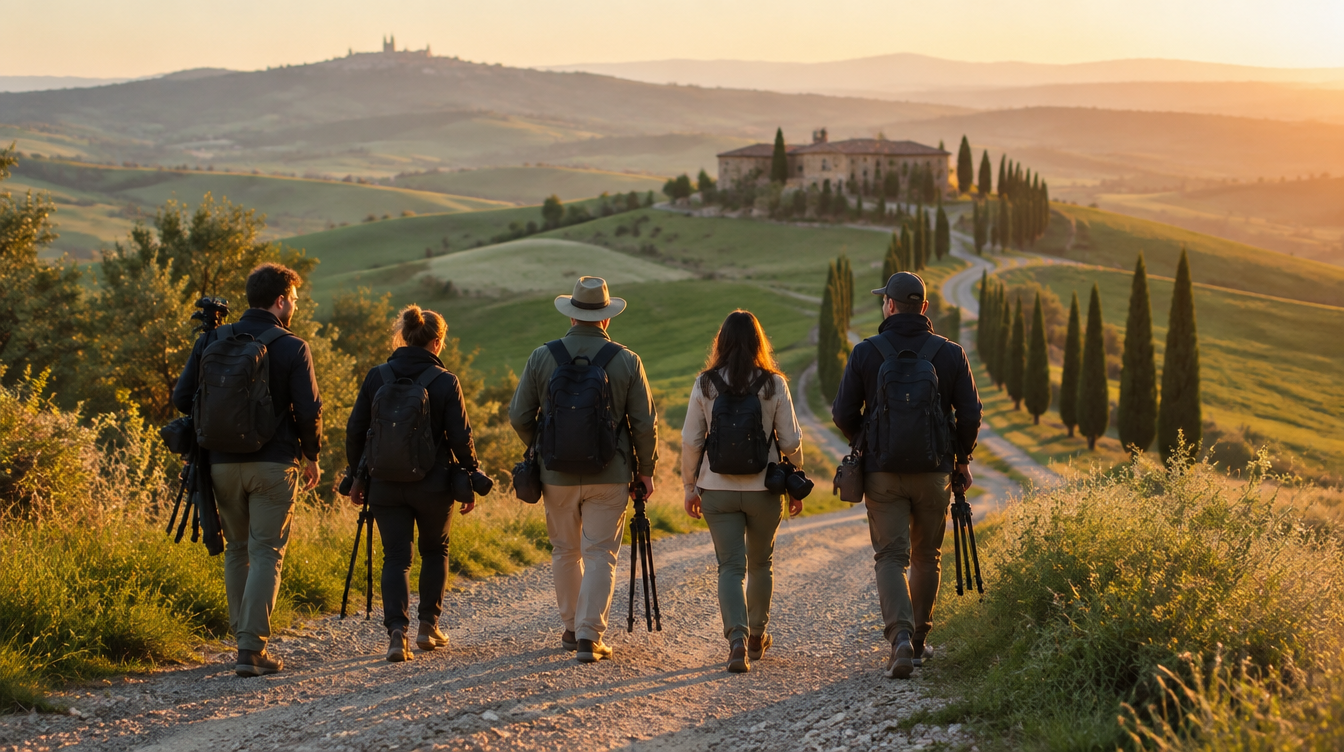
Every tour description says some version of "uneven terrain" and it rarely explains what that actually is underfoot. In Val d'Orcia, the ground you are walking on for most golden hour shoots is a mix of a few specific surfaces. Compacted gravel farm roads, the kind you would drive a small tractor down, which are stable but not perfectly flat and often have a gentle camber toward a drainage ditch on one side. Packed dirt tracks between fields, which turn slick if it has rained in the last day or two but are otherwise firm. Short grass slopes at some of the classic viewpoints, where you are standing on an incline rather than level ground for the duration of a shoot. And cobblestones in the historic centers of San Quirico, Pienza, and Monticchiello, which are uneven in a completely different way, smaller and more irregular underfoot than a farm track.
None of this requires special hiking skill. It does require the right shoes, and this is the single most common gear mistake I see. People bring the shoes they wore on the plane or a pair of fashion sneakers with a flat, thin sole, and by day three their ankles are sore from constantly correcting on loose gravel.
A trail runner or a low hiking shoe with a grippy rubber outsole and some lateral support is the right tool here, not a heavy waterproof boot. You are not fording streams or walking in mud most of the week, and a stiff boot just adds unnecessary weight and breaks in poorly on a short trip. What actually matters is the sole. Look for a multidirectional lug pattern rather than a smooth running shoe tread, since it is the side to side stability on a cambered gravel road, not raw traction, that saves your ankles. If you already own a pair of light hikers you have worn a handful of times, bring those over buying something new the week before you fly.
Standing and waiting: the part nobody warns you about
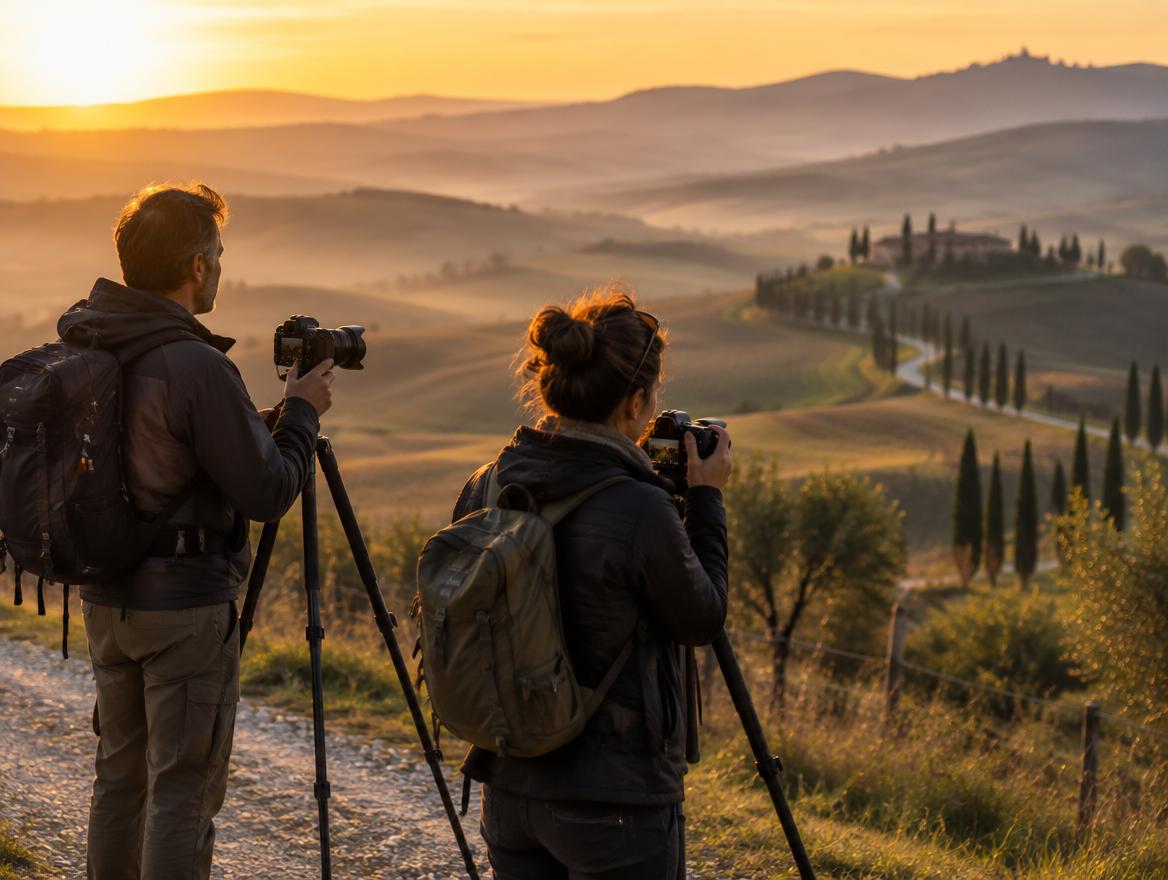
Photographers tend to think about the walking and forget about the standing. On a good golden hour, you are not shooting continuously for forty five minutes. You set up, you wait for the light to develop, you make small adjustments, and you wait again. Total standing time at a single location often runs twenty to forty five minutes, sometimes on a slope, sometimes on cobblestones, often in temperatures that are cooler than you expect before sunrise even in July.
This is genuinely the part that catches people off guard more than the walking distance does, especially anyone who deals with lower back stiffness or standing fatigue. It is also the easiest part to prepare for, because unlike distance walking, standing tolerance improves fast with a little bit of practice at home. If you know you struggle with it, a few weeks of deliberately standing for twenty to thirty minutes at a stretch, at a kitchen counter or while reading, builds real tolerance before you ever leave home.
How much you are actually walking
To put real numbers on this instead of vague reassurance, here is roughly what a typical shoot location asks of you, based on how our guides structure a normal day in the field.
| Type of stop | Typical walking distance | Terrain |
|---|---|---|
| Classic hilltop viewpoint (e.g. near San Quirico) | 0.25 to 0.75 miles round trip from the van | Gravel farm road, gentle incline |
| Village walking session (Pienza, Monticchiello) | 1 to 2 miles over the course of a few hours | Cobblestone streets, some stairs |
| Cypress road iconic shot | Under 0.25 miles from parking | Packed dirt, flat |
| Bagno Vignoni reflection shoot | Under 0.5 miles | Stone piazza, flat |
| Fog chase morning (if conditions cooperate) | 0.5 to 1 mile, sometimes at a brisker pace to catch the window | Grass slope or gravel, sometimes wet |
Add it up across a full day with a morning and evening shoot and you are typically looking at two to four miles total, well under what most people walk on an average sightseeing day in a European city, just distributed around two shorter, more deliberate outings instead of one long walk.
Carrying your gear without wrecking your shoulders
The physical demand people underestimate the most is not their own body, it is the weight on their back. A camera body, a standard zoom, a wide angle for landscape work, a compact travel tripod, a spare battery or two, and a water bottle adds up faster than you think. Weigh your kit before you go. A typical loadout on this trip runs 8 to 15 pounds, and carrying that comfortably for two to three hours on uneven ground is a completely different experience with a proper hip belt and sternum strap than it is with a shoulder tote bag you picked up years ago because it looked nice in a camera store.
A few concrete recommendations from watching hundreds of guests pack for this exact trip. Leave the heaviest telephoto at home unless you specifically know you will use it for a compressed hillside shot; a 24-70mm or equivalent and a wide prime cover the vast majority of Val d'Orcia compositions. Choose a carbon fiber tripod over an aluminum one if you are buying new, the two to three pound difference is real over a week of carrying it. Pack a proper hiking sock rather than a cotton one, because blisters from farm track walking are a real and completely avoidable problem.
Pro Tip: Break in any new hiking or trail shoes for at least two weeks before the trip. New shoes and unfamiliar gravel terrain is the single most common cause of a sore day two on tours like this one, and it has nothing to do with actual fitness.
How this compares to other kinds of trips
If you have done other types of travel, here is a rough comparison to calibrate your expectations. It is noticeably less demanding than a multi-day hiking or trekking trip, where you might cover eight to twelve miles a day with real elevation gain and a loaded backpack. It is roughly comparable to a walking-focused city trip, the kind where you spend a week exploring a place like Rome or Florence on foot, just with earlier mornings and more time standing still. It is more demanding than a beach or resort trip, obviously, and more demanding than a typical bus tour where you are seated most of the day, because you are up and outdoors at hours when a bus tour passenger is still asleep.
If you regularly walk your dog for thirty minutes, handle a full day at a museum or theme park without needing to sit down every twenty minutes, or comfortably manage a flight of stairs at home, you are almost certainly fine for this trip. The people who struggle are usually dealing with a specific, known limitation, not a general lack of fitness, which brings me to the next point.
Something that surprises a lot of guests is how differently the trip feels compared to a cold weather destination like Iceland, where the physical load comes from wind, ice, and genuinely cold temperatures on top of the walking itself. In Val d'Orcia the terrain is gentler and the weather rarely works against you the way an Icelandic coastline can, so the fatigue here is almost entirely about sleep and pacing rather than fighting the elements. If you have done a demanding cold weather shoot before and managed fine, a week in Tuscany will likely feel easier on your body, even with the early mornings.
If you have a knee, hip, or mobility concern
We have hosted guests in their seventies, guests recovering from minor knee surgery a year prior, and guests who simply do not exercise much but move through daily life without issue. All of them completed the trip comfortably. What matters is not your age or your gym routine, it is whether you know your own limitations and tell your guides about them before the trip starts, not on day one when it is already awkward to bring up.
A guide who knows in advance that a guest has a bad knee can quietly suggest the shorter approach to a viewpoint, offer a trekking pole, or adjust which spot in the group makes sense for a particular shoot without singling anyone out. A guide who finds out mid-trip has far fewer options. If you use a cane, a knee brace, or a mobility aid day to day, email ahead. Small group tours like this one, capped at seven participants with two guides, exist specifically so that kind of individual accommodation is possible in a way it simply is not on a forty person bus tour.
If walking distances genuinely worry you, this is also exactly the kind of trip worth talking through directly with us before booking. Our Val d'Orcia photography tour page has the current itinerary and departure dates, and the guides running each departure are happy to answer specific questions about a specific location on the schedule rather than giving you a generic answer. It is a much better conversation to have in an email three months out than to have it quietly on a hillside at 6 AM.
Frequently asked questions
Do I need to train or prepare physically before the trip? Not seriously, but a few weeks of regular walking, ideally with the shoes and daypack you plan to actually use, is worth far more than any gym routine. Comfort with your gear and footwear matters more than raw fitness.
Is there an age limit? No. We have hosted guests from their twenties through their late seventies. What matters is mobility and stamina, not the number on your passport.
What if I cannot keep up with the group on a particular morning? Tell your guide. With two guides and a maximum of seven guests, it is normal for the group to split briefly, with one guide staying closer to the van and one leading anyone who wants to go further for a specific composition. Nobody is left behind.
Are there rest days? The itinerary includes a midday break every day rather than a single full rest day, since the trip is built around two shoot windows daily. That midday block is where recovery actually happens, and skipping it to sightsee instead is a choice worth making deliberately, not by default.
Is this more or less demanding than a typical guided hiking tour? Less. A dedicated hiking tour is built around covering distance and elevation as the point of the day. This trip is built around light and photography, with walking as the way you get there, not the goal itself.
The bottom line
Do not let the word "photography tour" trick you into thinking this is a sit-in-a-van-and-hop-out experience, and do not let "uneven terrain" in a tour description scare you into thinking it is a hiking trip in disguise. It is a week of early mornings, moderate walking spread across two shoot windows a day, and a fair amount of standing still while the light does its thing. If that sounds like a normal active vacation to you, you will be completely fine. If you have a specific concern, the right move is a five minute email before you book, not a guess.
The itinerary, group size, and what is actually included on our Val d'Orcia trip are all laid out on the tour page itself, including current departure dates if you want to see how the shoot schedule lines up with your own travel window.