How to Get Better at Landscape Photography: Practice, Critique, and Fast Failure
Why "shoot more" is incomplete advice, and how deliberate practice, honest critique, and studying the greats actually move the needle on your landscape photography.
How to Get Better at Landscape Photography: Practice, Critique, and Fast Failure
Every season I meet photographers on our trips who have owned a full frame camera for three or four years and still feel stuck at the same level they were at after their first six months. They have read the guides, they know the rule of thirds, they own a graduated filter they rarely use, and they still come home from most trips with a memory card full of images that are fine but forgettable. The advice they usually get is "just shoot more," which is true in the same way "just eat less" is true for weight loss. It is not wrong, it is just missing the part that actually explains why some people improve fast and others plateau for years.
This article is about that missing part. It pulls from the same "fail fast" thinking behind our landscape photography guide, and it leans on actual research into how skill gets built, not just photography folklore. The short version is that getting better at landscape photography is a practice-and-feedback problem, not a gear problem or a talent problem, and once you treat it that way, the plateau starts to move.
Key Takeaways
Improvement in landscape photography follows the same rules as skill-building in any other field: structured repetition plus honest feedback beats random shooting every time.
| Point | Details |
|---|---|
| The real lever | Deliberate practice, not raw hours; quality of repetition matters more than quantity of shutter clicks |
| The 10,000-hour myth | Anders Ericsson, the researcher the number is attributed to, said it is "wrong in several ways" and was never a universal threshold |
| Fastest local fix | Shoot the same accessible spot repeatedly, changing one variable at a time instead of chasing new locations constantly |
| Critique that works | Ask a specific question about a specific creative problem, not "what do you think?" |
| Studying the greats | Analyze process and decisions, not just the finished image, using photographers like Ansel Adams and Galen Rowell as case studies |
| The shortcut | Shooting next to a guide supplies the immediate feedback and expert-designed task that solo practice usually lacks |
Table of Contents
- Deliberate practice, not just practice
- Pick one local spot and fail on purpose
- Get critique that actually moves the needle
- Study the greats like a student, not a fan
- Why shooting next to a guide compresses the learning curve
- Frequently asked questions about getting better at landscape photography
- The habit that actually moves the needle
Deliberate practice, not just practice
The psychologist most associated with the idea that practice builds expertise is Anders Ericsson, whose 1993 study of violinists concluded that their skill came largely from extended, structured practice rather than innate talent. That study is also the source of the famous "10,000 hours" number, and Ericsson spent a good part of his later career trying to correct how badly that number got misquoted. He pointed out that 10,000 hours was simply the average amount of practice the elite violinists in his study had accumulated by age twenty, at which point, in his own words, they were "nowhere near masters." The number is not a finish line and it is not a fixed requirement for every field. What actually mattered in his research was not the hour count but the structure of the practice itself.
Ericsson defined that structure, which he called deliberate practice, with a short list of requirements: the task has to be well defined with a clear goal, you perform it yourself rather than just watching, you get immediate feedback on how you did, you repeat the same or a similar task many times, and ideally the task itself is designed by a teacher or expert who already knows where the difficulty lies. A session that has the first four pieces but not the fifth, meaning nobody with more experience designed the exercise, is technically what Ericsson called "purposeful practice." It still works, just not as efficiently, because you are guessing at what to work on instead of having someone point you at your actual weak point.
Translate that to a camera in your hand on a hillside at six in the morning, and most "going out to shoot" trips fail at least two of those five criteria. The goal is vague ("get some nice shots"), the feedback is delayed by days or weeks until you get home and look at the files on a bigger screen, and nobody designed the session to target a specific weakness. You are not doing deliberate practice. You are doing something closer to a pleasant walk with a camera, which is a fine way to spend a morning but not a reliable way to get better at composition, exposure, or light.
Pro Tip: Before your next shoot, write down one specific thing you are testing, such as "foreground placement with a 16mm lens" or "metering for a bright sky without blowing the highlights." A vague goal produces vague practice. A narrow goal produces a narrow, checkable result you can actually learn from.
Pick one local spot and fail on purpose
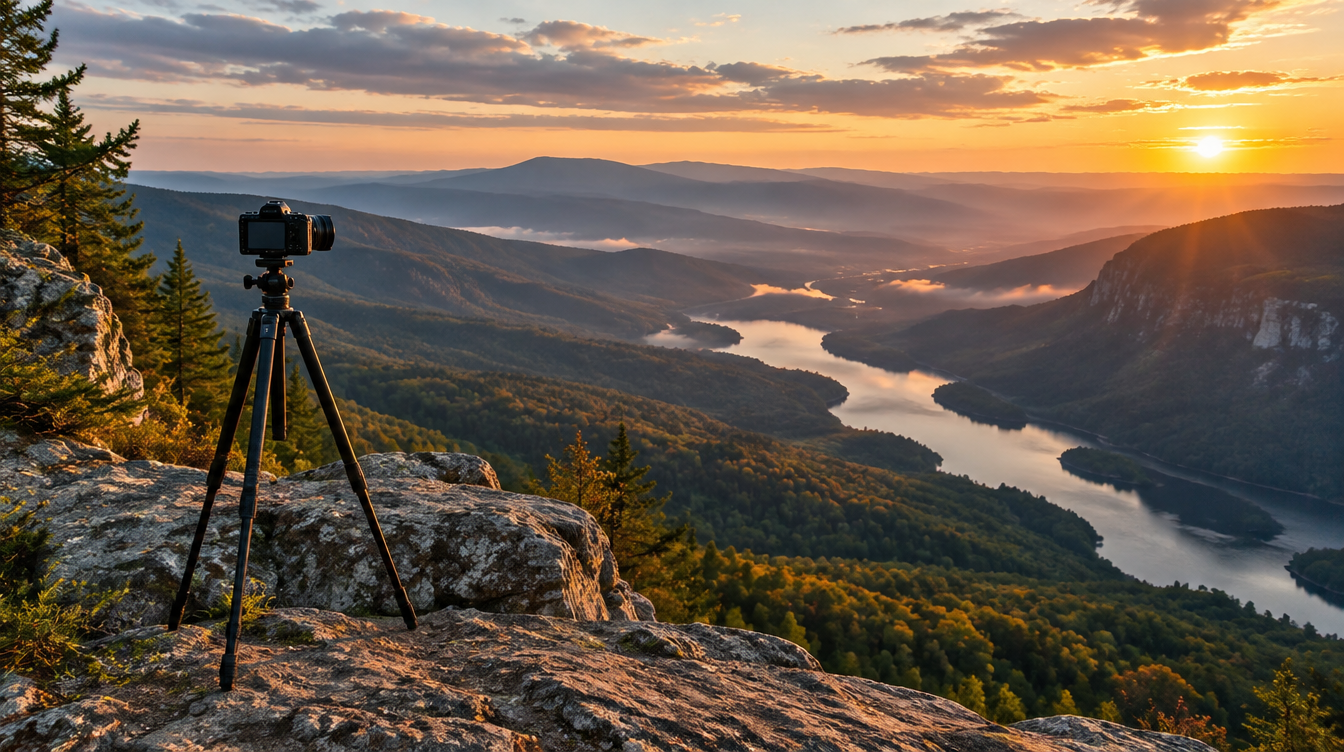
The single most practical way to apply deliberate practice to landscape photography does not require a trip anywhere. Pick one accessible spot, ideally within twenty minutes of home, and return to it repeatedly over weeks or months. Most photographers do the opposite instinctively, chasing a new location every weekend because new scenery feels like progress. New scenery is exciting, but it resets your learning every single time, because you spend half the session just figuring out the light and the composition options instead of refining a technique you already identified as weak.
A repeated local spot does something a new location cannot: it isolates the variable. If your foreground placement is weak, you go back to the same ridge or riverbank and shoot it in five different kinds of light until foreground placement stops being a guess and starts being a decision. If your exposure blending for a bright sky over a dark valley is inconsistent, you shoot that same valley at sunrise, at midday, and in overcast light until you understand exactly how far you can push a single exposure before you need to bracket. You are running the same experiment with one changed variable at a time, which is close to the textbook definition of a well-defined, repeatable task.
Our guide to planning a landscape shoot covers how to structure a single session around light, timing, and a short shot list. Use that same structure for your local spot, but shrink the ambition. One session, one variable, one honest note afterward about what worked and what did not. That note is the feedback loop you are otherwise missing when you only shoot new places you will never return to.
Get critique that actually moves the needle
"Nice shot" is the least useful sentence in photography. It feels good for about four seconds and teaches you nothing. The missing piece of deliberate practice for most self-taught photographers is not repetition, which most people already do plenty of, but the immediate, specific feedback half of Ericsson's definition. Vague praise and vague criticism both fail the same test: neither one points at a fixable decision you made.
The fix is to ask a narrow question instead of a broad one. Instead of posting an image and asking "what do you think," ask "does the horizon line in the lower third help or hurt this composition, and why." Instead of asking whether a sunrise shot is good, ask whether the exposure on the sky versus the foreground reads as intentional or just lucky. A specific question forces a specific answer, and a specific answer is something you can actually act on the next time you are in a similar scene. This works whether you are asking a more experienced photographer, a local camera club, or an online critique group, and it works just as well in reverse: giving this kind of specific critique to someone else sharpens your own eye for the same problems in your own images, because naming the flaw in someone else's photo is the same skill as noticing it in yours before you press the shutter.
| Deliberate practice requirement | Typical solo weekend shoot | Shooting alongside an experienced guide |
|---|---|---|
| Well defined task | Vague ("get some nice shots") | Pre-scouted composition and light window with a clear goal |
| Immediate feedback | Delayed days or weeks, once you review files at home | Real-time correction on composition, settings, and timing |
| Repetition of a similar task | Rare, because the location changes each trip | Possible across multiple mornings at related locations |
| Task designed by an expert | Self-designed, based on guesswork about your weak points | Designed by someone who has already shot the location and knows the common mistakes |
Study the greats like a student, not a fan
Looking at great landscape photography for inspiration is easy and mostly useless. Studying it like a student is harder and is where the actual learning happens. The difference is the questions you ask. A fan looks at an image and says it is beautiful. A student asks what specific decision made it work: where was the camera positioned, what time of day, what was sacrificed in exposure to protect the highlights or the shadows, and how would that decision transfer to a location you can actually reach.
Ansel Adams is the clearest case study for this because he was explicit about his own process. With Fred Archer, he developed the Zone System around 1939 and 1940, a calibrated method for deciding, before the shutter even opens, exactly how a scene's brightness range would be exposed, developed, and printed. His core creative principle, which he called visualization and put into print as early as 1934, meant committing to the final tonal result of an image before taking it, not discovering the image afterward in the darkroom. He was also not a lone genius working in isolation. He actively sought out and adopted technique from peers, including a suggestion from Paul Strand to use glossy paper to intensify tonal values in his prints. Adams built his process the way an engineer builds a system, by testing, calibrating, and borrowing good ideas wherever he found them.
Galen Rowell is the other useful case study, partly because he came to photography as a second career. He sold his automotive business in 1972 to shoot full time, and he spent the following decades treating landscape photography as an engineering problem rather than a waiting game. He developed and sold his own graduated neutral density filters, which went on to become a standard tool across the industry, specifically because existing gear could not handle the dynamic range he needed in the mountains. He called his work "dynamic landscapes" because conditions change fast at altitude, and getting the shot was less about luck than about positioning himself at the right spot at the right moment, repeatedly, until the odds favored him.
Neither of these photographers got good by admiring other people's work from a distance. They reverse engineered decisions, tested solutions, and borrowed from anyone who had solved a problem they were facing. That is the model worth copying, not their specific style.
Why shooting next to a guide compresses the learning curve
Go back to Ericsson's list: a well-defined task, immediate feedback, repetition, and a task designed by someone with more experience than you. A guided photography tour supplies exactly those four pieces in a way that solo practice almost never does, which is the actual mechanism behind why photographers improve faster on a guided trip than they do shooting alone for the same number of days.
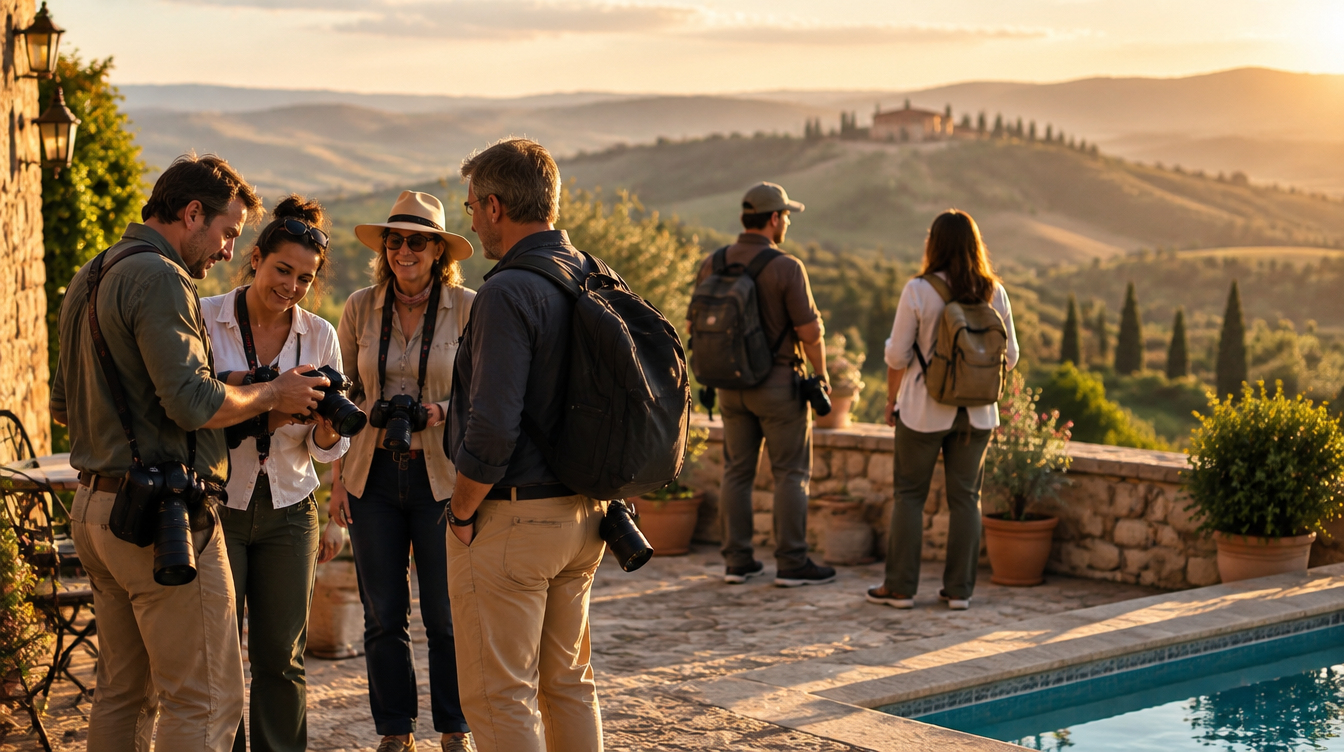
Our private photo tours are built around this directly. The locations are pre-scouted with weather and light backup plans already worked out, so the task itself is well defined before you ever lift the camera. Your guide follows you step by step with direct help on composition, settings, focus, and exposure, which means the correction happens while the light is still changing in front of you, not three weeks later when you finally open the files. That is the immediate feedback criterion, solved. Trips are explicitly tailored to your skill level and goals, whether that is a stronger portfolio, night photography, or long exposure work, which covers the expert-designed task criterion. The post-trip review session, a dedicated thirty minutes to go back through what you shot and why certain frames worked, adds a second, slower feedback pass on top of the real-time corrections. As the private tour page puts it plainly, you learn while you shoot, which is a fair description of what deliberate practice looks like when someone else has already done the designing for you.
Our small group tours work on the same principle at a larger scale. Groups are capped at six to eight photographers, led by photographers with real teaching experience, specifically so that personalized attention is still possible even though you are not the only person on the trip. Across our current departures, prices run from roughly $3,800 to $5,000 per person depending on the destination and season, covering multi day expeditions to places like Val d'Orcia, Iceland, and Lofoten under the northern lights. If you are weighing whether a guided trip is worth it against a solo trip to the same kind of scenery, the honest answer is that it depends on what you are optimizing for. If the goal is scenery alone, you do not need a guide. If the goal is compressing years of trial and error into days by getting the kind of immediate, expert feedback that is genuinely hard to arrange for yourself, that is specifically what a guided tour is built to deliver, and it is worth comparing against what a solo trip would actually cost once you add up gear, failed mornings, and the locations you would have scouted wrong without local knowledge. You can see the full range of current group departures here.
This is also why we built the post-trip editing conversation into our process rather than treating it as an afterthought. If you want to see how that final step closes the loop between a raw file and a finished image, our Lightroom editing workflow guide walks through exactly that process, from culling through export.
Frequently asked questions about getting better at landscape photography
How long does it take to get better at landscape photography? There is no fixed number of hours, despite the popular "10,000 hours" claim. Anders Ericsson, the researcher behind the original study that number is drawn from, said directly that the figure is "wrong in several ways" and was never meant as a universal threshold. What determines your speed of improvement is the structure of your practice, meaning clear goals, repetition, and fast feedback, not the raw hour count.
Do I need expensive gear to improve my landscape photography? No. Gear can remove specific technical limitations, such as a graduated filter solving a dynamic range problem, but it does not substitute for structured practice and feedback. Most of the plateau photographers hit has nothing to do with their camera body and everything to do with vague goals and delayed, vague feedback.
How do I get honest feedback on my landscape photos? Ask narrow, specific questions rather than open ones. "Does the exposure on the sky read as intentional" produces a more useful answer than "what do you think." The narrower the question, the more actionable the answer, whether you are asking a mentor, a camera club, or a guide on a trip.
Should I copy the style of famous landscape photographers? Study their process, not their style. Ansel Adams's calibrated Zone System and Galen Rowell's engineered approach to filters and positioning are useful because they show a repeatable method, not because copying their finished look will teach you anything about your own decisions in the field.
Is it better to travel to new locations or practice at the same spot repeatedly? Both have a place, but if your goal is skill improvement rather than a varied portfolio, a repeated local spot is the faster path. New locations reset your learning curve every time. A familiar spot lets you isolate one variable, such as foreground placement or exposure blending, and actually fix it.
Can a guided photo tour really make me a better photographer, or is it just a nice trip? It can genuinely accelerate skill if the guide provides real-time, specific feedback on your composition and settings rather than just leading you to pretty scenery. That real-time correction is the immediate feedback component that solo practice usually lacks, which is the actual mechanism behind faster improvement on a guided trip.
The habit that actually moves the needle
If you take one thing from this guide, make it this: stop measuring progress in hours spent or trips taken, and start measuring it in specific, fixable feedback received. Pick a local spot and return to it with one narrow goal at a time. Ask critique questions specific enough that the answer changes what you do next time. Study a photographer's decisions instead of just admiring their results. And if you want to compress months of that trial and error into a single trip, shoot alongside someone who has already made the mistakes you are about to make and can correct them in the moment instead of letting you find out three weeks later at home.
You do not need to already be a serious photographer to benefit from any of this, and if that question is holding you back, our piece on whether you need to be a serious photographer for a trip like this is worth reading next. The gap between where you are and where you want to be closes faster with structure and feedback than it ever will with more gear or more luck.
Sources
- Anders Ericsson: the 1993 deliberate practice study and his rebuttal of the "10,000-hour rule"
- Deliberate practice: the five-part definition, including immediate feedback and expert-designed tasks
- Ansel Adams: the Zone System, visualization, and his habit of adopting technique from peers
- Galen Rowell: dynamic landscapes and the development of graduated neutral density filters
- Practice (learning method): cross-reference on structured, repeatable, feedback-driven learning