Flying to Tuscany From the US: Airports, Routes, and Timing for Your Tour
Rome, Florence, or Pisa: a real comparison of the three gateway airports for a Val d'Orcia photography tour, including flight options, drive times, and how our own arrival day actually works.
Flying to Tuscany From the US: Airports, Routes, and Timing for Your Tour
Every year I get some version of the same email a few weeks before a departure: "I found a flight into Pisa for two hundred dollars less, should I book it instead of Rome?" It is a fair question, and the honest answer is almost always no, for reasons that have nothing to do with loyalty to one airport over another and everything to do with what actually happens once you land. Picking the wrong gateway airport for a Val d'Orcia trip does not ruin the trip, but it can turn a simple transfer day into a six hour slog through three trains and a taxi you did not budget for.
This is the airport breakdown I wish every guest read before booking flights, built around the three realistic entry points for a Tuscany photography tour: Rome, Florence, and Pisa. I will walk through how US connections actually work into each one, how far each airport really is from Val d'Orcia once you count traffic and terrain, and exactly how the arrival logistics work on our own tour, since that last part changes the calculation more than most people expect.
Key Takeaways
The right airport for a Tuscany photography trip depends less on ticket price and more on how the arrival day connects to your actual itinerary.
| Point | Details |
|---|---|
| Best airport for our tour | Rome Fiumicino (FCO), since Day 1 of our Val d'Orcia itinerary meets guests there directly |
| Most US direct flights | Rome Fiumicino, with year round nonstops from several major US hubs |
| Shortest drive to Val d'Orcia | Florence, roughly 90 minutes to two hours depending on the exact village, but with far fewer US direct options |
| Least convenient for US travelers | Pisa, mainly served by budget carriers connecting through other European cities, with the longest drive of the three |
| Document requirement | A US passport valid at least six months beyond your travel dates, no visa needed for stays under 90 days |
| When to arrive | The day before your tour start date if at all possible, to absorb jet lag before your first shooting session |
Table of Contents
- The quick answer
- Why Rome Fiumicino is our meeting point
- Flying into Rome (FCO)
- Flying into Florence (FLR)
- Flying into Pisa (PSA)
- The three airports side by side
- How arrival day actually works on our tour
- Camera gear through security and customs
- Passports, visas, and what you actually need
- Should you add days before or after the tour
- Frequently asked questions
- So which airport should you book
The quick answer
Book into Rome Fiumicino (FCO) unless you have a specific reason not to. It has the most direct flight options from the US, it is the airport where our Val d'Orcia tour actually begins each week, and the roughly two and a half hour transfer into the heart of the Tuscan countryside is a known, comfortable drive rather than a puzzle you have to solve yourself. Florence is a legitimate second choice if you are extending your trip and want to spend a few extra days in the city itself before or after the tour, but you will likely be connecting through a European hub to get there from most of the US. Pisa almost never makes sense for our itinerary specifically, since it adds the longest ground transfer of the three and rarely saves enough on airfare to justify it once you factor in the extra train or taxi leg.
Pro Tip: Search flights into all three airports before you commit, but compare total door to door time, not just the ticket price. A flight that is $150 cheaper into Pisa can easily cost you three extra hours of trains and connections on the ground, and those are hours you could otherwise spend resting up for a 6am shoot.
Why Rome Fiumicino is our meeting point
Our Val d'Orcia itinerary starts with everyone meeting at Rome Fiumicino, Terminal 3, in the early afternoon on Day 1, or at a partner hotel near the airport if your flight lands too early or too late to meet the group directly at arrivals. From there, the whole group transfers together into the countryside, checks into the villa that serves as our base for the week, and heads out for a first golden hour session together that same evening. That single meeting point is not an arbitrary choice. Rome has the deepest bench of direct US flights of any airport within reasonable driving distance of Val d'Orcia, which means the largest share of our guests can land, clear passport control, and be standing in the arrivals hall at the agreed time without having connected through a second European city first.
If your flight puts you into Rome the same morning as the meeting time, that generally works fine as long as you are not cutting it closer than a couple of hours of buffer for immigration lines and baggage claim, which can run long at Fiumicino during peak summer travel. If you would rather not risk it, or if your flight schedule only allows for a late evening arrival the night before, booking a hotel near the airport for that one extra night is a small cost against the peace of mind of not white knuckling a tight connection to your own tour's starting point.
Flying into Rome (FCO)
Rome Fiumicino runs year round nonstop service from a genuinely wide spread of US cities, including New York, Newark, Boston, Philadelphia, Chicago, Atlanta, and Miami on any given season, plus additional routes that open up seasonally from cities like Los Angeles. That breadth matters because it usually means you can find a reasonable fare and a reasonable arrival time without stitching together an odd routing through a hub you would not otherwise choose. Flight time from the East Coast typically runs eight to nine hours nonstop, which puts you on the ground in Rome in the early to mid morning local time if you take a typical evening departure from the US, giving you a full day of buffer before an afternoon tour meeting time.
The drive from Fiumicino into central Val d'Orcia, near San Quirico or Pienza, runs about two to two and a half hours depending on traffic around Rome itself and exactly which village is your first stop. Our own transfer handles this as a group, so you are not driving it yourself on day one, which is worth mentioning specifically since jet lag plus unfamiliar Italian highway signage plus a rental car with the wheel on the correct side but everything else unfamiliar is not how you want to start a trip you have been planning for months.
A couple of practical notes on the airport itself. International arrivals typically land in Terminal 3, and passport control lines can run anywhere from a quick ten minutes to closer to an hour during peak summer months, so build in a comfortable buffer rather than assuming the shortest case. If you are arriving a day early and staying in Rome itself before the transfer, the Leonardo Express train runs directly from Fiumicino into Roma Termini in about 32 minutes, which is a far less stressful option than a taxi through central Rome traffic if you just want to drop your bags and get some rest before an early transfer the next day.
Flying into Florence (FLR)
Florence's airport, officially Amerigo Vespucci but usually just called Peretola locally, is by far the closest of the three to Val d'Orcia in raw distance, at roughly ninety minutes to two hours depending on your exact destination and whether you catch Florence's notoriously congested ring road at a bad time. The catch is that very few nonstop flights connect it directly to the US. Most American travelers reach Florence by connecting through a European gateway first, commonly London, Paris, Amsterdam, or Munich, which adds a layover and generally a longer total travel day than a Rome nonstop even though the airport itself sits closer to your final destination.
Florence makes the most sense if your trip includes a few days in the city itself, before or after our tour, since you would be flying there anyway for that part of the itinerary and can simply build the tour transfer around it. If Florence is not otherwise on your list of places to visit, the extra connection rarely buys you enough in ground transfer time to be worth the added layover risk, particularly during European summer travel when short connections through hubs like Paris or Amsterdam can run into real delays.
Flying into Pisa (PSA)
Pisa is mostly a budget carrier airport within Europe, serving routes to and from other European cities on airlines like Ryanair and easyJet rather than functioning as a serious long haul gateway. A handful of US routings exist seasonally, but they typically involve at least one connection and often land you further from Val d'Orcia in total travel time than a direct Rome flight would, once you add the drive south from Pisa, which runs close to three hours to reach central Val d'Orcia. I mention Pisa mainly because guests occasionally find a tempting fare into it while comparison shopping, and it is worth knowing upfront that the savings rarely survive contact with the actual transfer logistics for our specific itinerary.
The three airports side by side
| Airport | Direct US flights | Drive to Val d'Orcia | Best for |
|---|---|---|---|
| Rome Fiumicino (FCO) | Extensive, year round from multiple hubs | ~2 to 2.5 hours | Our tour's official meeting point, most guests |
| Florence (FLR) | Limited, usually via a European connection | ~1.5 to 2 hours | Guests adding city days in Florence |
| Pisa (PSA) | Minimal, mostly intra-European budget routes | ~2.5 to 3 hours | Rarely the best fit for this itinerary |
How arrival day actually works on our tour
Day 1 of our Val d'Orcia tour is built specifically around a Rome Fiumicino arrival. We meet at Terminal 3 in the early afternoon, or at a nearby partner hotel if your flight timing does not line up with meeting the group at the airport itself. From there we transfer together into the countryside, check into the villa that is our base for the full week, and settle in before heading out for a first sunset session together. If your flight is delayed or you need to arrive a different way, message your guide ahead of time. It has happened before, and the fix is almost always a short taxi to the villa rather than anything that derails the week.
Day 7 works in reverse, with a farewell sunrise session followed by departure logistics timed around getting everyone back to Fiumicino comfortably for their return flights. If you are curious what the days in between actually look like, village by village, our full sample 7 day Val d'Orcia itinerary walks through the whole week.
Camera gear through security and customs
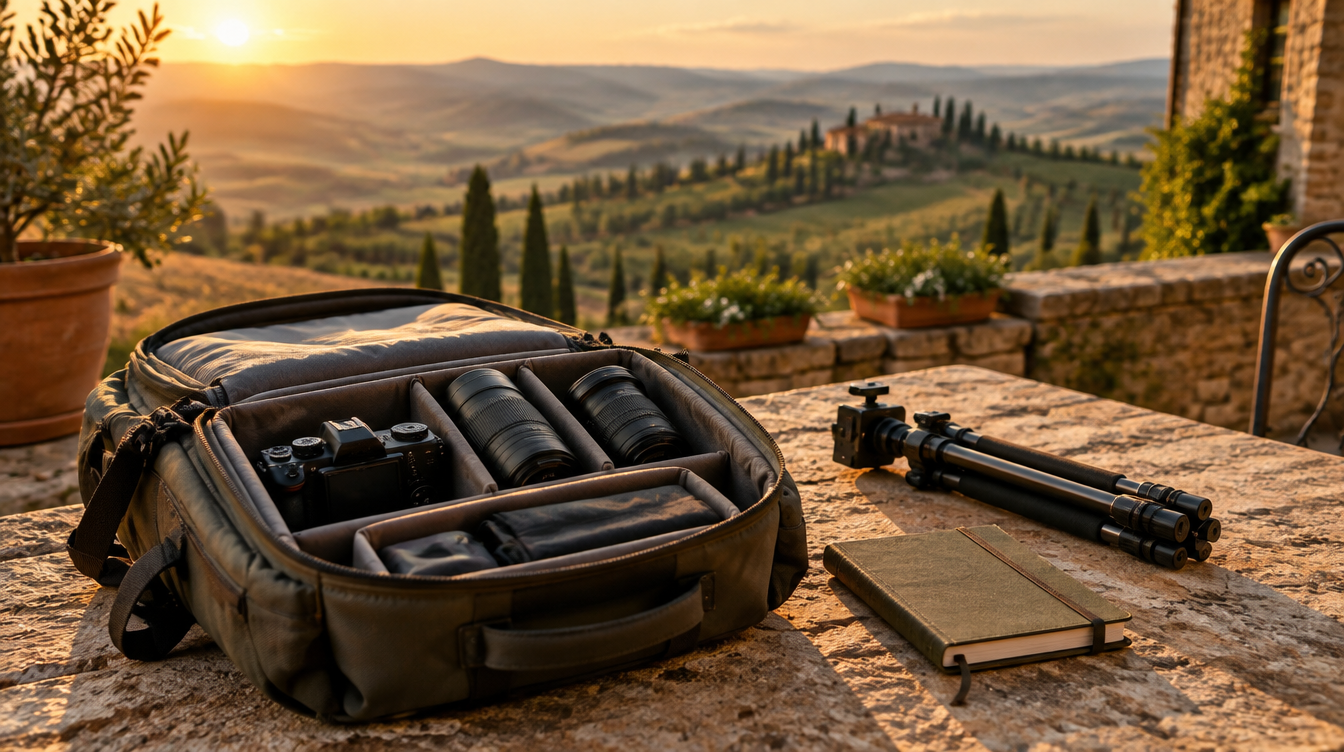
A few practical notes for photographers specifically, since a camera bag draws slightly different questions at security than a normal carry-on. Keep camera bodies, lenses, and any spare lithium batteries in your carry-on rather than checked luggage. Airlines and most international regulations require spare batteries to travel in the cabin, not the hold, and a checked bag getting delayed or misrouted with your only camera body inside is the kind of mistake that ruins the first two days of a trip you flew across an ocean for. A tripod can go in checked luggage if it does not fit your carry-on allowance, wrapped well against the rest of your gear, though a compact travel tripod that fits in or alongside your camera bag saves you the risk entirely.
Security screening for camera gear in both US and Italian airports is generally straightforward. You may be asked to remove a laptop-sized camera bag from your carry-on for separate screening, similar to a laptop, and large lenses sometimes draw a second look on the X-ray simply because of their shape. None of this typically causes delays beyond a minute or two if you build in a reasonable buffer before your flight, which is also just good practice with an international itinerary in general.
Pro Tip: Shoot a few frames with your gear the morning you leave for the airport, even just test shots around the house, so you land in Italy with your settings already dialed in rather than fumbling with a camera you have not touched in two weeks during your first golden hour session.
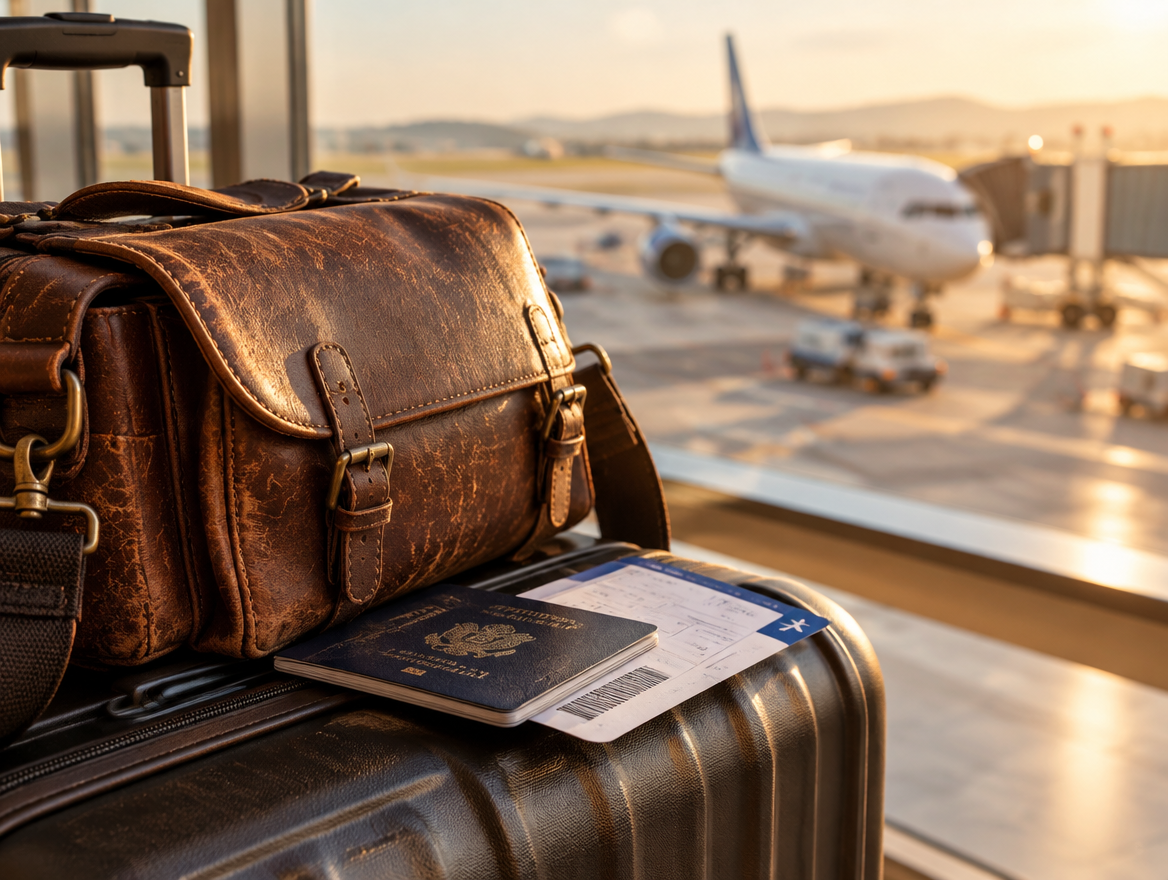
Passports, visas, and what you actually need
US citizens do not need a visa for a standard tourism stay in Italy under 90 days, but you do need a passport valid for at least six months beyond your planned return date, which is a common trip-planning mistake worth checking months in advance rather than the week before you fly. If your passport is getting close to that window, renew it early. Processing times fluctuate and a photography trip is not the moment to find out your passport renewal is backed up. The TSA's identification requirements page covers what counts as acceptable ID for security screening on the US side of the trip, including passport requirements for international departures, and is worth a quick read if this is your first international flight in a while.
Entry requirements for US travelers to Europe do shift occasionally at the policy level, so it is worth a quick check of current requirements in the months before you fly rather than relying on what was true for a friend's trip a few years ago. As of now, a valid passport meeting the six month rule is the only document a US citizen needs for a standard tourist stay, no advance visa or entry authorization required.
Should you add days before or after the tour
If your schedule allows it, I almost always recommend arriving a day before the tour officially starts rather than cutting it as close as the schedule technically permits. Jet lag flying east across the Atlantic hits most people harder on arrival than the flight home, and a buffer day gives you a chance to sleep, walk around, and show up for Day 1 rested rather than running on adrenaline and airport coffee. It also gives you a cushion against a delayed or cancelled flight, which is a real risk on any long haul itinerary and a much bigger problem if your buffer is zero.
On the other end, extending your stay after the tour is a genuinely popular choice among our guests, whether that means a few days in Rome before your flight home or a longer swing through another part of Italy. If you are weighing how many total days to take off work for the trip once you account for travel days on both ends, our guide on how many vacation days a photography tour actually eats into walks through the math in more detail. And if your extended plans involve picking up a rental car after the tour ends to explore further on your own, our guide to renting a car in Tuscany covers the practical details, from insurance to navigating a Zona a Traffico Limitato, that catch a lot of first time visitors off guard.
If you are still deciding whether a guided week like ours is the right fit for your first Tuscany trip at all, it is worth looking at the full Val d'Orcia photography tour itinerary directly. Knowing exactly where the week starts and ends, and that the arrival logistics are handled for you the moment you land at Fiumicino, tends to answer a lot of the "how does this actually work" questions that flight and airport planning brings up in the first place.
Frequently asked questions
Can I fly into a different airport and meet the group later? It is possible in some cases, but it usually means arranging and paying for your own transfer to catch up with the group after Day 1 has already started. It is much simpler, and rarely more expensive once you count the extra transfer, to fly into Rome and meet the group as planned.
How early should I book flights? International fares to Italy generally get less predictable, not more expensive on a straight line, the closer you get to summer departures, so booking three to six months ahead is a reasonable target once your tour departure is confirmed.
Is there a shuttle from Fiumicino if I miss the group meeting time? There is no scheduled shuttle built into the tour itself, but a taxi from Fiumicino to the villa is a straightforward, if not cheap, backup option, and your guide can help arrange it if your flight timing shifts.
Do I need an international driving permit? Not for our tour, since ground transport is included and handled for you. If you are extending your trip with a rental car afterward, that is a separate question worth checking directly with the rental company, since requirements vary.
What if my flight gets delayed and I miss the Day 1 meeting entirely? Message your guide as soon as you know. Guests have arrived a few hours late before, and the usual fix is a taxi directly to the villa rather than missing anything beyond the first transfer.
Can I bring film cameras through security without them getting X-rayed? Modern airport carry-on scanners are generally safe for film up to about ISO 800, but if you are shooting high-speed film or anything you would rather not risk, most security checkpoints, including Fiumicino, will hand-inspect film on request if you ask before it goes through the machine rather than after. Build a few extra minutes into your security time if you plan to ask for this.
So which airport should you book
Book Rome Fiumicino unless you have a genuinely good reason not to, such as extending your trip with several days in Florence beforehand. The nonstop options from the US are broader, the transfer into Val d'Orcia is a known two to two and a half hour drive rather than a guess, and it happens to be exactly where our own tour picks everyone up on Day 1. Chasing a slightly cheaper fare into Florence or Pisa can work out fine if you plan the ground transfer carefully, but for most guests it trades a small amount of savings for a meaningfully more complicated arrival day, and an arrival day is not where you want to introduce complications on a trip you have been looking forward to for months.