When Is the Best Time to Book a Tuscany Photography Tour?
Why the most popular Tuscany photography tour departures sell out early, how far in advance you should realistically plan, and how to time flights and vacation approval around a fixed group departure.
When Is the Best Time to Book a Tuscany Photography Tour?
I get some version of this question in almost every email I answer: "we are still deciding, is it okay if we book in a few months?" The honest answer depends entirely on which departure you have your eye on, but the short version is almost always the same: earlier than you think. Not because of pressure tactics or fake urgency, but because a small group tour with a hard cap on seats behaves completely differently from a hotel room or a flight you can grab three weeks out. Once a departure fills, it is full. There is no upgrade, no overbooking buffer, no quiet upsell to a bigger room. Someone else got there first.
This guide walks through why that happens, which seasons sell out fastest, and how to actually think about your own booking window against flights, vacation approval, and the rest of your life logistics. If you already read our guide to the best time to photograph Tuscany, think of this as the practical companion to it: that piece tells you which season produces the images you want, this one tells you when to actually pull the trigger on booking that season.
Key Takeaways
There is no universal booking deadline, but the seasons photographers want most are the ones that disappear first, so plan backward from the departure, not forward from "someday."
| Point | Details |
|---|---|
| Highest demand seasons | Late spring poppy bloom (April/May) and autumn fog season (September/October) fill up fastest |
| Realistic booking window | 6 to 12 months ahead for a spring or autumn departure, 3 to 6 months for a shoulder season date |
| Group size | Maximum 7 participants per departure, so a handful of bookings can close out a date |
| Deposit | Roughly 30 percent down, refundable per the cancellation policy, holds your seat while the balance is due closer to departure |
| Flight prices | International fares to Italy are generally most favorable 4 to 7 months before departure, so booking the tour first, then the flight, tends to work better than the reverse |
| If your dates are flexible | A shoulder season departure with more open seats is your best bet for booking on shorter notice |
Table of Contents
- Why a photography tour does not work like a hotel booking
- Which seasons sell out first, and why
- A realistic booking timeline by season
- Flights vs. tour booking: what comes first
- Getting vacation time approved without losing your seat
- What a deposit actually buys you
- What happens if you wait too long
- Booking on short notice: your realistic options
- Frequently asked questions about booking timing
- The bottom line
Why a photography tour does not work like a hotel booking
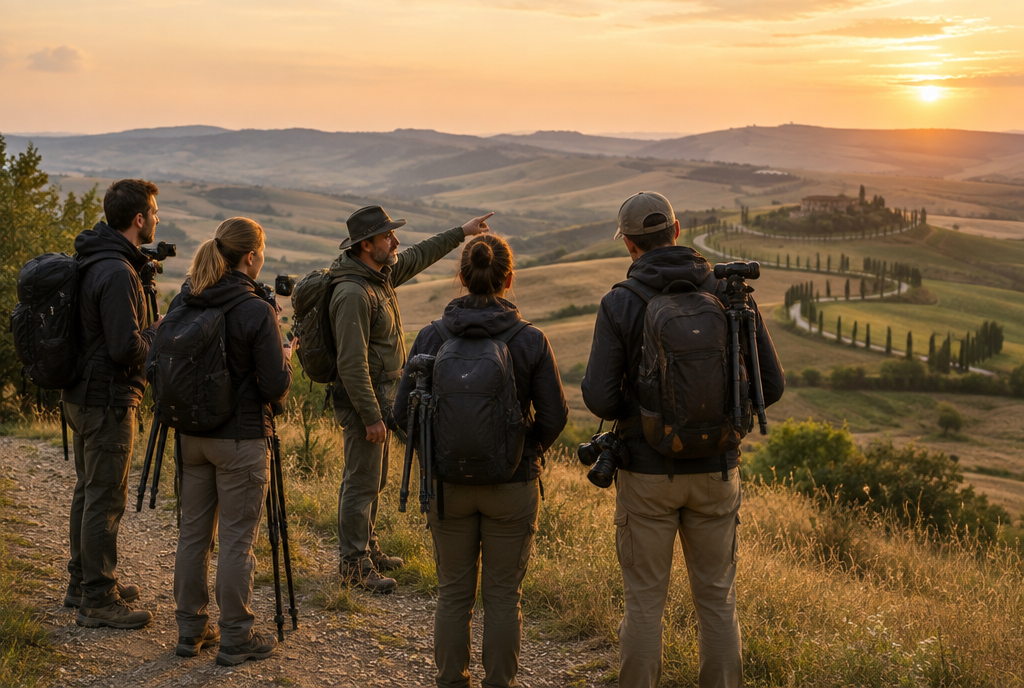
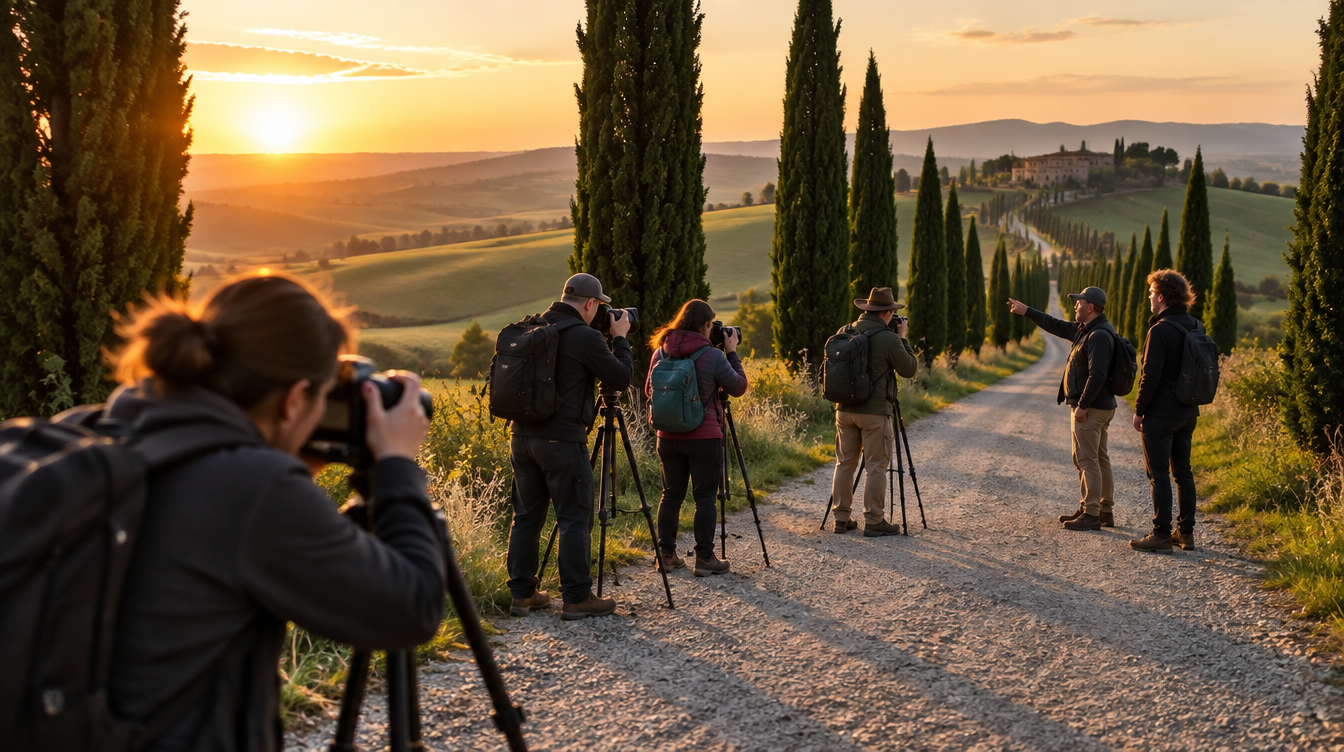
Most travel bookings scale. A hotel with 200 rooms can absorb a rush of demand because it has 200 rooms to sell. An airline can add a bigger plane to a popular route. A small group photography tour cannot do either of those things without breaking the thing that makes it good. Our Val d'Orcia tour caps out at seven participants per departure, split between two professional photographer guides, and that ratio is not arbitrary. It is what lets a guide actually walk over to you at a viewpoint, look at your composition, and tell you to drop half a stop and switch to your 24mm instead of the 70-200mm you had mounted. Add three more people to that group and the guides are triaging instead of teaching.
That means the inventory for any given week is fixed the day the departure is scheduled, sometimes a year or more in advance. There is no way to add a seat once seven people have committed, and unlike a hotel that might quietly overbook and shuffle people around, a tour operator that oversells a departure has genuinely broken its own product. So when a date is gone, it is gone. The only path back in is a cancellation, which does happen occasionally, but is not something worth planning your trip around.
Pro Tip: If you are torn between two departure dates, book the one with fewer remaining spots first and treat the other as your backup. You can always ask about switching later if plans change, but you cannot un-sell a seat that someone else already took.
Which seasons sell out first, and why
Not every week of the year gets photographed equally, and booking patterns follow the light almost exactly. If you have read our piece on the best time to photograph Tuscany, you already know that late April through May and mid September through late October are the two strongest windows for landscape work: green hills and scattered poppies in spring, harvest color and a real shot at valley fog in autumn. Those are exactly the departures that sell out first, usually six months to a year ahead of the actual week.
Shoulder season departures, generally midsummer or the very start and tail end of the main season, tend to hold availability longer. That is not because they are worse trips (the itinerary, the guiding, and the villa are the same regardless of month), it is simply because fewer photographers are chasing that specific light. If your schedule is flexible and you are more interested in the overall experience of a guided tour than in one particular seasonal look, a shoulder season date is your best shot at booking closer to departure without a long wait list.
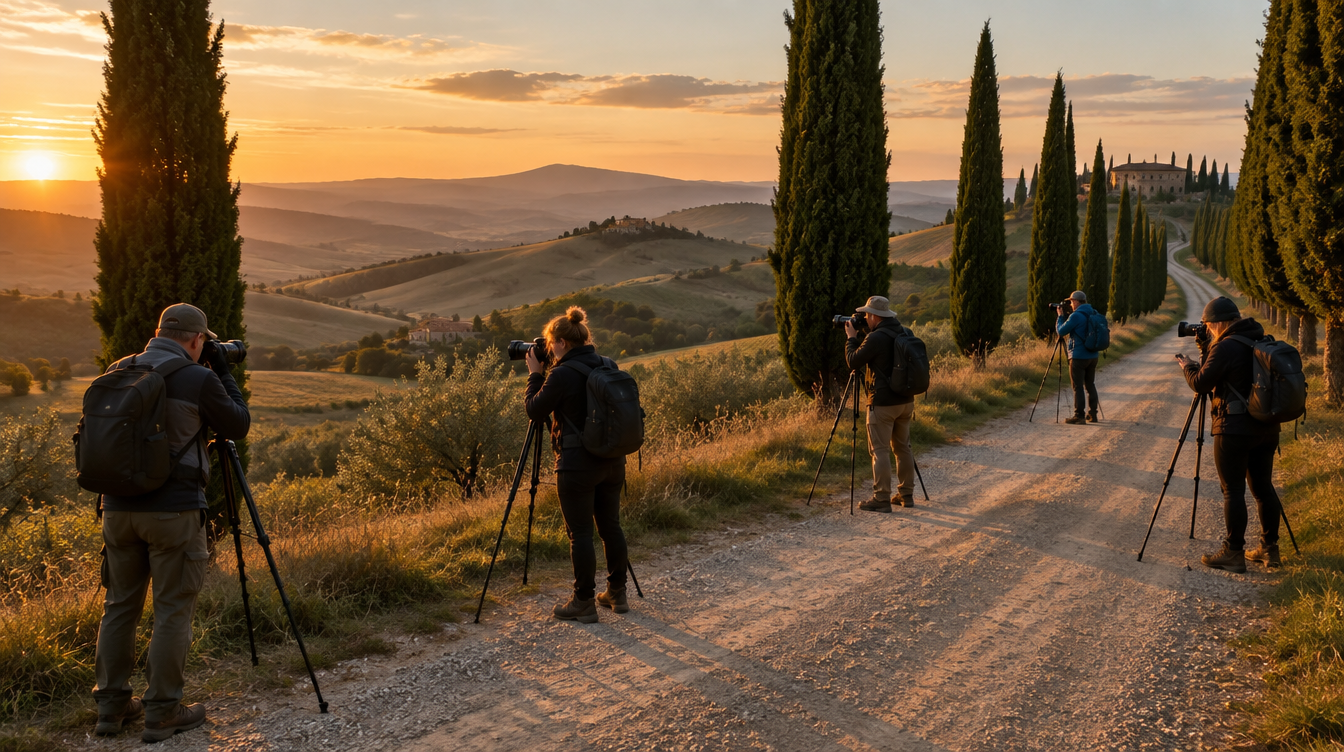
The gear each season demands is different too, and that is part of why serious photographers commit early. A spring trip built around poppy fields and green hills usually means packing a circular polarizer to cut haze and saturate the greens, and a mid-range zoom in the 24-70mm range for compressing a field of poppies against a cypress row without a wide angle distorting the foreground. An autumn fog trip is a completely different kit problem. You want a sturdy tripod for the pre-dawn long exposures while the fog is still settling, a remote shutter release so you are not introducing shake at slow shutter speeds, and a lens hood that actually works, since backlit fog scatters light in ways that create flare you will not notice until you are back home reviewing files on a real monitor. Knowing which season you are booking months ahead of time means you can budget for a filter you do not already own, or rent a lens for the week instead of buying one, rather than showing up with whatever happens to be in your bag.
A realistic booking timeline by season
Looking at how our own upcoming Val d'Orcia departures have filled gives a pretty clear pattern. The table below is a general guide rather than a guarantee for any specific date, since demand shifts year to year, but it reflects what we have consistently seen.
| Season | Demand level | Recommended booking lead time |
|---|---|---|
| Late April to May (poppy bloom, green hills) | Highest | 9 to 12 months |
| September to October (harvest, fog season) | Highest | 9 to 12 months |
| June and early July | Moderate | 5 to 8 months |
| Mid to late summer | Lower | 3 to 6 months |
| Winter departures (when offered) | Lowest | 2 to 4 months |
As one real example, our upcoming departures currently on the books include an October week with only a handful of spots left, and a September date the following year with a dozen spots still open, more than a year out. That gap is not random. It is the fog and harvest season selling faster than a date twelve months away, purely because photographers who already know what they want are locking it in early.
Flights vs. tour booking: what comes first
This trips people up constantly, and I understand why. Nobody wants to pay a tour deposit and then discover flights to Florence or Rome have doubled in price. In practice, though, booking the tour first and the flight second usually works out better, for two reasons. First, tour availability is the harder constraint. There are only seven seats and a fixed departure date, while there are dozens of flight options across multiple airlines and routing combinations for almost any week of the year. Second, international fares to Italy tend to become available for purchase, and are usually most competitively priced, somewhere in the four to seven month window before departure. If you book your tour a year out for a popular season, you are not booking flights blind, you are simply waiting for the normal fare window to open and then buying with your dates already locked.
The one exception is if you are hunting for a specific award ticket redemption or a positioning flight through a particular hub, since those inventory windows can behave differently and sometimes open earlier than cash fares. If that is your situation, it is worth checking your preferred airline's award calendar before committing to a departure date, though for the vast majority of travelers, book the trip, then buy the flight once you are inside that five or six month window, is the simpler and more reliable order of operations.
Getting vacation time approved without losing your seat
A lot of our guests are working professionals who need to clear a week of vacation time with an employer, and this is genuinely one of the more practical reasons to book early rather than a sales tactic dressed up as one. A deposit, not the full balance, is what holds your seat. Once you have paid it, you have a specific week in hand, which is a far easier ask to bring to a manager than "sometime in the fall, exact week TBD." Walking in with concrete dates months in advance is also simply more considerate to your team, since it gives everyone time to plan coverage around your absence instead of scrambling two weeks before you leave.
If your workplace requires vacation requests to be submitted a certain number of months ahead, work backward from that requirement when picking a departure. Booking the tour, then immediately submitting the time off request with your confirmed dates in hand, removes almost all of the risk of a schedule conflict showing up later.
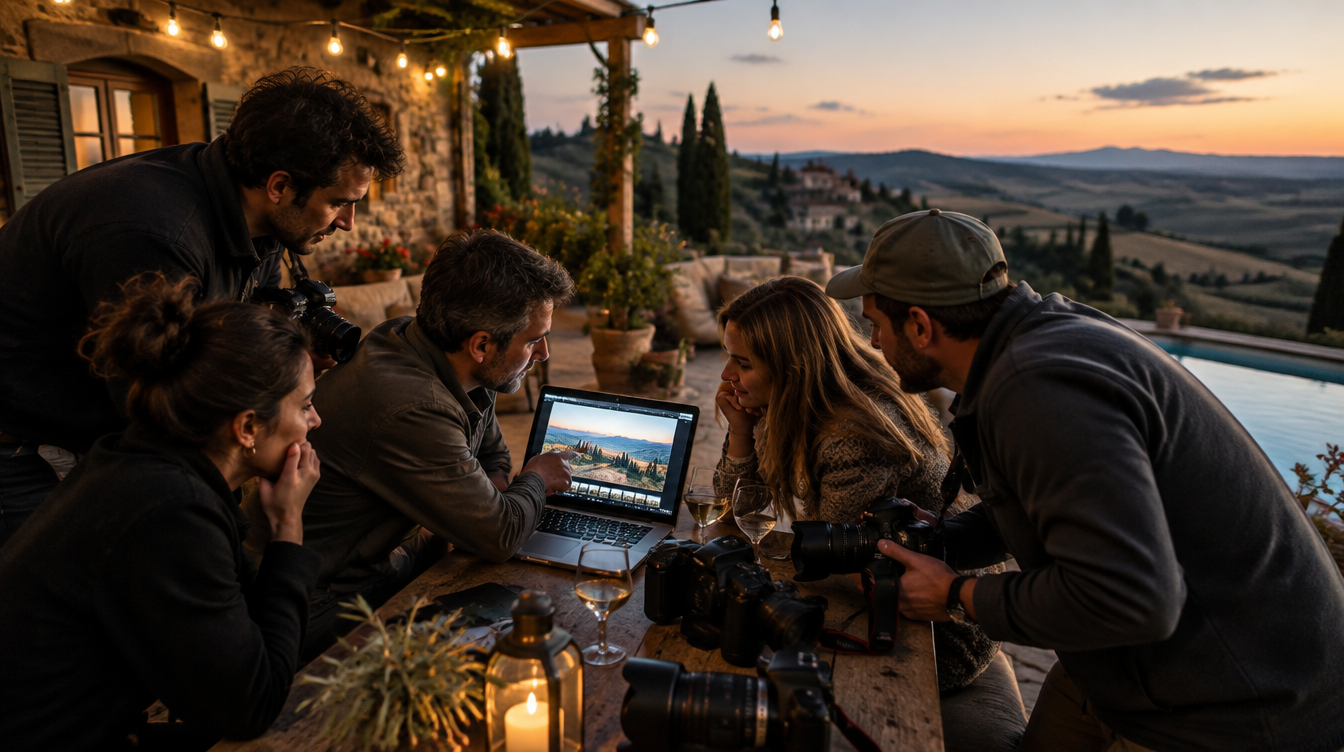
There is a second, quieter benefit to locking in your dates early that has nothing to do with your employer. A confirmed departure gives you a real deadline to actually learn your camera before you leave, instead of trying to figure out manual mode in the departure lounge. I have watched guests show up having never used a graduated ND filter or shot a proper exposure bracket for a sunrise HDR blend, and the first morning of the trip becomes a crash course instead of a chance to make images. Book nine months out and you have time to run a weekend practicing bracketed exposures at your local park, get comfortable with your intervalometer if you are planning any time-lapse work, and figure out your composition habits before you are standing on a hillside in Val d'Orcia with only a handful of sunrises to work with. That preparation window is a genuine, practical reason to book early that has nothing to do with fear of missing out on a seat.
If you already know Val d'Orcia is the trip you want and are just weighing whether now is the right moment to commit, that hesitation is exactly what a deposit is designed to solve. Our Val d'Orcia photography tour holds your specific week with a partial payment, so you are not choosing between "commit the full cost today" and "risk losing the season," you are simply reserving the date while the rest of the planning, gear, and flights fall into place around it.
What a deposit actually buys you
On our Val d'Orcia tour, a roughly 30 percent deposit is what secures your seat, with the remaining balance due closer to departure. That structure exists specifically so you are not asked to commit the full trip cost more than a year out. It also means the financial commitment to lock in a popular date is smaller than people often assume. You are not paying the full $4,800 to $5,000 upfront, you are paying roughly $1,440 to hold your spot while the departure is still nine or ten months away, with the balance following on a schedule you can plan around.
Pro Tip: Read the cancellation and refund policy before you book, not after. Life happens, and knowing exactly what is refundable and by what date if your plans change removes most of the anxiety around committing to a date this far ahead.
What happens if you wait too long
The most common outcome of waiting is not that the trip becomes impossible, it is that your first choice season disappears and you end up choosing between a less ideal month or waiting a full year for the next comparable date. I have had this exact conversation more times than I can count: someone reaches out in March hoping to book the upcoming May departure, and that date closed out the previous autumn. The trip is not gone, but the specific green hills and poppy bloom they had pictured is now a year away instead of two months away.
Sold out departures also sometimes generate a short waitlist, since cancellations do happen for ordinary reasons like a health issue or a work conflict. It is worth asking to be added if your ideal date is full, but a waitlist spot is a chance, not a guarantee, so it should never be your primary plan if you have a fixed vacation window you are trying to protect.
There is also a cost dimension to waiting that people underestimate. Flights booked inside a tight window, say six weeks out because that is when a spot finally opened up, are almost always more expensive than the same route booked five or six months ahead. Add in the fact that a compressed timeline often means less flexibility on connections and arrival dates, and the total cost of a last minute booking can end up noticeably higher than the tour price itself would suggest. None of this is a reason to panic if you are genuinely deciding on short notice, but it is worth factoring into the comparison when you are weighing "book now for next year" against "wait and see what is available closer to the date."
Booking on short notice: your realistic options
If you are reading this three months before you want to travel, you are not necessarily out of luck, but your options narrow. Your best bet is checking current departure availability directly, since a shoulder season date or an unexpected opening can still exist even inside a shorter window. A private departure is also worth considering if a fixed group date will not work with your timeline, since a private tour can sometimes be arranged with more flexibility around scheduling than a set group departure, though generally at a different price point.
If your dream is specifically the poppy fields of May or the fog season in October and neither is available on short notice, my honest advice is to book the next available occurrence of that season rather than settling for a month that will not give you the images you actually want. A photography trip you plan properly a year out will almost always beat one you rush into during a season that was never your first choice.
Frequently asked questions about booking timing
How far in advance should I book a Tuscany photography tour? For the highest demand seasons, spring poppy bloom and autumn fog and harvest, plan on booking 9 to 12 months ahead. For shoulder season months, 3 to 6 months is usually enough.
Can I book a photography tour last minute? Sometimes, particularly in shoulder season, but the most popular departures with only 7 seats often sell out far in advance, so last minute availability is the exception rather than something to plan around.
Should I book flights before or after the tour? Book the tour first. Tour availability is the harder constraint since seats are limited, while flight fares to Italy are usually most competitive 4 to 7 months before departure, well within a normal booking window once your tour dates are locked.
Is the deposit refundable if my plans change? Refund terms depend on the specific cancellation policy and how far out you cancel, so read that policy before booking rather than assuming either way.
What if my preferred date is already sold out? Ask about the waitlist, since cancellations do happen, but treat it as a backup plan. Your more reliable options are a nearby shoulder season date with open seats, or booking the same season a year out.
Do I need to already own all my gear before I book? No. Booking early is actually the better order of operations, since it gives you months to figure out what you are missing, whether that is a graduated ND filter, a sturdier tripod for fog season long exposures, or simply time to practice manual exposure before you are standing on a hillside at sunrise with only a handful of mornings to work with.
Does traveling with a non-photographer partner change the booking timeline? Not meaningfully. Non-photographer partners are welcome on our departures at a different rate, but the same seat limits and seasonal demand patterns apply, so the same booking advice holds regardless of whether everyone in your group is shooting.
The bottom line
There is no trick to this, just math. Seven seats, two of the most photogenic seasons on the calendar, and photographers who plan a year ahead because they already know what light they want. If a specific season matters to you more than the exact calendar year, book as early as you can stomach committing to a date, pay the deposit, then let flights and vacation approval fall into place around a trip you already know is happening. If you are still deciding which season is even right for you, that is a completely reasonable place to start, and it is worth working through our full Tuscany photography guide before you lock in a date, so the week you book is actually the one that matches the photographs you are chasing.