How to Choose a Photography Tour Operator: Questions to Ask Before You Book
A practical vetting checklist for any photography tour operator: guide credentials, real guest to guide ratios, weather contingency plans, independent reviews, and pricing transparency.
How to Choose a Photography Tour Operator: Questions to Ask Before You Book
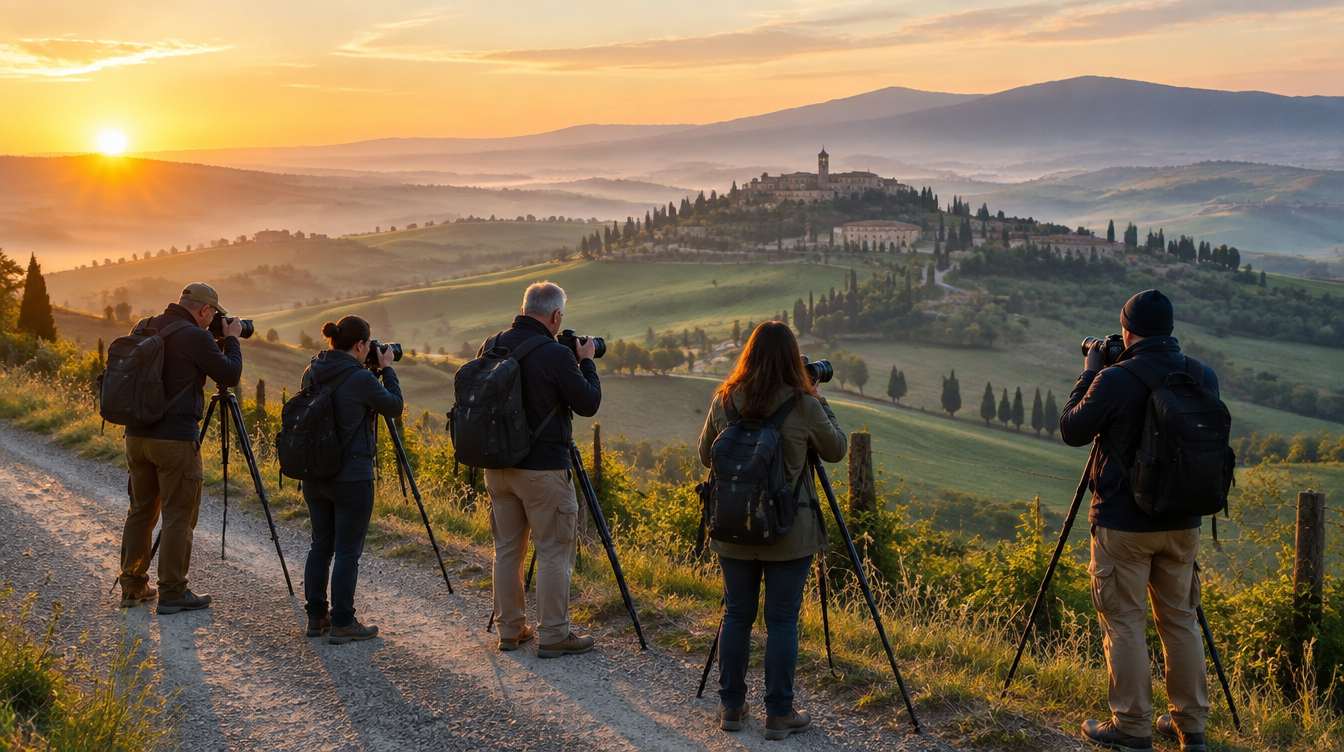
I get emails almost every week from people who are torn between two or three photography tour operators, all quoting roughly the same price for roughly the same destination, and asking me how to tell them apart. It is a genuinely hard problem from the outside. Every operator's website has a beautiful hero photo of a misty hillside, a testimonials section full of five star quotes, and an itinerary page that reads almost identically to the next one. You cannot tell from a homepage alone whether a company actually delivers on what it promises once you are standing in a field at 5am with a guide who either does or does not know what they are doing.
I run tours for a living, so take this with the grain of salt that implies, but I have also been the customer on other people's trips, in other parts of the world, and I have watched friends book tours that fell apart in ways a few pointed questions before booking would have caught. This is the checklist I actually use, and the one I would hand a friend who asked me to help them vet a company before they put down a deposit, whether that company is us or someone else entirely.
Key Takeaways
Most photography tour websites look similar on the surface. The differences that actually matter show up when you ask specific, slightly uncomfortable questions before you book.
| Point | Details |
|---|---|
| Ask about credentials directly | A working professional photographer with a published portfolio and years leading that specific destination is a different guide than a tour leader who is primarily a logistics manager |
| Check the group size and guide ratio | Ask how many guests per guide, not just the total group size, since a 20 person group with two guides behaves very differently than a 7 person group with two guides |
| Get the weather policy in writing | A real operator has a specific answer for what happens if fog, rain, or wind cancels a planned shoot, not a vague reassurance |
| Read reviews off the operator's site | Google Business reviews and TripAdvisor are harder to curate than a testimonials page the company built itself |
| Ask what is not included, in writing | A transparent operator will list flights, insurance, gratuities, and optional extras clearly rather than folding the question into a vague "contact us for details" |
Table of Contents
- The quick answer
- Question one: who is actually guiding you
- Question two: what is the real guide to guest ratio
- Question three: what happens if the weather ruins a shoot
- Question four: are the reviews real, and where do they live
- Question five: is the pricing actually transparent
- Question six: what is the cancellation and deposit policy
- Red flags worth walking away from
- Ask for a sample day, not just a sample itinerary
- The vetting checklist at a glance
- How we answer these questions ourselves
- Frequently asked questions about choosing an operator
- So how do you actually decide
The quick answer
Before you book any photography tour, ask the operator six specific things: who is physically leading the trip and what their photography background actually is, what the real guest to guide ratio is on your specific departure, what their written policy is if weather wipes out a planned shoot, where you can read reviews that were not selected by the company itself, exactly what the listed price does and does not include, and what happens to your deposit if your plans change. A company that answers all six clearly and specifically, in writing, without hedging, is one you can trust with your travel dates and your camera gear. A company that gets vague on any of these is worth a second look before you commit.
Pro Tip: Ask your questions by email rather than only through a contact form, so you have a written record of the answers. A good operator will answer specifically and quickly. A slow, generic, or copy-pasted response to a direct question is useful information on its own.
Question one: who is actually guiding you
"Guide" is a loose word in this industry, and it is worth pinning down before you book. Some tours are led by a working photographer who shoots the destination professionally and can talk you through why a two stop graduated ND filter beats bracketing and blending for a specific scene, or why you want an 18 or 20mm lens instead of your 35mm for a particular cypress road composition. Other tours are led by a logistics coordinator who manages the van schedule and the hotel check-ins competently but has limited hands-on photography expertise to actually improve your images in the field. Both roles matter, but they are not the same thing, and a website photo of someone holding a camera does not tell you which one you are getting.
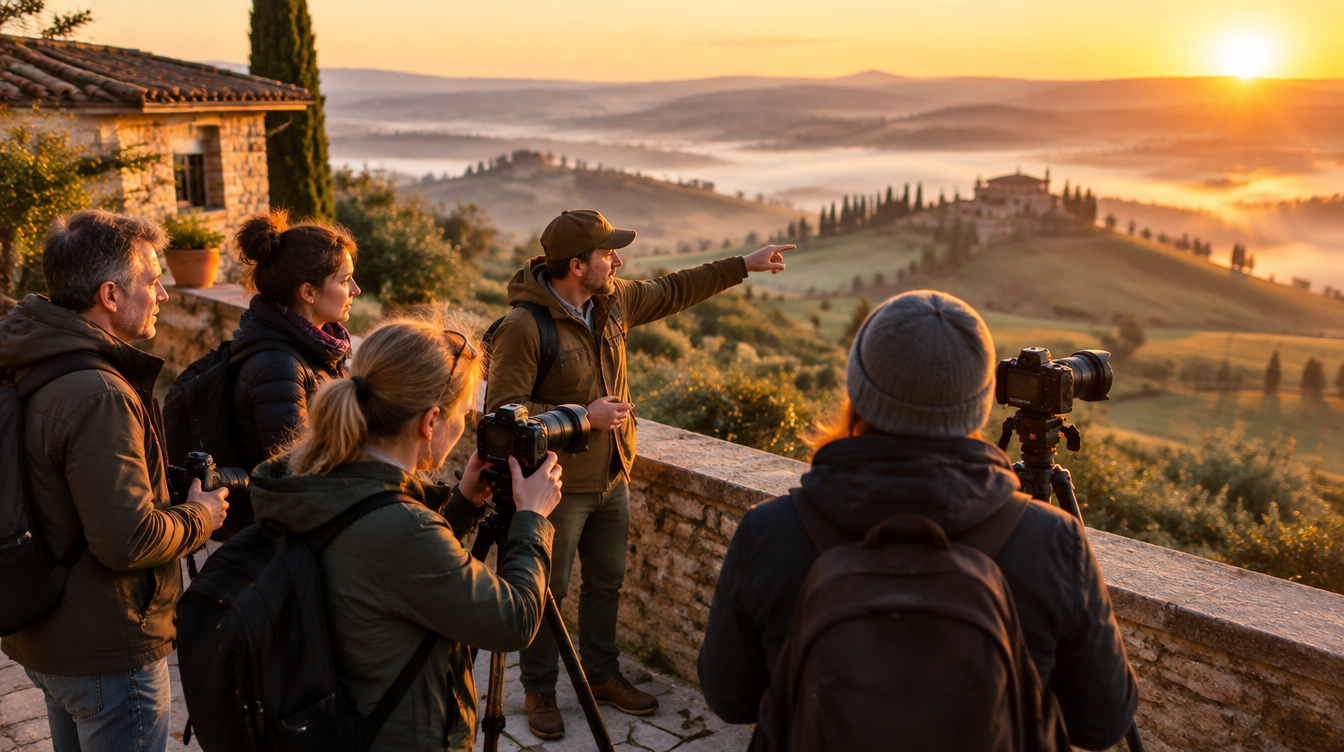
Ask directly: has this specific guide led this specific destination before, how many times, and can you see a portfolio of their own work shot there. A guide who has photographed Val d'Orcia across a dozen seasons knows which back road catches fog at 6:40am in October and which viewpoint gets crowded by 7:15, knowledge you cannot get from a guidebook or a single scouting trip. If an operator cannot name the specific guide on your departure yet, or cannot point you to that person's own photography, that is a fair thing to push on before you commit.
There is a practical way to test this before you ever ask a direct question. Pull up the guide's own photography, not the operator's marketing gallery, and look at the metadata or captions if they are available. Are the images actually shot at the destination you are booking, in a range of seasons and conditions, or is it a handful of postcard shots that could have been licensed from a stock library? A working guide who shoots Val d'Orcia regularly will have images from a foggy November morning, a hazy August afternoon, and a green May sunrise, not just the one perfect golden hour frame every operator's homepage uses. That range is a reasonable proxy for how many actual mornings that person has spent in the field there, which is exactly the experience you are paying for.
It is also worth asking what gear the guide personally shoots with and whether they can speak specifically to your own kit. A guide who can tell you, without hesitating, that a three stop soft graduated ND works better than a hard edge on the rolling hills around San Quirico because the horizon line is rarely flat, or that f/11 is usually the sharpest aperture on your particular lens for a wide landscape composition, is demonstrating real field experience rather than reciting the same generic tips you could find in a beginner's guide. If a guide's answers to specific technical questions stay vague or generic, that is a fair thing to weigh before you commit a week of vacation time to their itinerary.
Question two: what is the real guide to guest ratio
Group size gets marketed as a single number, but the number that actually predicts your experience is guests per guide, not total headcount. A 14 person tour with one guide behaves completely differently from a 14 person tour with three guides, even though both would advertise the same "small group" language on a landing page. We have written a much longer breakdown of exactly what changes as that ratio shifts, covering shooting position access, one-on-one feedback time, and van logistics, in our piece on small group versus large group photo tours, but the short version for a vetting checklist is this: ask for the guest count and the guide count on your specific departure, not a marketing range, because departures do sell out closer to the guide cap on some dates and further from it on others.
Question three: what happens if the weather ruins a shoot
Every landscape photography trip anywhere in the world runs into weather that does not cooperate with the itinerary. What separates a good operator from a mediocre one is not whether this happens, it always eventually does, but whether they have a real, rehearsed plan for it. Ask specifically: if a planned sunrise shoot is rained out, is there a backup location or backup activity, or does the group simply lose that morning? Does the itinerary build in any flexible days specifically to absorb a weather disruption, or is every day locked to a fixed schedule with no slack?
A guide who has shot a region for years usually has two or three backup locations memorized for exactly this situation, a covered market, an indoor post-processing session, a lower elevation viewpoint that still works in light rain, rather than treating a rained out morning as a total loss. If an operator's answer to "what if it rains" is a shrug or a vague "we will figure it out," that tells you something about how the rest of your trip will be handled when something unexpected comes up, and something unexpected always comes up on a week long trip.
Pro Tip: Ask specifically whether the itinerary has any completely unscheduled block of time. An itinerary with zero slack looks efficient on paper, but it means a single delayed flight, a single rained out morning, or a single closed road has nowhere to absorb the disruption without cutting something else.
Question four: are the reviews real, and where do they live
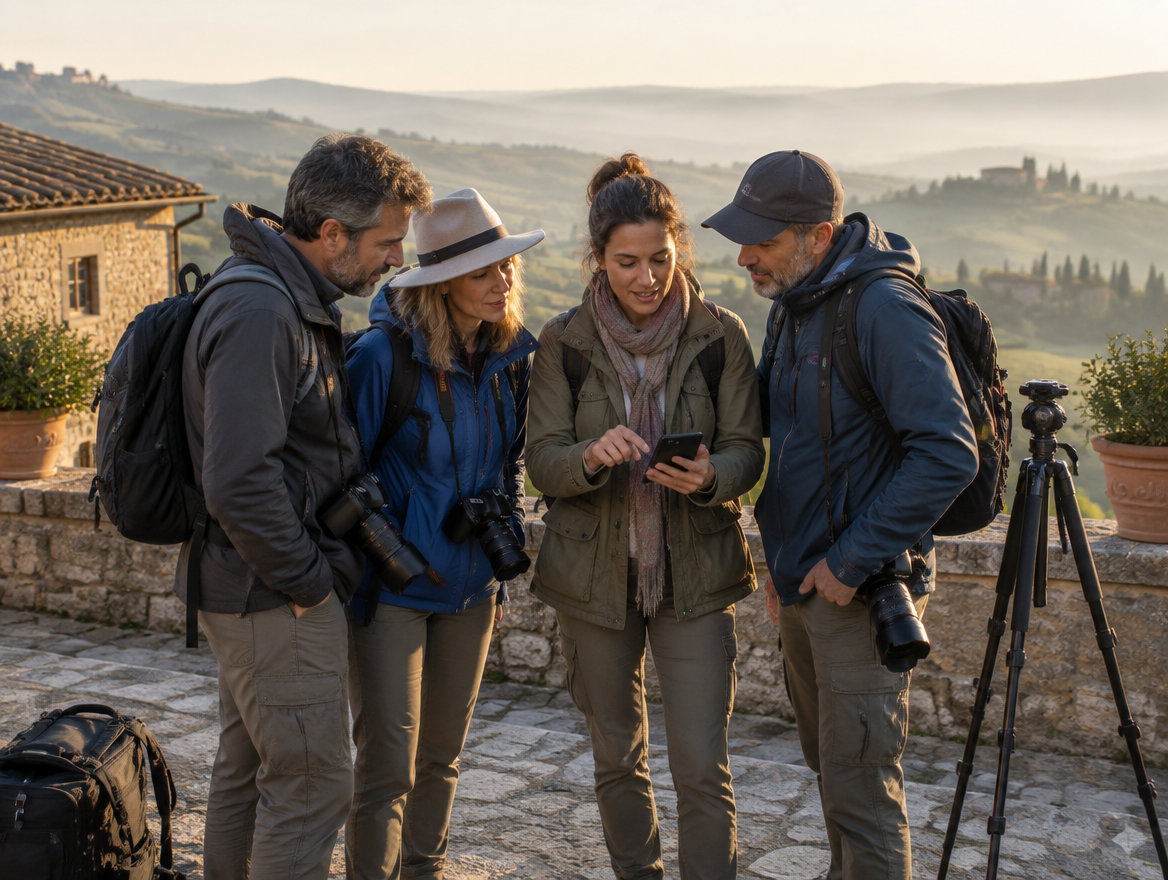
A testimonials page on an operator's own website is the single easiest piece of marketing content to curate, since the company chooses which quotes to publish and can leave out anything lukewarm. That does not make those quotes fake, but it does mean they are a filtered sample rather than a full picture. Before you book, look for reviews that live somewhere the operator does not fully control: Google Business reviews attached to the company's actual listing, TripAdvisor, or a review aggregator that shows a full star distribution rather than a hand-picked handful of quotes.
Pay attention to the number of reviews as much as the average score. A 5.0 average built from 60 reviews across several years and multiple departures tells you something real. A 5.0 average built from four reviews posted the same month tells you much less, even though both numbers look identical at a glance. Our own Val d'Orcia tour currently sits at 13 published reviews averaging 5.0, and I would rather a prospective traveler read all 13 on an external platform than take my word for it on our own site.
Question five: is the pricing actually transparent
A trustworthy operator tells you exactly what a quoted price includes and, just as importantly, what it does not, without you having to dig through fine print or email support to find out. We went through this in detail in our own breakdown of what a Tuscany photography tour actually costs, but the short version for vetting any operator, not just ours, is to ask for a written line-item list: lodging, meals, ground transport, guiding, and instruction on one side, and flights, travel insurance, gratuities, alcohol, and optional add-ons on the other. If an operator hedges on this question or only offers a single bundled number with no breakdown, ask again before you book, since that vagueness tends to show up again later in the trip in other forms.
If you are weighing whether a structured, fully guided trip is the right call for your own Tuscany plans in the first place, our Val d'Orcia photography tour is a useful benchmark to compare against, even if you end up booking with someone else. Looking at a detailed, transparent itinerary from an operator that publishes its group size, its guide credentials, and its full pricing breakdown gives you a real standard to hold other quotes against, rather than comparing vague marketing language between two or three companies at once.
Question six: what is the cancellation and deposit policy
A deposit and cancellation policy tells you a lot about how an operator treats its customers when plans change, which they sometimes do over the months between booking and departure. We cover our own policy in detail in our piece on photography tour deposits and cancellation, but as a general vetting question for any operator, ask what percentage of the trip cost the deposit represents, what the refund schedule looks like as the departure date approaches, and whether travel insurance covering trip cancellation is recommended or required. A policy that is easy to find, easy to understand, and reasonably generous is a good sign. A policy that is buried in a terms page written entirely in dense legal language, with no plain-English summary anywhere, is worth reading twice before you send a deposit.
Red flags worth walking away from
A few patterns are worth treating as genuine warning signs rather than minor quibbles. An operator that cannot or will not name the specific guide on your departure until close to travel dates, a website with reviews only in one curated testimonials section and nowhere independently verifiable, a price that changes noticeably depending on who you talk to or when you ask, or a refusal to put a cancellation policy in writing before you pay a deposit are all reasons to slow down. None of these alone is automatically disqualifying, small or newer operators sometimes have thin online review histories for entirely legitimate reasons, but two or more of these patterns together on the same company is a real signal worth taking seriously.
A related question worth asking directly is what happens to the group's shooting positions once you arrive at a location. On a well run small tour, a guide will spread guests across a viewpoint deliberately, so you are not all standing shoulder to shoulder pointing the same 24mm composition at the same cypress tree. On a poorly run large tour, thirty photographers funneling into one narrow overlook is not a hypothetical, it is a Tuesday morning in high season at some of the more famous viewpoints in Tuscany. Ask how the operator handles this in practice, not in theory, since the honest answer usually reveals a lot about how much thought has gone into the field logistics beyond just booking the bus and the hotel.
The vetting checklist at a glance
| What to ask | What a good answer sounds like |
|---|---|
| Who is the guide, specifically | A named, working photographer with a portfolio shot in that destination, named before you book |
| What is the guest to guide ratio | A specific number for your actual departure, not a marketing range |
| What is the weather contingency plan | Named backup locations or activities, and some built-in schedule flexibility |
| Where can I read independent reviews | A link to Google Business or TripAdvisor, not only the operator's own testimonials page |
| What exactly is included in the price | A written, line-item breakdown, not a single bundled number |
| What is the deposit and cancellation policy | A clear, plain-English policy available before you pay anything |
How we answer these questions ourselves
I put together this checklist to help vet any operator, not just to sell our own tour, but I would be leaving something out if I did not tell you how we answer it ourselves. Our Val d'Orcia departures run with two named professional photographer guides for a maximum of 7 participants, a ratio close to one guide for every three and a half guests. Our itinerary is built with flexibility around the light and weather rather than a fixed bus schedule, since chasing fog and golden hour in Val d'Orcia genuinely requires it. Pricing runs $4,800 to $5,000 per person, covering lodging, meals, ground transport, guiding, and structured post-processing masterclasses, with flights, travel insurance, and beverages beyond meals listed separately rather than buried in fine print. You do not have to take my word for any of that. Ask us the same six questions you would ask anyone else, and compare the answers.
Ask for a sample day, not just a sample itinerary
Nearly every operator publishes a day-by-day itinerary listing locations and meal inclusions. Far fewer will walk you through what an actual morning looks like in practice, and that is the more useful thing to ask for before you book. Ask what time the wake-up call is, how the group gets from the villa to the shooting location, how long you typically have at a single viewpoint before moving on, and what a midday break looks like on a day with two planned shoots. A specific, confident answer, for example a 5:15am wake-up, a 20 minute drive, roughly 90 minutes at the primary location with a guide rotating between guests for individual feedback, then breakfast back at the villa, tells you the operator has actually run this itinerary before and knows its rhythm cold. A vague answer like "it varies" for every question is a sign the itinerary may be more aspirational than tested.
This is also where it is worth asking specifically about post-processing support, since it is one of the more overlooked differentiators between operators. Does the guide run structured editing sessions with actual one on one image review, looking at your raw files and suggesting a specific white balance or masking approach, or is editing time left as unstructured free time with a laptop in a common room? Both models exist in this industry, and neither is wrong, but you want to know which one you are booking before the trip, not on day three when you realize the "post-processing masterclass" on the itinerary is really just quiet laptop time with no instruction attached.
Frequently asked questions about choosing an operator
Is a bigger, more established company always safer than a smaller one? Not necessarily. Size correlates loosely with track record, but a smaller operator with a strong, verifiable review history and a named, experienced guide can be a better fit than a larger company that treats guiding as a secondary role behind logistics management.
Should I book directly with the operator or through a third-party travel agent? Either can work, but if you book through a third party, confirm you still get direct answers from the operator itself to questions about the guide, the ratio, and the weather policy, rather than relayed secondhand answers that can lose detail along the way.
How far in advance should I start vetting operators? Popular departures for well reviewed operators sell out months ahead of the trip itself, so start asking these questions as soon as you are seriously considering a destination and season, not after you have already narrowed it down to a single company.
What if an operator has no independent reviews at all yet? That is more common with newer companies and is not automatically disqualifying, but it does shift more weight onto the other questions on this list, especially the guide's individual portfolio and how specifically they answer your weather and pricing questions in writing.
Is it reasonable to ask an operator for references from past travelers? Yes, and a confident operator will not hesitate to connect you with a recent traveler willing to talk about their experience. Hesitation on a direct, reasonable request like this one is useful information.
So how do you actually decide
If two operators are quoting you similar prices for a similar destination, the six questions above are what actually separate them in practice, not the quality of their homepage photography. Ask who is guiding you by name, ask for the real guest to guide ratio on your departure, ask what happens if the weather does not cooperate, find reviews the company did not hand-pick, get the pricing broken down in writing, and read the cancellation policy before you pay anything. An operator that answers all six clearly is one worth trusting with a week of your travel time and your camera gear. If you want to see how we answer every one of these questions for our own Val d'Orcia departures, our full Tuscany Photography Guide is the natural next stop.