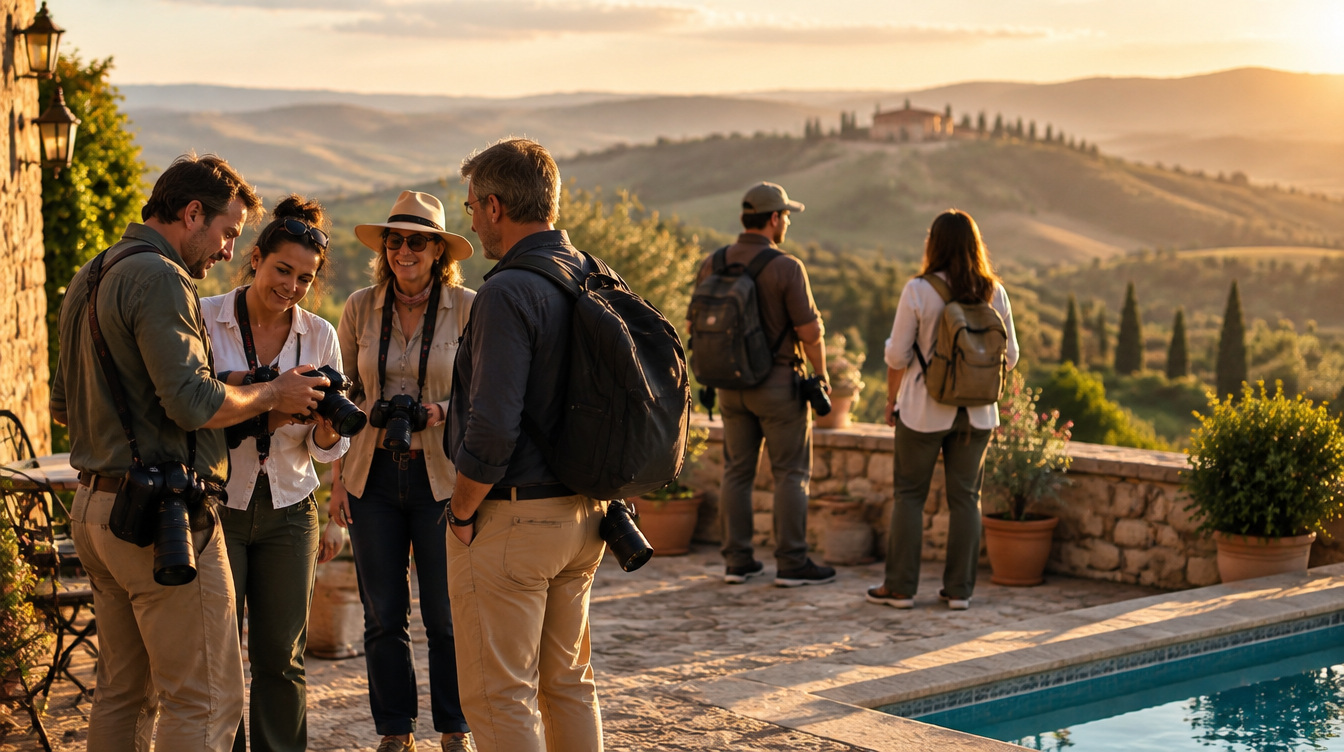
Photography Tour vs DIY Trip: A Real Cost and Time Comparison for Tuscany
A side by side look at what it actually costs, in both dollars and planning hours, to plan a Val d'Orcia photography trip yourself versus booking a guided tour.
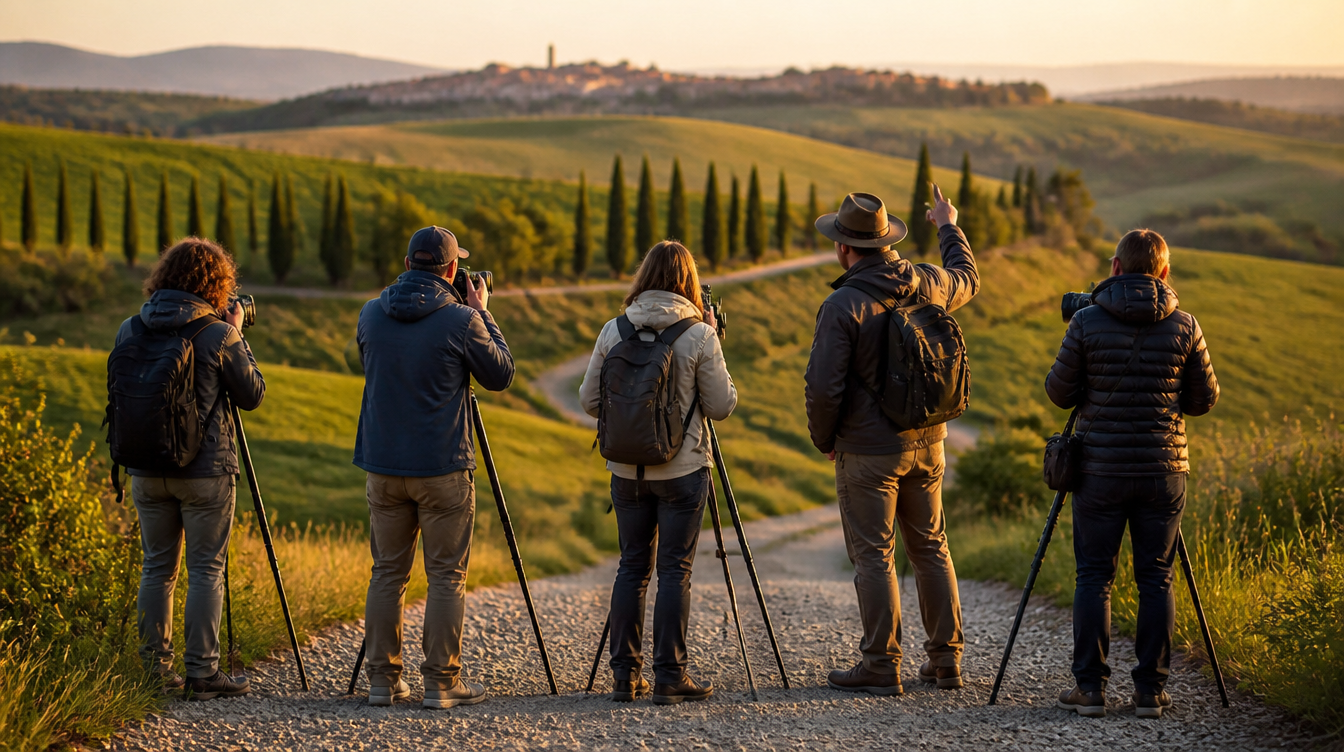
Photography Tour vs DIY Trip: A Real Cost and Time Comparison for Tuscany
I get some version of this question almost every week: "Could I just do this myself for less money?" It is a completely fair thing to ask, and I would ask it too if I were sitting on the other side of the booking page. So instead of giving you the marketing answer, I sat down and actually ran the numbers, both the dollar numbers and the hour numbers, for a real Val d'Orcia trip planned two ways. One version is booking our guided photography tour. The other is doing what a resourceful, reasonably tech savvy photographer would do on their own: renting a car, booking lodging, scouting locations from blog posts and satellite maps, and hoping the fog cooperates on the one morning you have free for it.
I am not going to pretend this is a neutral comparison written by someone with no stake in the outcome. I run photography tours for a living, so take that as a disclosed bias up front. What I can promise is that every number below is a real number, not a number picked to make the guided trip look good, and I will call out plainly where the DIY route wins, because it genuinely does win on some things.
This is the natural follow up to a question I answered in a previous breakdown of what a Tuscany photography tour actually costs. That piece focused on the dollar side. This one adds the piece that budget spreadsheets always miss: time, and the specific kind of time that a camera cannot get back once it is gone, like a fog window that only lasts twenty minutes.
Key Takeaways
A DIY Tuscany photography trip and a guided one can land within a few hundred dollars of each other once you price everything honestly, but the real gap shows up in planning hours and in the shots you either get or miss.
| Point | Details |
|---|---|
| DIY dollar cost | Roughly $3,200 to $4,400 per person for a comparable 7 day trip once you add lodging, a rental car, fuel, tolls, and a couple of paid local guiding days |
| Guided tour dollar cost | $4,800 to $5,000 per person, all-in except flights, insurance, and beverages beyond meals |
| DIY planning time | 25 to 40 hours of research, route planning, and location scouting before you ever board a flight, based on the trips I have watched readers plan |
| The real DIY risk | Missing the narrow weather windows that make Val d'Orcia photographs special, since fog, storm light, and golden hour clarity are unpredictable and unforgiving of a fixed itinerary |
| What money cannot buy back | A missed fog morning or a wasted midday session cannot be refunded or rescheduled once your week in Italy is over |
Table of Contents
- The question behind the question
- The DIY route: what it actually costs in dollars
- The planning hours nobody puts on the budget
- The guided tour cost, as a comparison point
- Side by side: the real numbers
- The risk that money cannot buy back
- What the DIY route genuinely gets right
- The gear and technique you need either way
- A realistic week, either way
- Frequently asked questions
- So which one should you actually book
The question behind the question
When someone asks whether they should just plan a Tuscany trip themselves instead of booking a tour, what they are usually really asking is one of two different questions, and they matter for very different reasons. Some people are asking "can I afford this," which is a dollars question with a fairly clean answer once you do the math. Others are asking "will I actually get the photographs I am imagining," which is a much harder question involving weather, timing, local access, and whether you know that a particular cypress lined road looks completely different depending on whether the sun is behind you or off to your left at 6:40am. I want to answer both, separately, because conflating them is where most DIY vs guided comparisons online go wrong.
The DIY route: what it actually costs in dollars
Let's build a realistic DIY budget for a 7 day, 6 night solo or small group trip to Val d'Orcia, using real, checkable price ranges rather than a rounded guess. Lodging in a countryside agriturismo with reasonable comfort during shoulder season commonly runs $120 to $220 per night, which puts six nights somewhere between $720 and $1,320. A rental car with the insurance coverage you actually want, given that you will be on narrow, unmarked farm roads at dawn, typically runs $300 to $500 for the week, and you should budget another $150 to $250 for fuel and autostrada tolls if you are covering ground between regions.
Food for a week, eating a mix of trattorias and grocery store breakfasts rather than tourist restaurants every meal, realistically lands around $50 to $70 per person per day, or $350 to $500 for the week. If you want any local expertise at all, which I would strongly recommend for at least a couple of mornings given how location specific the best compositions in this region are, hiring a private local photography guide for two or three days runs $300 to $600 per day, adding another $600 to $1,800 depending on how much guiding you book. Add it up and a reasonably comfortable DIY week, with a bit of local guiding mixed in, lands somewhere between $3,200 and $4,400 per person before flights.
Pro Tip: If you are pricing a DIY trip, build in at least one paid local guiding day even if you skip guiding for the rest of the week. A single morning with someone who already knows where the fog pools in October is often worth more than three extra days of unguided scouting.
The planning hours nobody puts on the budget
Here is the part that almost never makes it into a DIY cost comparison: the time you spend planning before you ever get on the plane. Based on watching readers work through this, a genuinely well planned Val d'Orcia trip takes somewhere between 25 and 40 hours of research. That includes reading location guides, cross referencing sunrise and sunset times against specific villages, figuring out which roads are actually drivable versus which ones only look passable on a satellite map, checking whether a particular field you saw on social media is private farmland that requires permission to enter, and building a day by day route that does not have you driving 45 minutes between two locations you wanted to shoot at the same golden hour.
None of those hours are wasted exactly, but they are hours, and if you value your own time at even a modest hourly rate, 30 hours of planning is a real cost that belongs in the comparison even though no invoice ever shows up for it. A guide who has run this exact region for years has already absorbed that cost once and amortized it across every group they lead, which is a meaningful part of what you are actually paying for on a tour, beyond just having someone drive the van.
The guided tour cost, as a comparison point
Our own Val d'Orcia tour currently runs $4,800 to $5,000 per person for 7 days and 6 nights, capped at 7 participants with two professional photographer guides, in a high level hotel or agriturismo with full amenities including pool and spa access. That price bundles lodging, all meals, ground transport by van between locations, structured instruction in composition, lighting, and editing, and built in image reviews. It does not include flights, travel insurance, the $30 wine tasting add-on, or personal spending, which I walked through in more detail in the full cost breakdown if you want the line item version. Departure dates and current pricing shift over time, so it is worth checking the tour page directly rather than relying on numbers from an old blog post, ours included.
Side by side: the real numbers
Putting both routes next to each other makes the actual gap clearer than either number on its own. The dollar difference is smaller than most people assume going in, and the planning time difference is larger.
| Factor | DIY trip | Guided tour |
|---|---|---|
| Total dollar cost, 7 days | $3,200 to $4,400 per person | $4,800 to $5,000 per person |
| Planning hours before departure | 25 to 40 hours | Under 1 hour (booking and prep) |
| Local knowledge of fog and light timing | Learned in real time, by trial and error | Built into the itinerary from day one |
| Flexibility to change plans same-day | Total, if you are willing to improvise alone | High, guides adjust the group's plan around weather |
| Risk of missing a key weather window | Meaningful, since you are learning the region live | Low, guides watch forecasts and reposition the group |
| In-field technical feedback on your shots | None, unless you pay for a local guide | Daily, from two working photographers |
The risk that money cannot buy back
This is the section I think matters most, and it is the one that a pure spreadsheet comparison cannot capture. Val d'Orcia's most photographed conditions, the valley fog that pools below the hilltop towns on autumn mornings, the specific 15 minute stretch of golden hour where the light rakes across the hills without yet blowing out your highlights, the rare but real chance of snow dusting the cypress trees in winter, are all narrow and unforgiving windows. If you are on your own and you guess wrong about which morning to drive to which viewpoint, that window is simply gone. You do not get a refund on it, and your flight home does not get delayed to give you another try.
On a guided trip, the itinerary is built to bend around exactly this problem. If the forecast shows a strong temperature inversion overnight, a good guide reshuffles the next morning's plan to get the group to a hilltop viewpoint above the fog line before sunrise, something I cover in more depth in a piece on workshop versus self guided photography in Tuscany if you want the fuller version of this argument. That flexibility, not the van or the villa, is arguably the single biggest thing a DIY trip cannot replicate without years of local experience.
If getting the shot matters more to you than the process of planning the trip yourself, this is exactly the gap our Val d'Orcia photography tour is built to close. Two guides watch the weather and the light for you every single day of the week, which means your seven days in Italy are not gambled against a forecast you are reading for the first time from a hotel room with spotty WiFi.
What the DIY route genuinely gets right
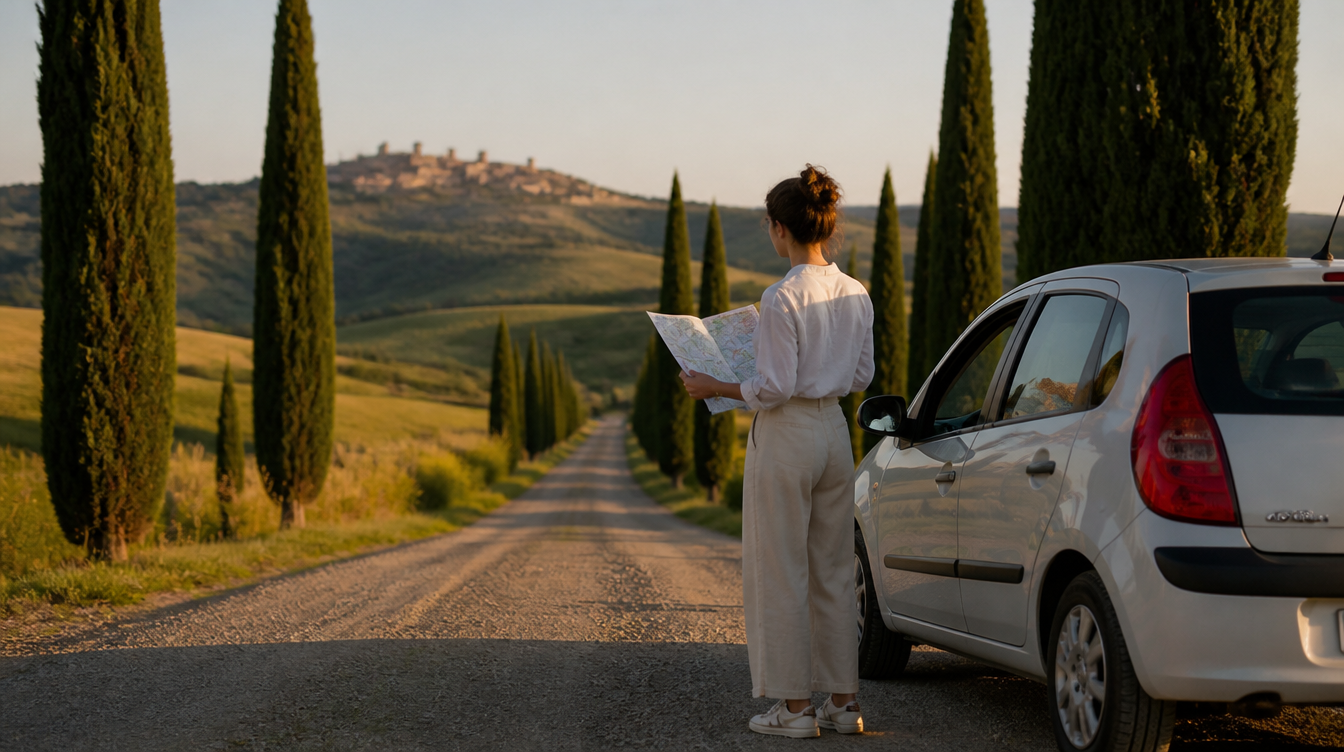
I want to be fair here, because the DIY route is not just a worse version of a guided trip. If you already know how to drive in rural Italy, you have shot enough landscapes to trust your own instincts on composition, and what you actually want out of the trip is total control over your schedule, including the freedom to sit in one spot for three hours waiting on a single cloud formation, a guided group is genuinely not the right structure for you. A tour moves as a group, on a schedule that has to work for seven people, and that is a real trade-off against the total freedom of planning your own days.
DIY also wins outright if your budget is meaningfully below the $3,200 floor above, since you can strip out the paid local guiding days and a chunk of the lodging comfort and get a workable trip for closer to $2,000 to $2,500, accepting more risk on timing and access in exchange. If you have driven in Italy before, if a rental car and manual transmission do not intimidate you, and if you enjoy the planning process itself as part of the trip rather than a chore to avoid, doing it yourself is a completely legitimate choice, and I would not try to talk you out of it.
The gear and technique you need either way
Whichever route you pick, the actual photography does not change, so it is worth being concrete about what gear and settings matter for this specific landscape, since that part of the cost and prep is identical on both sides. A wide zoom in the 16 to 35mm range covers most of the classic rolling hill compositions, while a mid telephoto around 70 to 200mm is what actually compresses a row of cypress trees against a hazy background hill, which is the shot most people are picturing when they imagine Tuscany. Bring both if you can, because relying on one lens for the whole trip means missing half the compositions the region offers.
On filters, a circular polarizer earns its place in your bag every single day here, cutting the summer haze and deepening the sky without the artificial look of heavy saturation pushed in post. A 2 or 3 stop graduated ND helps balance a bright sky against darker foreground hills at sunrise, and a solid 6 stop ND is worth carrying if you plan to shoot the thermal water reflections at Bagno Vignoni or want to smooth clouds moving over the hills during the day. For settings, I shoot most hillside landscapes at f/8 to f/11 for enough depth of field to keep a foreground row of vines sharp along with the background village, with the camera on a tripod and a 2 second timer or remote release to avoid shake, especially in the low light of blue hour before the sun clears the horizon.
A sturdy travel tripod is not optional if you want sharp low light shots at dawn, and a spare battery or two matters more than people expect, since cold mornings and a lot of live view use drain a mirrorless battery faster than you would guess. None of this changes whether you book a tour or go it alone. What changes is whether someone experienced is standing next to you when you are deciding between f/8 and f/11 on a specific hillside at 6:20am, correcting a habit before it costs you a week of similar mistakes rather than after.
A realistic week, either way
On the DIY side, a realistic week looks like arriving a day early to adjust for jet lag and pick up the rental car, then spending the first full day scouting rather than shooting, because you genuinely do not know the roads yet. The middle days become a mix of driving, checking weather apps against your planned locations, and inevitably discarding at least one planned shoot because the light or the fog did not cooperate and you had no backup plan for that specific morning. The last day or two usually goes smoother as you finally understand the geography, which is exactly the point where the trip is ending.
On the guided side, that entire learning curve is front loaded into the itinerary before you ever land, and each morning starts already knowing where the group needs to be based on the forecast, with a fallback location built in if conditions change. You lose the ability to linger somewhere for an extra two hours on a whim, but you gain every one of those days being used at something close to its full potential rather than half of them being spent figuring out where you are.
Frequently asked questions
Is it actually cheaper to do Tuscany yourself? Usually, by a few hundred to about fifteen hundred dollars, depending on how much comfort and local guiding you build into the DIY version. The gap narrows a lot once you add even a couple of paid guiding days to the DIY budget.
How much planning time should I actually budget? Plan on 25 to 40 hours if you want a trip that does not waste days figuring out logistics on the ground. That includes route planning, checking access rules for specific fields and roads, and building a realistic day by day schedule around sunrise and sunset times.
Can I mix the two, like a few guided days and a few solo days? Some travelers do exactly this, hiring a private local guide for two or three key mornings and exploring solo the rest of the week. It costs more than a pure DIY trip but less than a full guided tour, and it is worth asking a local operator whether they offer partial guiding days.
Does a rental car make sense for a DIY trip? Almost always yes, since public transport between the small hilltop towns in Val d'Orcia is limited and does not run at the pre-dawn hours you need for golden hour and fog shoots.
What is the single biggest mistake people make planning this trip themselves? Underestimating driving time between locations and overestimating how flexible their schedule will feel once jet lag and unfamiliar roads are part of the picture. Build in more buffer than feels necessary on paper.
So which one should you actually book
If you strip away the marketing on both sides, this comes down to what you are actually optimizing for. If your priority is total schedule freedom and you are comfortable accepting more risk on timing and access in exchange for a lower dollar cost, the DIY route is a completely reasonable choice, and the numbers above should give you a realistic budget to plan against rather than a guess. If your priority is maximizing the odds that you come home with the photographs you actually pictured before the trip, and you would rather spend your vacation days shooting than researching, the guided route closes a gap that is genuinely hard to close on your own, no matter how much time you put into planning. Either way, go in with real numbers instead of a hopeful estimate, and you will end up happier with whichever version of the trip you choose.