Iceland Winter Photography: The Complete Guide to Aurora, Ice, and Light
What makes Iceland's winter light different, the aurora and how to plan around it, the handful of locations every itinerary builds around, and the gear and driving realities unique to this season.
Iceland Winter Photography: The Complete Guide to Aurora, Ice, and Light
I have stood on the black sand at Reynisfjara at eleven in the morning in full, usable daylight, then watched that same light slide into blue dusk by three in the afternoon. I have laid flat on a frozen beach outside Hofn waiting for a faint green smear to resolve into an aurora arc, and I have white knuckled a rental van through a wind alert on Route 1 because I did not check the forecast closely enough that morning. Iceland in winter rewards photographers in a way almost no other season or country can match, and it punishes a lack of planning just as efficiently.
This guide is the overview for a whole cluster of articles we are publishing on Iceland in winter: the light that makes it different, the aurora and how to actually plan around it rather than just hope for it, the handful of locations every serious itinerary builds around, the driving realities that catch first time visitors off guard, and the gear choices that matter when temperatures drop. Treat this as the map. The deeper dives on each location and technique are coming, and we will link to them here as they go live.
Key Takeaways
Iceland in winter is a different photography trip than Iceland in summer: shorter days, a longer and lower golden hour, real aurora chances, and driving conditions that demand more respect and more buffer time.
| Point | Details |
|---|---|
| Shortest daylight | Under 5 hours in Reykjavik between December 2 and January 10, climbing back to about 7 hours by the end of January |
| Winter sunshine totals | Reykjavik averages 22.6 hours of sunshine in January versus 189.5 hours in June |
| Aurora season | Roughly September through April, whenever skies are dark and clear enough, with the Kp index as the forecasting tool to watch |
| Core location shortlist | Reykjanes, Snaefellsnes and Kirkjufell, the south coast waterfalls, the Vestrahorn and Jokulsarlon area, and Vik with its sea stacks |
| One location to treat with caution | Reynisfjara's sea caves, after a partial collapse and an active safety closure system |
| Realistic trip length | Longer than you would plan for summer, since short days and variable roads both slow down how much ground you cover |
Table of Contents
- Why Iceland in winter is a different photography trip
- The light: short days, long golden hour, and dark nights
- The aurora: when, where, and how to plan around it
- The locations every winter itinerary builds around
- Winter driving realities every photographer needs to know
- Gear and technique essentials for winter
- How this guide fits together
- Frequently asked questions about photographing Iceland in winter
- Plan your Iceland winter photography trip
Why Iceland in winter is a different photography trip
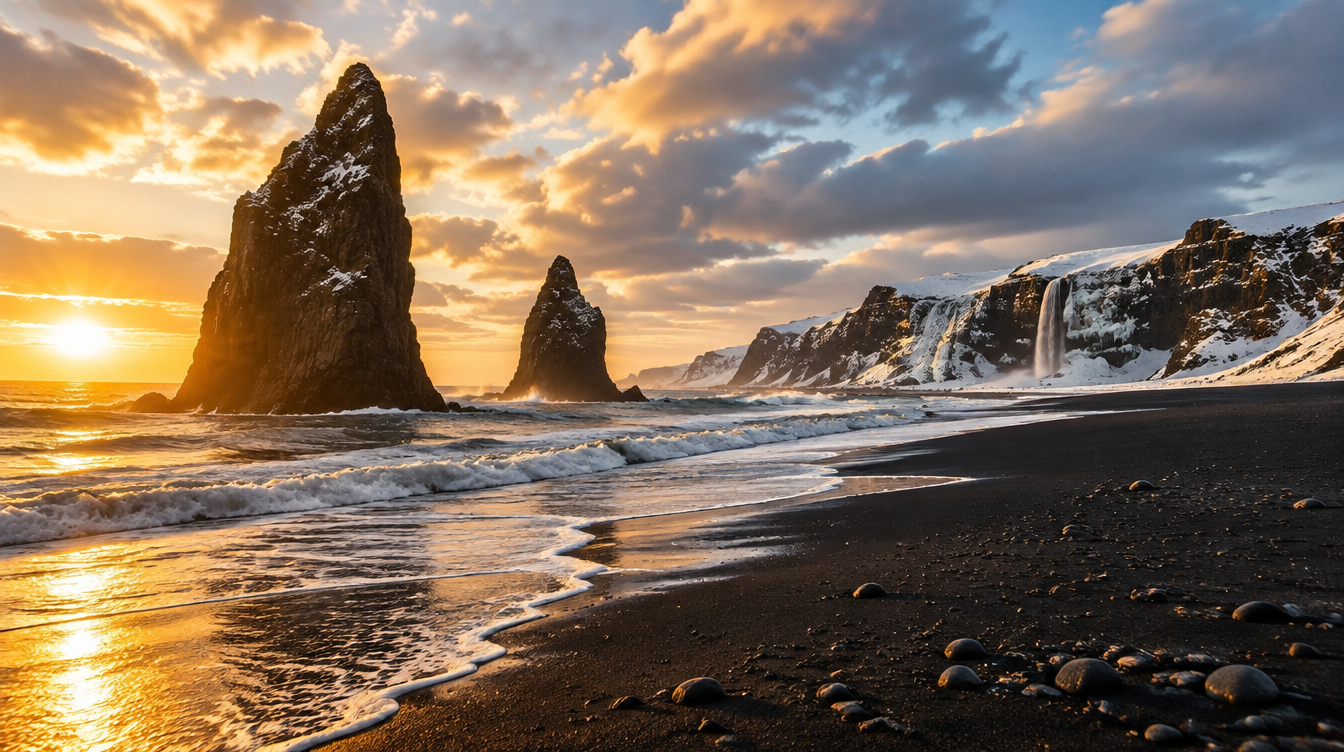
Most of what gets written about photographing Iceland is written for summer, when the Ring Road is fully open, the midnight sun means you barely need to sleep, and every waterfall is running at full volume. Winter flips all of that. The sun stays low enough in the sky that what would be a brief golden hour in most places becomes a long, slow burn of warm light that can last most of a short day. Nights are genuinely dark, which is the one condition every aurora photograph actually requires. And the landscape itself changes character: waterfalls partially freeze, black sand beaches collect ice chunks the size of boulders, and moss covered lava fields pick up a dusting of frost that summer never shows you.
The tradeoff is real. You get fewer hours of usable light per day, roads that can close with little warning, and a narrower margin for error if you are not used to driving in genuine winter conditions. None of that makes winter a worse time to visit. It makes it a trip that rewards planning the way summer never forces you to.
The light: short days, long golden hour, and dark nights
The single biggest adjustment for a winter trip is simply how little daylight there is, and how that daylight behaves. In Reykjavik, day length drops below 5 hours between December 2 and January 10, with the sun climbing only a few degrees above the horizon even at midday, according to climate data compiled on Wikipedia's Reykjavik entry. That same source puts the city's average sunshine total at 22.6 hours for the entire month of January, compared with 189.5 hours in June. By the end of January, daylight has already climbed back up to around 7 hours, and it keeps expanding quickly through February and March.
Here is the part most visitors do not expect: because the sun never climbs very high, almost the entire short day has the warm, low, directional quality that photographers everywhere else only get for twenty or thirty minutes around sunrise and sunset. We cover exactly why that happens, and how it compares to a completely different kind of golden hour, in Mastering Golden Hour Photography in Iceland, and in a direct side by side with another WeShoot destination in Golden Hour in Tuscany vs Iceland. The short version: you are not racing a clock the way you would in most places. You are working inside a long, low, soft light window that can realistically run for several hours around midday in deep winter.
Pro Tip: Do not treat a short winter day as a handicap. Plan your shot list around the fact that the light stays flattering for hours, not minutes, and you can move slowly between two or three locations in a single session instead of sprinting for one brief sunset window.
The other side of short days is long, genuinely dark nights, which is the one ingredient every aurora photograph needs and that summer simply cannot offer, since Reykjavik has close to permanent daylight from late May to late July.
The aurora: when, where, and how to plan around it
The northern lights happen because of activity on the sun, not because of anything happening in Iceland's sky itself. Solar storms send charged particles toward Earth, and when those particles get trapped in Earth's magnetic field, they travel down the field lines near the poles and collide with gases in the atmosphere. Oxygen produces the green and red you see most often, and nitrogen produces the rarer blues and purples, according to NASA's explainer on what causes an aurora. Iceland's latitude puts it inside the band where that collision regularly becomes visible from the ground, which is the entire reason this is a winter photography destination in the first place.
Forecasters at NOAA track geomagnetic activity using the Kp index, a scale from 0 to 9 built from the largest three hour swings in Earth's magnetic field, measured by ground based magnetometers. A related G-scale translates that into plain visibility guidance, and NOAA notes that stronger storms, in the G-4 to G-5 range, can push aurora visibility as far south as the mid latitudes of the United States, while much lower activity is already enough at Iceland's latitude. NOAA also points out that local weather, light pollution, and moon phase all matter as much as the geomagnetic number itself, and that March and September tend to bring stronger auroras, with the best viewing window usually falling around midnight.
Iceland makes this easier than almost anywhere else to plan around, because the Icelandic Meteorological Office publishes its own combined aurora and cloud cover forecast. The tool shows expected auroral activity at midnight on a 0 to 9 scale next to a map where clear patches show up white and cloud cover shows up green, according to the Icelandic Meteorological Office's aurora forecast page. In practice, that means the bottleneck for seeing the aurora is almost never your camera. It is finding a night where the activity number and the clear sky patch line up over wherever you happen to be standing.
We go deep on the actual settings, composition choices, and forecasting workflow in Northern Lights Photography: Settings and Forecasts, so this guide will only say the minimum here: you want a wide aperture, a shutter speed slow enough to gather light but fast enough to keep the aurora's shape, manual focus locked on a distant point of light, and a dark enough sky to begin with. That last point is where light pollution comes in, and we cover how to judge a truly dark sky, including the Bortle scale astronomers use to rate it, in Light Pollution, the Bortle Scale, and Dark Skies.
The locations every winter itinerary builds around
Iceland has dozens of photogenic spots, but a small number of locations show up on almost every serious winter itinerary, including our own. Here is the shortlist, roughly in the order a west to southeast loop out of Keflavik would hit them.
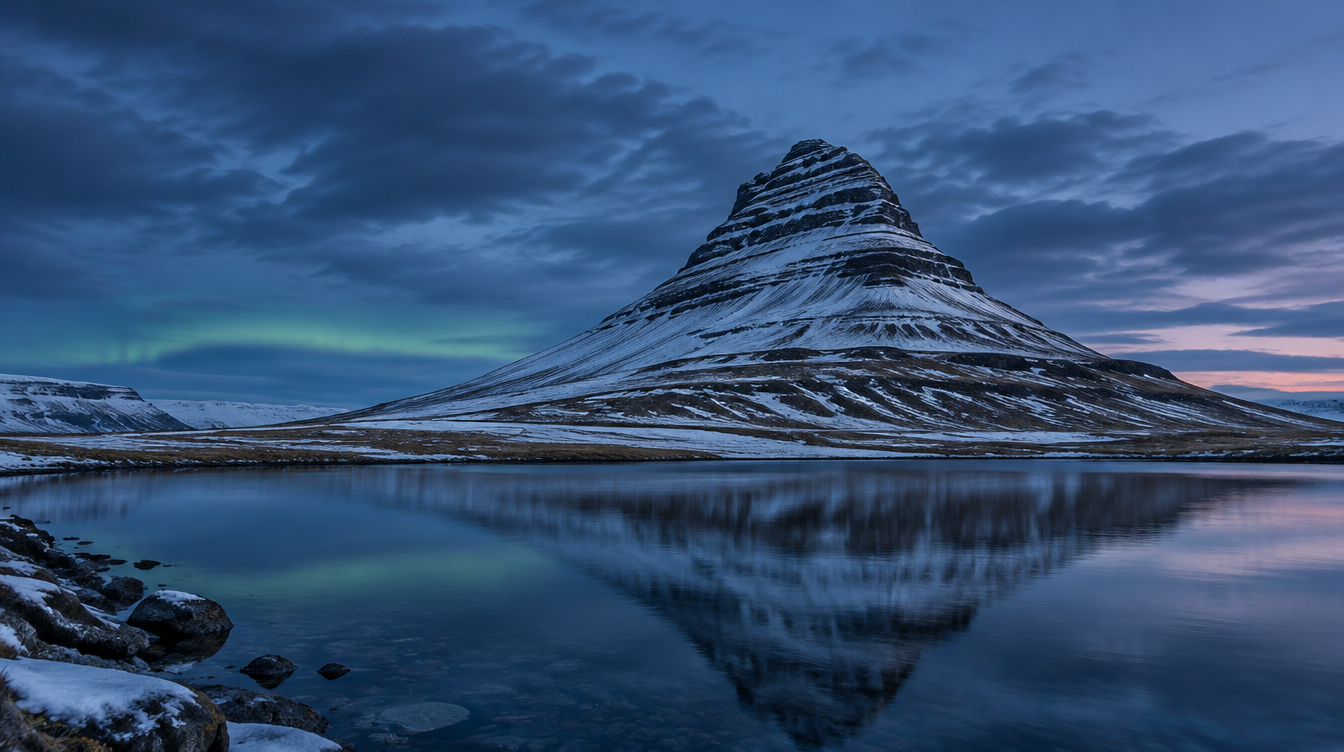
The Reykjanes Peninsula, close to the airport, is an easy first or last stop with geothermal landscapes and quiet spots like Kleifarvatn lake and the Gardur lighthouse for an easy warm up shoot before or after the main loop. From there, most itineraries head to the Snaefellsnes Peninsula, home to Kirkjufell, a 463 meter peak on the peninsula's north coast that is widely described as the most photographed mountain in the country, according to Wikipedia's entry on Kirkjufell, which also notes its turn as a filming location for Game of Thrones. The wider peninsula, including Arnarstapi, Hellnar, and the Londrangar sea cliffs, is a good proxy for what the Icelandic coastline looks like without the crowds of the south.
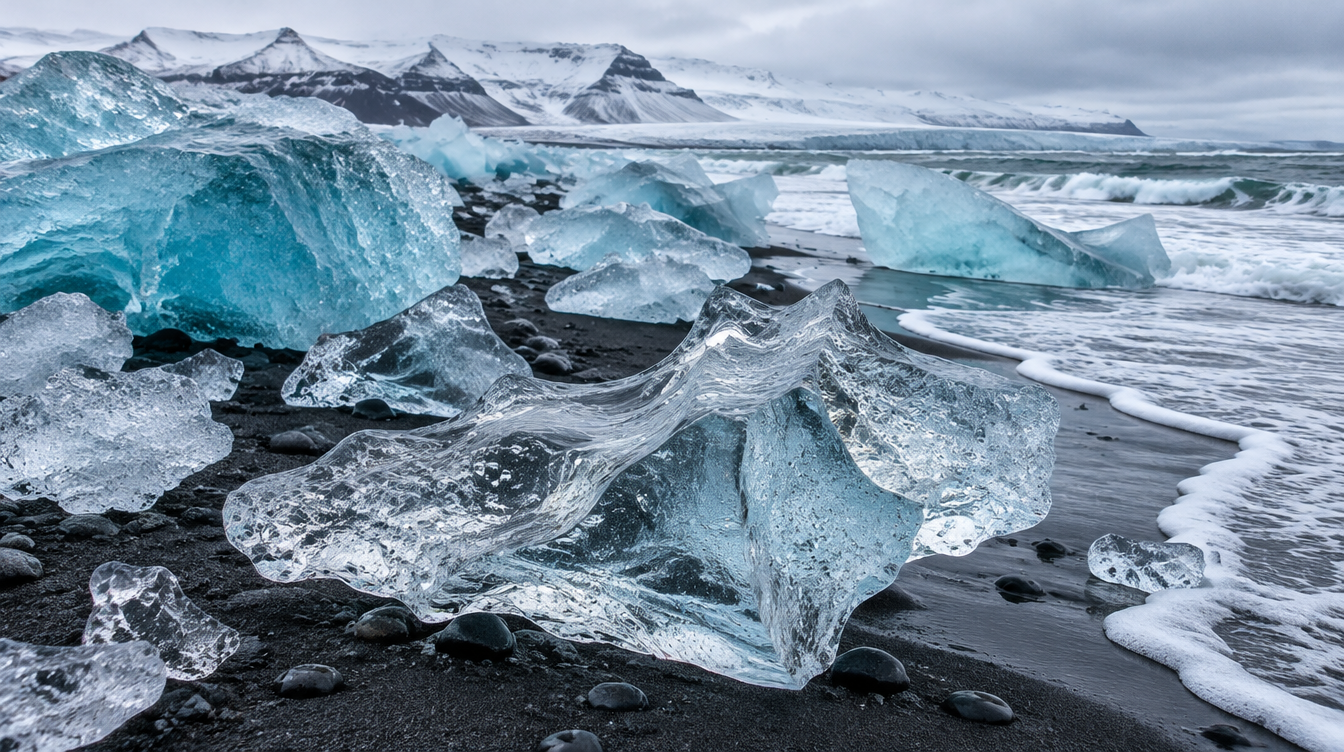
The south coast brings the classic waterfall run, Seljalandsfoss and Skogafoss among them, both around 60 meters tall and both close enough to the Ring Road to shoot without major detours. Further east, the Vestrahorn mountain on the Stokksnes headland near Hofn is one of the most dramatic foregrounds in the country, paired often with Fjallsarlon, a quieter glacier lagoon just before you reach the famous one. That famous one is Jokulsarlon, which formed only in the mid 1930s as the Breidamerkurjokull glacier tongue retreated and has roughly quadrupled in size since the 1970s, now covering around 25 square kilometers and reaching a maximum depth of 284 meters, which makes it Iceland's deepest lake, according to Wikipedia's entry on Jokulsarlon. Icebergs that calve off the lagoon wash up across the road on the black sand of Diamond Beach, which takes its popular name from exactly that. Both sit inside Vatnajokull National Park, which covers about 14 percent of Iceland and was inscribed as a UNESCO World Heritage Site in 2019 under the name "Vatnajokull National Park, dynamic nature of fire and ice," according to Wikipedia's entry on the park.
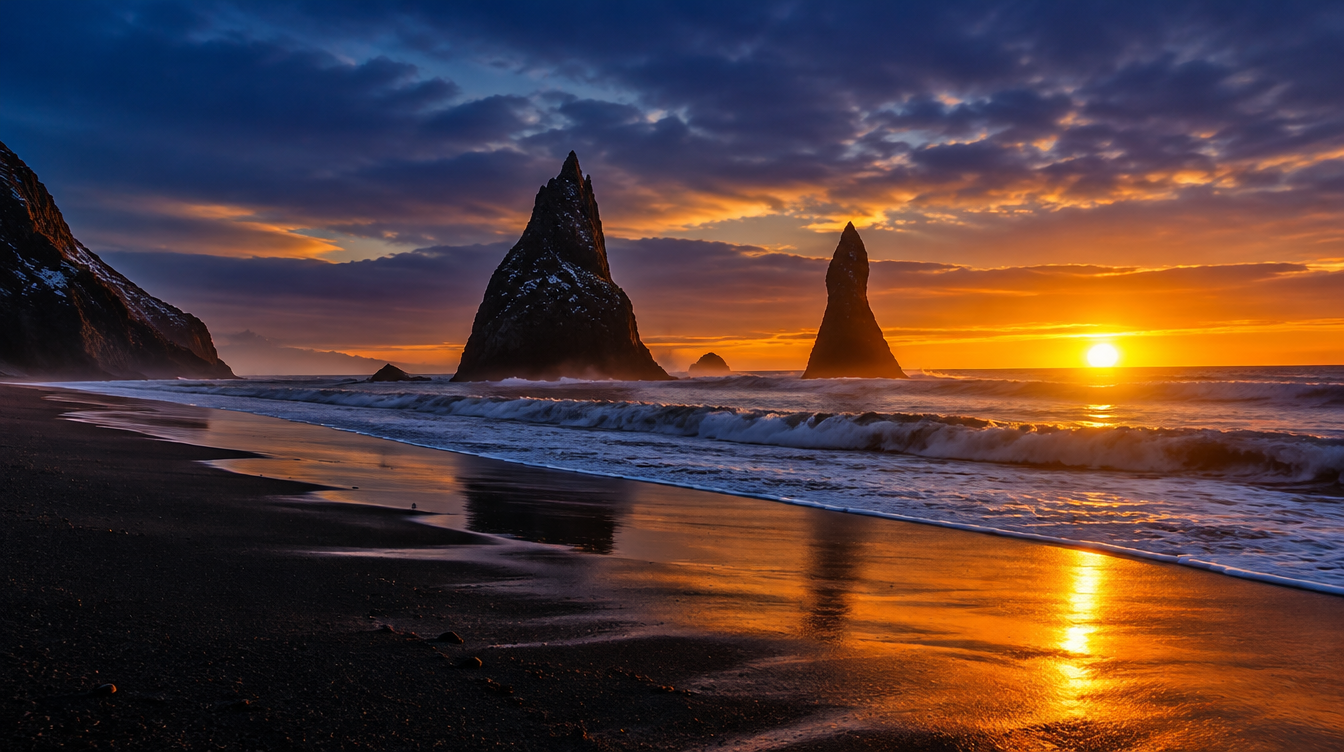
Finally, most loops end near Vik, Iceland's southernmost village and the regional hub for a wide stretch of coastline, close to Dyrholaey's sea arch and the Reynisdrangar sea stacks just offshore from Reynisfjara's black sand beach. This is the one location on this list that deserves a direct caution rather than just a description. In February 2026, part of Reynisfjara's basalt sea cave columns collapsed after weeks of strong waves and erosion, and the site now runs an active, condition dependent closure system for the cave and column area during severe weather warnings, following a string of serious incidents at the beach over the years, including a death at the cave in August 2025, according to Wikipedia's entry on Reynisfjara. The sneaker waves there are not a photography inconvenience. They are a genuine hazard, and the cave may simply not look the way it does in older photographs you have seen. Check current conditions before you plan a shot there, and never turn your back on the water.
| Location | Known for | Winter consideration |
|---|---|---|
| Kleifarvatn and Gardur, Reykjanes | Geothermal ground, a quiet lighthouse | Easy first or last stop near the airport |
| Kirkjufell, Snaefellsnes | Iceland's most photographed mountain | Can hold snow on its slopes for extra contrast |
| Seljalandsfoss and Skogafoss | Classic south coast waterfalls | Spray freezes onto walkways and railings; footing needs care |
| Vestrahorn, Stokksnes | A dramatic mountain foreground near Hofn | Exposed and often windy; check conditions before shooting |
| Jokulsarlon and Diamond Beach | Glacier lagoon and icebergs on black sand | Iceberg shapes change constantly; no two visits look the same |
| Reynisfjara, near Vik | Black sand beach and sea stacks | Active safety closures around the collapsed sea cave; sneaker waves are a real hazard |
This location list is not an abstract suggestion. It is close to the actual route our Iceland Winter Aurora photo tour follows over its 7 days and 7 nights, starting from the Reykjanes Peninsula, moving through Snaefellsnes and Kirkjufell, down the south coast waterfalls, out to Vestrahorn and the glacier lagoons, and finishing with Vik and the sea stacks, with one of our guides reading the forecast and the conditions at each stop rather than sticking to a fixed plan regardless of weather. If following this itinerary on your own sounds like a lot to coordinate in short winter daylight, that coordination is most of what a guided departure is actually buying you.
Winter driving realities every photographer needs to know
Almost every one of the locations above sits along or just off the Ring Road, and almost every winter itinerary is built around driving between them. That driving looks nothing like a summer road trip. Highland routes and many unpaved side tracks close for the season entirely, main roads can ice over without much warning, and a forecast that looks fine in the morning can shift by the time you reach your next stop. A sturdy, winter capable vehicle and a cautious pace are not optional extras here, they are the baseline, and building real buffer time into each day matters more in winter than in any other season.
The practical effect for a photographer is that you should plan to cover noticeably less ground per day than a summer itinerary would suggest, and treat any posted weather or road warning as a hard stop rather than a suggestion, even if it costs you a shot. A future article in this cluster will go deeper into specific road and vehicle guidance. For now, the safest planning assumption is that winter logistics in Iceland take longer than you expect, and that is exactly the kind of friction a guided trip is designed to absorb for you.
Pro Tip: Build at least one unplanned buffer day into any winter Iceland itinerary, whether you are driving yourself or on a guided departure. The best aurora or ice cave conditions rarely arrive on schedule, and a trip with zero slack cannot take advantage of them when they do.
Gear and technique essentials for winter
Winter in Iceland does not require an entirely different camera bag, but it does change how you use what you already have. Batteries drain faster in the cold, so carry spares and keep them warm against your body between shots rather than in an outer pocket. Moving a cold camera into a warm car or room invites condensation, so let gear acclimatize gradually inside a bag before you open it up. A sturdy tripod matters even more than usual, since both blue hour long exposures and any aurora shot depend on the camera staying completely still, and a lightweight travel tripod that is fine in summer can struggle in coastal wind. Snow and ice also trick your camera's metering toward underexposure, so dial in some positive exposure compensation and check your histogram rather than trusting the preview screen alone.
For the deeper technical side, general composition, exposure, and the gear that matters across any landscape scenario, our Landscape Photography: The Complete Guide to Light, Gear, and Technique covers the fundamentals this pillar does not repeat. Think of that guide as the technique foundation, and this one as the Iceland specific layer on top of it, including how Iceland's cold weather and extreme light range change equipment choices compared with a destination like Tuscany, which we cover directly in What a Photographer Packs Differently for Tuscany vs Iceland.
How this guide fits together
This article is the overview for an entire batch of Iceland winter content we are building out over the coming weeks: dedicated deep dives on each major location above, the specific gear and clothing that earns its place in a winter camera bag, the post-processing choices that suit Iceland's cooler color palette, and the practical planning questions, from flight routing to how many days to budget, that come up before anyone actually books a trip. As each article goes live, it will link back here, and this guide will keep pointing you to the right deep dive for whatever you are trying to plan next.
Frequently asked questions about photographing Iceland in winter
How many hours of daylight does Iceland get in winter? Around the depth of winter, day length in Reykjavik drops below 5 hours between December 2 and January 10. By the end of January it climbs back to roughly 7 hours, and it keeps expanding quickly from there through February and March.
What is the best month to photograph the northern lights in Iceland? Aurora season runs roughly from September through April, whenever the sky is dark and clear enough, with NOAA noting that March and September tend to bring stronger geomagnetic activity. Rather than fixing on one single month, plan around a multi night window and check the aurora and cloud cover forecast once you are close to your travel dates.
Is it safe to photograph at Reynisfjara in winter? Treat it with real respect. The beach has a documented history of dangerous sneaker waves, part of its basalt sea cave collapsed in February 2026 after storm erosion, and the site now closes the cave and column area during severe weather warnings. Check current conditions before you plan a shot there, and keep a safe distance from the water at all times.
Do I need special camera settings for the northern lights? Yes, but they are a short list: a wide aperture, a shutter speed that balances gathering enough light against keeping the aurora's shape, manual focus, and a genuinely dark sky to begin with. Our dedicated Northern Lights Photography: Settings and Forecasts article walks through the full workflow.
How cold does it actually get, and what should I pack? Coastal Iceland in winter is milder than its name suggests, but wind chill is the real factor outdoors for hours at a time. Layered, wicking base layers under an insulating mid layer and a waterproof, windproof shell, plus insulated waterproof boots, cover most of what you need, alongside spare camera batteries kept warm and close to your body.
Can I see the northern lights from Reykjavik, or do I need to leave the city? Getting away from city light pollution meaningfully improves contrast and your odds of seeing a fainter aurora. See Light Pollution, the Bortle Scale, and Dark Skies for how to judge a genuinely dark sky before you commit to a shooting spot.
Plan your Iceland winter photography trip
If everything above sounds like a lot to coordinate around short daylight, shifting weather, and roads you may not have driven in winter conditions before, that is exactly the gap a guided trip is built to close. Our Iceland Winter Aurora photo tour runs 7 days and 7 nights with a maximum of 10 participants and one professional photographer guide per departure, so you are never shooting in a crowd. It covers carefully selected lodging, all ground transportation and airport transfers from Keflavik, professional coaching, image review sessions, and a post-processing workshop built into the itinerary, with breakfasts and 5 dinners included. Pricing currently runs 4,500 dollars per person with a 30 percent deposit, and the itinerary follows almost exactly the location shortlist covered above, from Reykjanes through Snaefellsnes, the south coast waterfalls, Vestrahorn and the glacier lagoons, to Vik and the sea stacks on the final days. Departure dates and prices shift, so check the tour page directly for the current schedule before booking.
Sources
- Wikipedia: Reykjavik, daylight and sunshine-hour climate data
- NASA Space Place: what causes an aurora
- NOAA/NCEI: how science predicts the aurora, the Kp index and G-scale
- Icelandic Meteorological Office: aurora and cloud cover forecast
- Wikipedia: Vatnajokull National Park, size and UNESCO status
- Wikipedia: Jokulsarlon glacier lagoon
- Wikipedia: Kirkjufell mountain
- Wikipedia: Reynisfjara, safety history and 2026 sea cave collapse
Explore the Full Iceland Winter Photography Series
This guide is the overview. Each article below goes deep on one Icelandic location, technique, or planning question, with the light and logistics specific to shooting there in winter.
Light and Season
- When Is the Best Time to Photograph Iceland? A Season by Season Guide
- How Short Are Iceland's Winter Days? Planning Your Shoot Windows Around the Light
Locations
- Jökulsárlón and Diamond Beach: Photographing Iceland's Glacier Lagoon
- Seljalandsfoss and Skógafoss: Shooting Iceland's Most Photographed Waterfalls Differently
- Vestrahorn and Stokksnes: Iceland's Moodiest Mountain
- Kirkjufell Without the Cliché: How to Shoot Iceland's Most Photographed Mountain