How Short Are Iceland's Winter Days? Planning Your Shoot Windows Around the Light
Iceland's winter days can drop under five hours around the solstice. Here is exactly how short they get, why the light still works in your favor, and how to build a shot list around it.
How Short Are Iceland's Winter Days? Planning Your Shoot Windows Around the Light
The first time I led a group into Iceland in December, one of my photographers asked me, completely seriously, whether we would even have enough daylight to shoot anything. It is a fair question. Reykjavik's day length drops to under five hours for about five weeks around the winter solstice, roughly from December 2 to January 10, and the sun during that stretch barely drags itself three degrees above the horizon before it starts sinking again, according to climate data for Reykjavik. If you are used to planning a shoot around a normal sunrise and sunset eight or nine hours apart, that number sounds like a dealbreaker.
It is not. It is a different kind of day, and once you understand what is actually happening with the light up there, a short Icelandic winter day turns from a limitation into one of the best arguments for going in winter at all. This guide breaks down exactly how short the days get, why they compress the way they do, and most importantly, how to build a shot list that works with that window instead of fighting it.
Key Takeaways
Iceland's winter days are genuinely short, but the light they contain is unusually long and unusually good if you plan around it rather than against it.
| Point | Details |
|---|---|
| Shortest window | Under 5 hours of daylight between roughly December 2 and January 10 |
| Sun's maximum height | Only about 3 degrees above the horizon at the darkest point of the year |
| Recovery speed | Daylight climbs back to around 7 hours by the end of January |
| Does Iceland go fully dark | No. The mainland sits just south of the Arctic Circle, so true 24 hour polar night never happens there |
| Why this matters for shooting | Low sun angles stretch golden hour and blue hour far longer than they last at lower latitudes |
| Practical shot list rule | Plan 1 to 3 real stops per day, not a packed itinerary built for summer daylight |
Table of Contents
- Just how short is "short"? The real numbers for December and January
- Why Iceland's days compress like this
- The good news: one long golden hour, not six short ones
- Build your shot list around the window, not the clock
- What a compressed day actually looks like
- Don't fight the short days, plan around driving time too
- Frequently asked questions about Iceland's winter daylight
- Plan the trip around the light
- Sources
- Recommended
Just how short is "short"? The real numbers for December and January
Let's start with the number that scares people off, then put it in context. Reykjavik's day length falls below five hours for roughly five weeks centered on the winter solstice, from about December 2 through January 10, and during that window the sun climbs only about three degrees above the horizon at its highest point, per Reykjavik's climate data. That is not a typo. For about a month and a half, the sun in Iceland behaves less like a normal daytime sun and more like a very long, very low sunset that happens to also count as noon.
The good news is that this is the floor, not the average for the whole season. Daylight comes back fast once the solstice passes. By the end of January, you are already back up to around seven hours of daylight, which is two to three hours more than the December low in about six weeks, according to the same source. If your trip falls in late January or February rather than the dead of December, you are working with a noticeably longer window already.
One distinction trips up a lot of people planning a winter Iceland trip: daylight hours and sunshine hours are not the same measurement. Day length is simply how long the sun sits above the horizon, whether or not clouds are in the way. Sunshine hours are a meteorological measurement of how many of those hours actually saw direct sun through the clouds, and in Iceland the two numbers diverge a lot, with January averaging about 22.6 hours of recorded sunshine for the entire month and December averaging about 12.6 hours, again per Reykjavik's official climate normals. December is Iceland's cloudiest month, which is a separate problem from the short days, and one you plan for with patience and backup locations rather than a calendar.
Why Iceland's days compress like this
The short version, without turning this into an astronomy lecture: Reykjavik sits at roughly 64 degrees north, and while that sounds like deep Arctic territory, Iceland's mainland actually lies entirely south of the Arctic Circle, which only clips the small offshore island of Grimsey, according to the geography entry for Iceland. At the winter solstice, Earth's axial tilt points the northern hemisphere away from the sun more steeply than at any other point in the year, which is why the solstice produces the shortest day everywhere north of the equator, not because Earth is farther from the sun, but purely because of that tilt, as NASA's explanation of the solstice lays out. The closer you are to the pole, the more dramatic that effect gets, and Iceland is close enough to feel it hard without being close enough to lose the sun entirely.
That last part matters more than people think. True polar night, the kind where the sun never rises at all, only happens inside the polar circles themselves, roughly above 66.5 degrees latitude, where you can get anywhere from 24 hours of darkness right up to 179 days of it at the poles, according to the entry on polar night. Iceland's mainland sits just south of that line, which is exactly why you still get a real, if brief, daylight window every single day of the year, even at the solstice. You are not shooting in darkness. You are shooting in a very compressed, very low version of daytime.
It is also worth knowing that Iceland's winters are milder than its latitude alone would suggest, because the Gulf Stream keeps its coasts largely ice free through the cold months, per the same geography and climate overview. That does not mean the weather is gentle. The Icelandic Meteorological Office's own review of 2025 noted that December was Iceland's third warmest on record nationwide, yet January still brought a Reykjavik low of minus 10.9 Celsius on New Year's Day and minus 21.7 Celsius inland at Vidalur on January 9, with more snow covered days than average across the month, according to the Icelandic Met Office's 2025 weather summary. Mild by Icelandic standards can still mean genuinely cold and volatile by anyone else's.
Pro Tip: Bring spare camera batteries and keep them in an inside jacket pocket, not your camera bag. Cold drains lithium batteries fast, and a battery that reads half charged at the hotel can die completely within twenty minutes of shooting at minus 10 Celsius on a black sand beach.
The good news: one long golden hour, not six short ones
Here is the part that actually changes how you should feel about all this. The same low sun angle that compresses the day also stretches out golden hour and blue hour dramatically. Twilight duration depends on latitude and season specifically because sunrise and sunset happen at a more oblique angle to the horizon the farther you get from the equator, and a more oblique angle means the sun takes longer to fully clear or drop below that horizon, according to the explanation of how twilight duration works. At temperate latitudes, golden hour might give you thirty or forty minutes of usable warm light. In Iceland in December, that low, raking light can last for an hour or more on either side of what counts as "midday," because the sun is never climbing steeply overhead in the first place. For most of a short Icelandic winter day, you are effectively shooting inside an extended golden hour rather than racing to catch the edges of one.
This is also the single biggest reason winter trades well against the obvious alternative of visiting in the bright, long days of an Icelandic summer. If you have already read our companion piece on when to visit Iceland for photography, you know the broad seasonal trade-offs. This article is the zoomed in version for anyone who has already chosen winter and wants to know exactly what they are working with, hour by hour.
Build your shot list around the window, not the clock
The mistake almost every first time winter visitor makes is building an itinerary the way they would for a summer trip, where eighteen hours of daylight forgives a packed schedule and a slow start. In December, that plan collapses by lunchtime. The fix is simple to state and genuinely useful once you commit to it: pick two or three locations you actually care about per day, not five or six, and build the whole day's schedule around getting to each one at the right point in that short light window rather than squeezing in "one more stop" on the way.
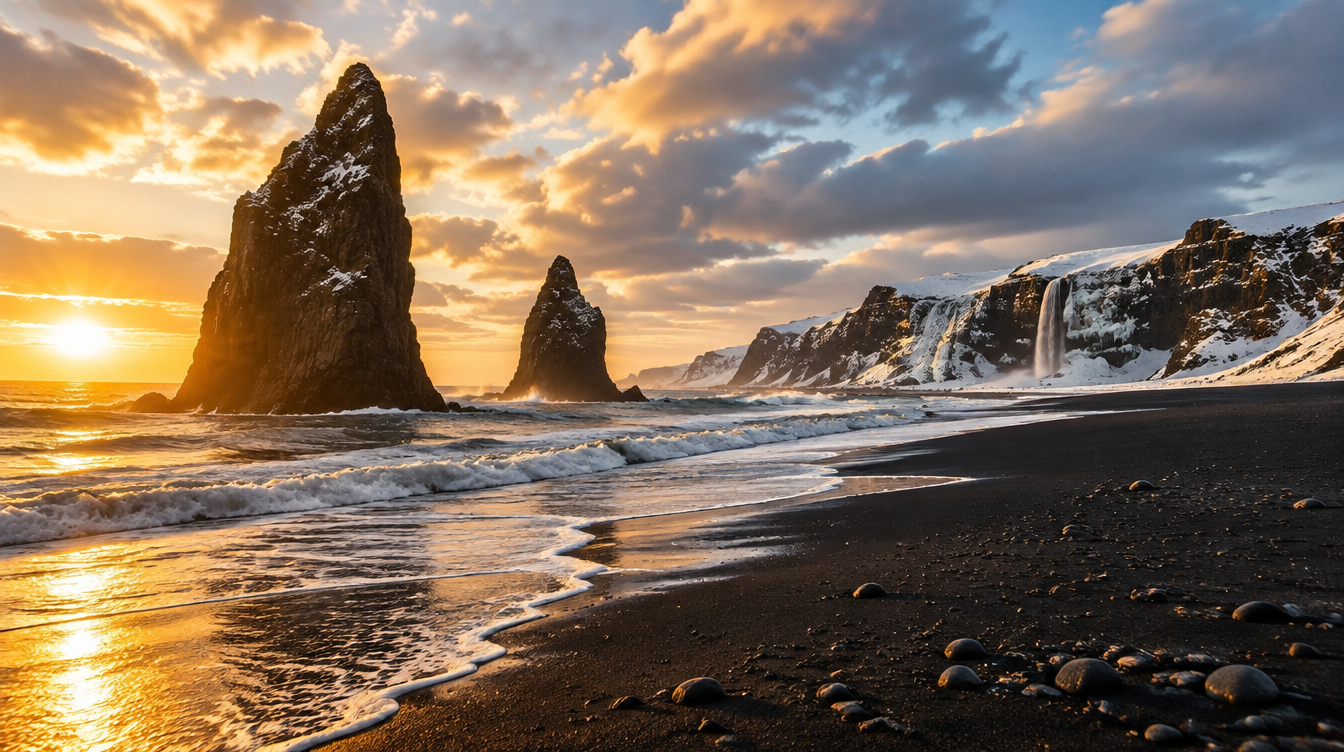
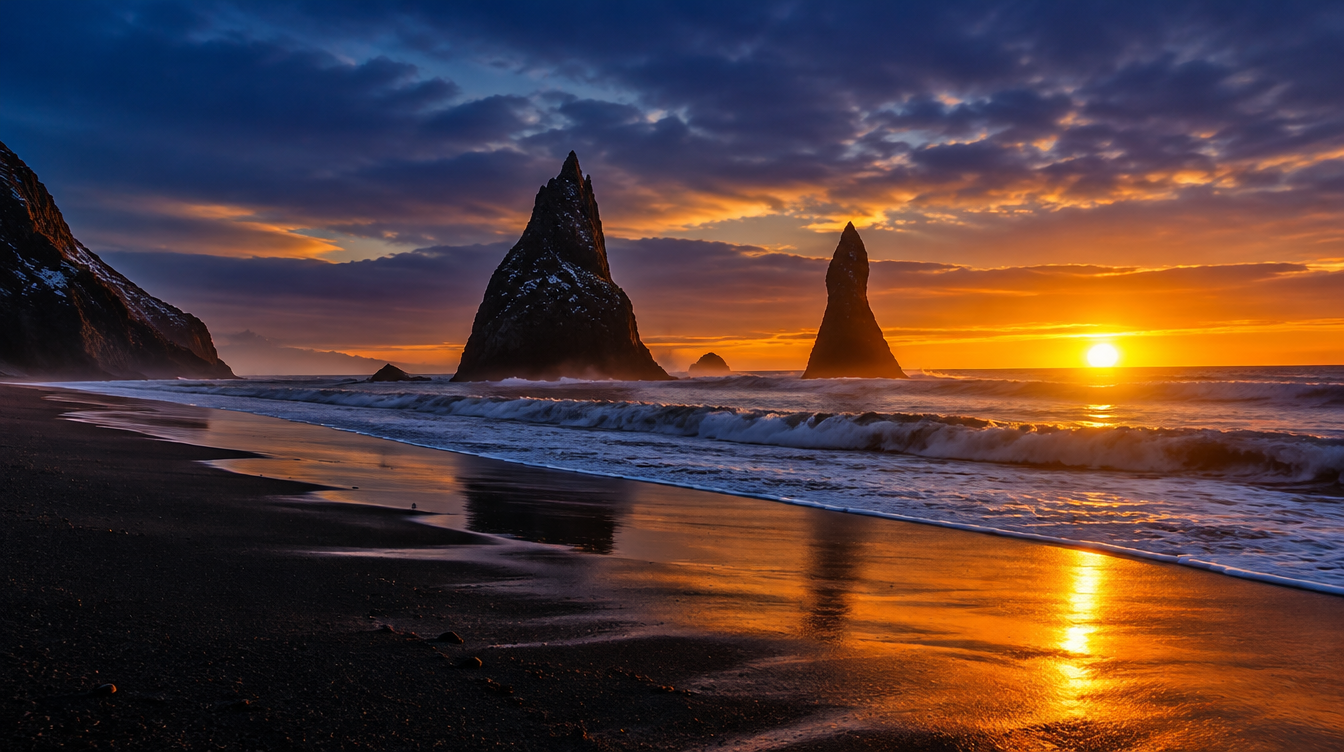
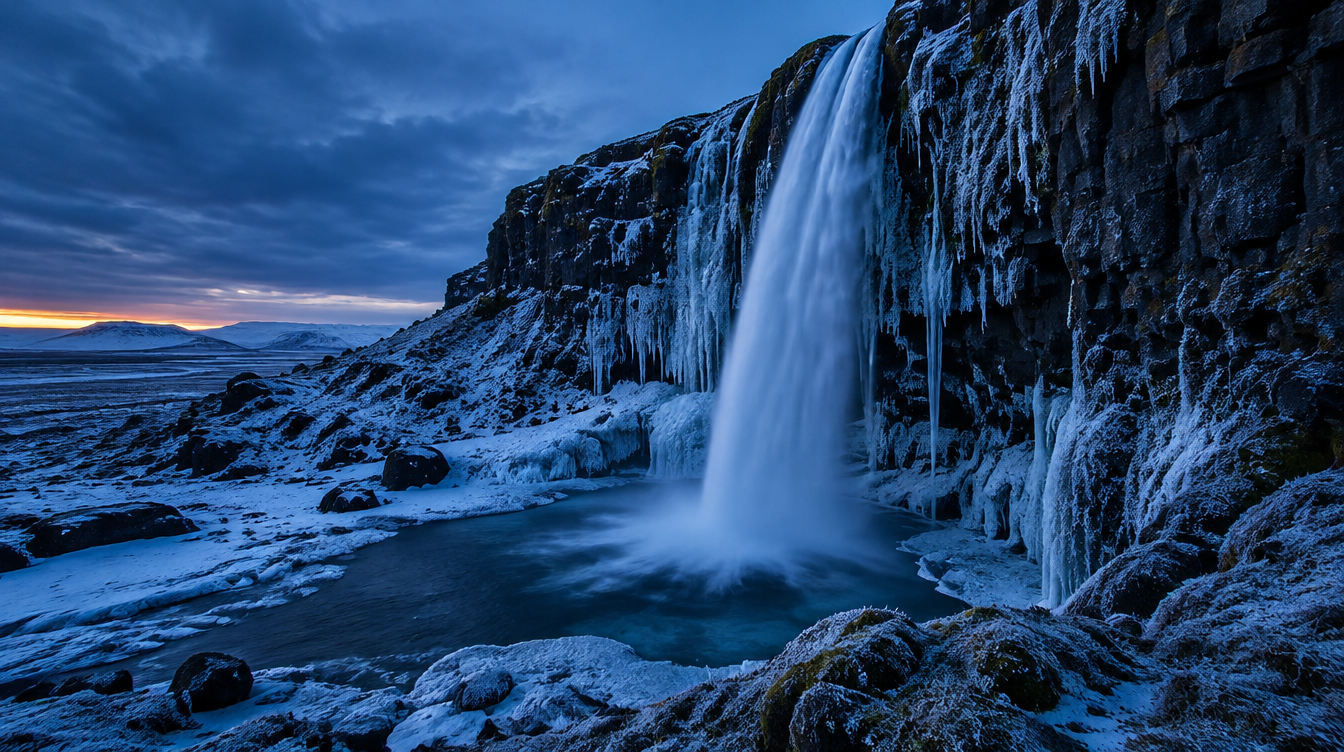
Think in terms of anchor points instead of a checklist. A location that works at the very start of the light, when the sun is barely up and the color is strongest, is a different choice than one that works best with an hour or two of that same low sun on it, which is different again from a true sunset stop. On WeShoot's Iceland Winter Aurora itinerary, each day is effectively built this way already: a cluster like Seljalandsfoss, Skogafoss, and Kvernufoss waterfalls works as one tight, walkable sequence inside a single short window, while a stop like Jokulsarlon glacier lagoon or Reynisfjara's black sand beach and sea stacks is treated as its own dedicated block rather than something you squeeze in on the way to somewhere else.
If you are planning your own route, apply the same logic to your own list. Rank your must-shoot locations, then ask honestly how many of them can actually sit inside the real daylight window for that date, including driving time, not the daylight window you wish you had. Anything that does not fit becomes tomorrow's plan, or the reason for choosing a different season or a longer trip instead of trying to force six locations into a five hour window.
What a compressed day actually looks like
Numbers are easier to plan around once you see them laid out against an actual day. Take December 21, the winter solstice itself, as the extreme case. Sunrise in Reykjavik lands around 11:20 in the morning and sunset around 15:30 in the afternoon, roughly matching the sub five hour window described earlier, with the sun never climbing more than a few degrees off the horizon the entire time. Here is how a single location shoot can actually fit around that.
| Time block | What's happening | Why it matters |
|---|---|---|
| 09:30 to 11:00 | Drive to location in pre-dawn twilight, set up gear | Civil twilight starts well before sunrise, so there is already usable light for scouting and setup |
| 11:00 to 12:30 | Sunrise through the first stretch of low sun | This is your primary shooting block; the low angle keeps warm color going far longer than a normal sunrise |
| 12:30 to 14:00 | Midday "high sun," still low and soft | Treat this as a second shooting block rather than downtime, since the sun never gets harsh overhead the way it does elsewhere |
| 14:00 to 15:45 | Sunset and extended blue hour | Plan your final composition before the light fades, then stay another 20 to 30 minutes for blue hour, which lasts noticeably longer here than at lower latitudes |
| 16:00 onward | Full dark, transit or aurora watch | With roughly 18 hours of night ahead, this is when a long drive, dinner, or an aurora check makes sense |
Notice that this schedule does not treat midday as a dead zone. Because the sun never gets high enough to flatten out and harden the light the way it would in Tuscany or most of the continental United States at noon, the entire short day functions as one long, continuously useful shooting window rather than two short bookends around a wasted middle.
Pro Tip: Scout your composition during the earlier, flatter part of the light rather than waiting for peak color to decide where to stand. With only a few hours total, you do not get a second attempt at finding your spot once the best light actually arrives.
Don't fight the short days, plan around driving time too
Short daylight is only half of the winter planning problem. The other half is that Iceland's roads get harder to predict exactly when you have the least spare time to absorb a delay. The Ring Road itself runs about 1,332 kilometers around the island and is largely single lane in places, and many of Iceland's roads become genuinely challenging to navigate in winter once snow or ice sets in, according to the overview of Iceland's geography and infrastructure. A drive that takes ninety minutes on a dry September afternoon can easily take two and a half hours in January, and that difference eats directly into a daylight window that was already thin.
This is exactly the problem a guided itinerary is built to remove. On a trip like WeShoot's Iceland Winter Aurora tour, all ground transportation and airport transfers are included and handled by someone who drives these roads through every winter, which means the itinerary's daily shot list is built around realistic winter travel times from the start rather than a best case summer estimate. The seven day, seven night trip caps at ten participants with one professional photographer guide leading each departure, so the daily plan is genuinely built around getting the group to the right place at the right point in that short window, not around cramming in extra stops for the sake of a longer brochure. If you are the kind of photographer who would rather spend your limited daylight shooting than recalculating drive times on the fly, that is the entire value proposition of going with a fixed, professionally guided schedule instead of self-driving the Ring Road in December.
Frequently asked questions about Iceland's winter daylight
What is the shortest day in Iceland, and how much daylight does it have? The shortest days cluster around the December 21 winter solstice. Reykjavik's day length runs under five hours for roughly five weeks, from about December 2 to January 10, with the sun peaking only about three degrees above the horizon.
Does Iceland get 24 hours of darkness in winter, like the high Arctic does? No. Iceland's mainland sits just south of the Arctic Circle, so it keeps a short but real daylight window even at the solstice. True round the clock polar night only happens inside the polar circle itself, well north of where Iceland sits.
How quickly does daylight come back after the solstice? Quickly. By the end of January, Reykjavik is already back up to around seven hours of daylight, roughly two to three hours more than the December low, in about six weeks.
Can you realistically shoot a full day's worth of stops within winter daylight? You can shoot one to three well chosen stops in a day, not a long multi-location itinerary built for summer light. The combination of a short window and slower winter driving means fewer, better planned stops consistently beat a packed list.
Is winter even worth it for landscape photography, given how little daylight there is? Most photographers who have shot it would say yes. You trade quantity of light for quality of light: the low sun angle stretches golden hour and blue hour across much more of the available day, the long nights open up aurora photography, and winter adds ice and snow scenes that simply do not exist the rest of the year.
Is "daylight hours" the same thing as "sunshine hours"? No. Day length is just how long the sun sits above the horizon, regardless of clouds. Sunshine hours measure how many of those hours actually saw direct sun through the clouds, and Reykjavik's December average of around 12.6 recorded sunshine hours for the whole month is much lower than its day length total, because December is also Iceland's cloudiest month.
Do you need a headlamp if the days are this short? Yes, mainly for working hands-free in the dark, changing lenses, swapping batteries, or walking safely off a trail, not for driving, since your car's headlights handle that. Pack one alongside warm layers and ice grips for your boots.
Why not just self-drive the whole trip and chase the light yourself? Self-driving in winter adds exactly the variable a short day cannot absorb: icy, sometimes single lane roads and travel times that run longer than you expect. A fixed, guided itinerary with included ground transportation removes that risk and lets the day be planned entirely around where the light will actually be.
Plan the trip around the light
Once you stop thinking of a five hour Icelandic winter day as "not enough time" and start thinking of it as one long, continuously useful golden hour, the whole planning problem flips. You are not trying to cram summer ambitions into a winter window. You are working inside a different kind of day, one built around fewer, better stops and light that stays flattering for far longer than it would anywhere closer to the equator. For the seasonal context behind this, our guide to photographing Iceland in winter is the right next stop, and it ties this article's hour by hour planning back into the bigger picture of where and when to shoot across the whole season.
Sources
- Reykjavik: Wikipedia entry with climate data on day length and sunshine hour normals
- Iceland: Wikipedia entry on latitude, Arctic Circle position, climate, and infrastructure
- Polar night: Wikipedia entry on where and when true 24 hour winter darkness occurs
- Twilight: Wikipedia entry on how latitude affects twilight duration
- NASA: explanation of the winter solstice and Earth's axial tilt
- Icelandic Meteorological Office: 2025 weather summary for Iceland