What a Photographer Packs Differently for Tuscany vs Iceland
A companion piece to our golden hour comparison, this time on the gear itself: which lenses, filters, clothing, and battery habits actually change between a warm Tuscany photography trip and a cold Iceland one.
What a Photographer Packs Differently for Tuscany vs Iceland
A few years ago I made the mistake of packing for a Tuscany trip almost exactly the way I had packed for Iceland six months earlier. Same rain shell, same pile of spare batteries, same six stop ND filter I had leaned on so heavily at Icelandic waterfalls. I got to Val d'Orcia and realized within about a day that half of what I had carried across an ocean was dead weight, and worse, I had left a couple of things at home that I needed every single evening. That trip is the reason I now keep two completely separate packing lists instead of one "landscape photography kit" that supposedly covers everything.
Tuscany and Iceland are both regular WeShoot destinations, and photographers who have booked or are considering both understandably assume the gear question is basically solved once you own a good tripod and a solid lens or two. It is not quite that simple. The climate, the light, the terrain, and even how far you walk from the car each differ enough that a kit optimized for one destination will actively work against you at the other. This is a practical, gear focused companion to our piece comparing golden hour in the two places, and it goes deeper into what actually goes in the bag, the camera body settings you will lean on, and the one difference that catches almost every first time visitor off guard: batteries.
Key Takeaways
Tuscany and Iceland reward almost opposite gear priorities, and packing for one the way you packed for the other is the most common mistake photographers make when they book both trips.
| Point | Details |
|---|---|
| Lens priority | Tuscany rewards a mid telephoto around 70 to 200mm for compressing hills; Iceland rewards a wide angle around 16 to 24mm for dramatic foregrounds |
| Filter priority | Tuscany's must have filter is a circular polarizer for haze and saturation; Iceland's is a solid or graduated ND for long exposures and bright skies |
| Battery behavior | Cold Icelandic temperatures can cut battery life by a third or more; Tuscany's mild climate rarely affects battery performance at all |
| Clothing focus | Tuscany needs layers for early morning cold that burns off by mid morning; Iceland needs genuine waterproofing and wind resistance all day, every day |
| Tripod demands | A mid weight tripod is fine for Tuscany's calm hilltops; Iceland's coastal wind calls for a heavier, lower profile setup |
| What overlaps | A weather sealed body, a sturdy tripod head, spare cards, and a rain cover earn their place in both kits without modification |
Table of Contents
- The short version
- Why the two climates demand different kits
- Camera bodies and lenses: warm vs cold
- Filters that actually matter in each climate
- Clothing and layers that affect how you shoot
- Battery management: the biggest difference of all
- Tripod and support gear
- Bag and carry considerations
- Side by side packing comparison
- What actually overlaps in both kits
- Frequently asked questions
- So what should you actually pack
The short version
For Tuscany, pack toward compression and warmth: a mid telephoto zoom, a circular polarizer, and layers you can peel off as the morning warms up. For Iceland, pack toward wide angle drama and cold survival: a wide zoom, a solid or graduated ND filter, genuine waterproof outerwear, and at least twice as many batteries as you think you need. If you are trying to build one kit that quietly serves both trips without a full rebuild each time, the honest answer is that you can get about seventy percent of the way there with a shared core, but the last thirty percent is destination specific and worth the extra bag space.
Pro Tip: Lay your full kit out on the floor the night before you pack and physically ask "will I use this in the first three days of this specific trip." If the answer is a vague maybe, it stays home. Gear you are unsure about in Tuscany is dead weight in a warm climate, and gear you are unsure about in Iceland is a missed shot in a climate that does not give you many second chances.
Why the two climates demand different kits
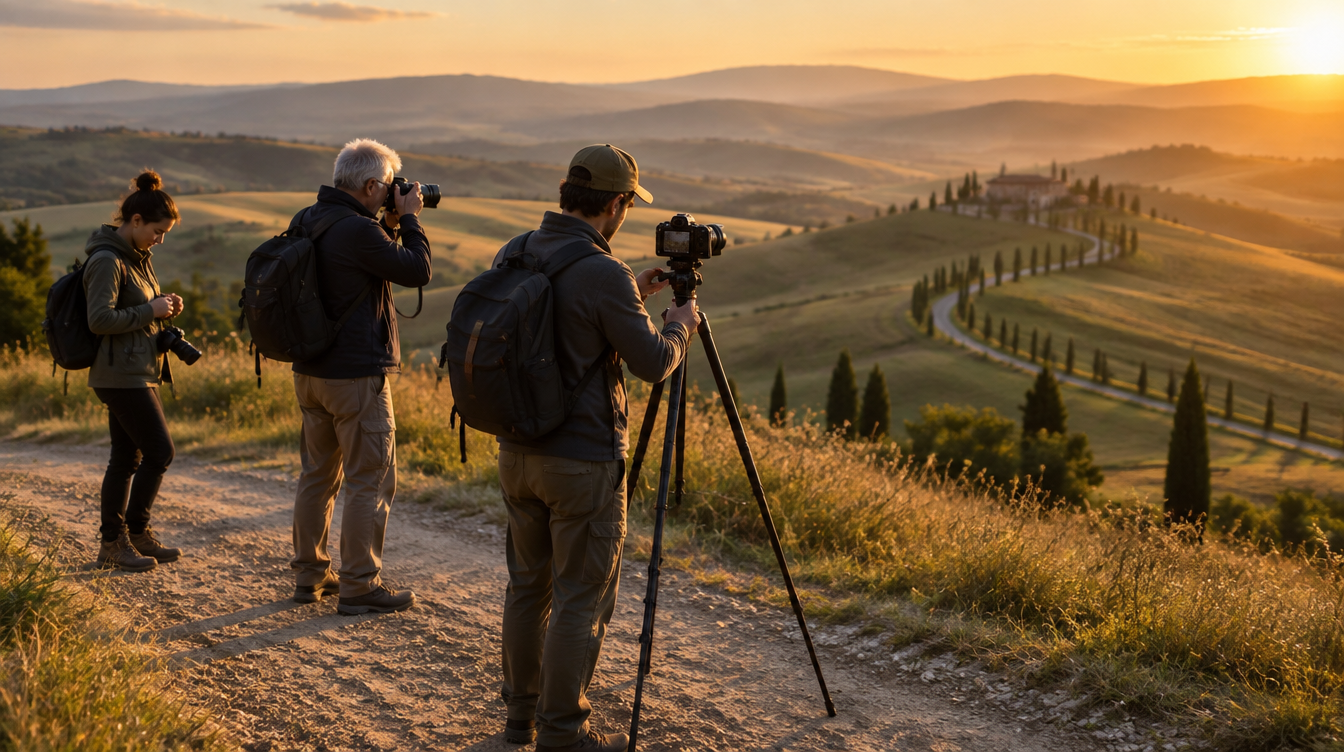
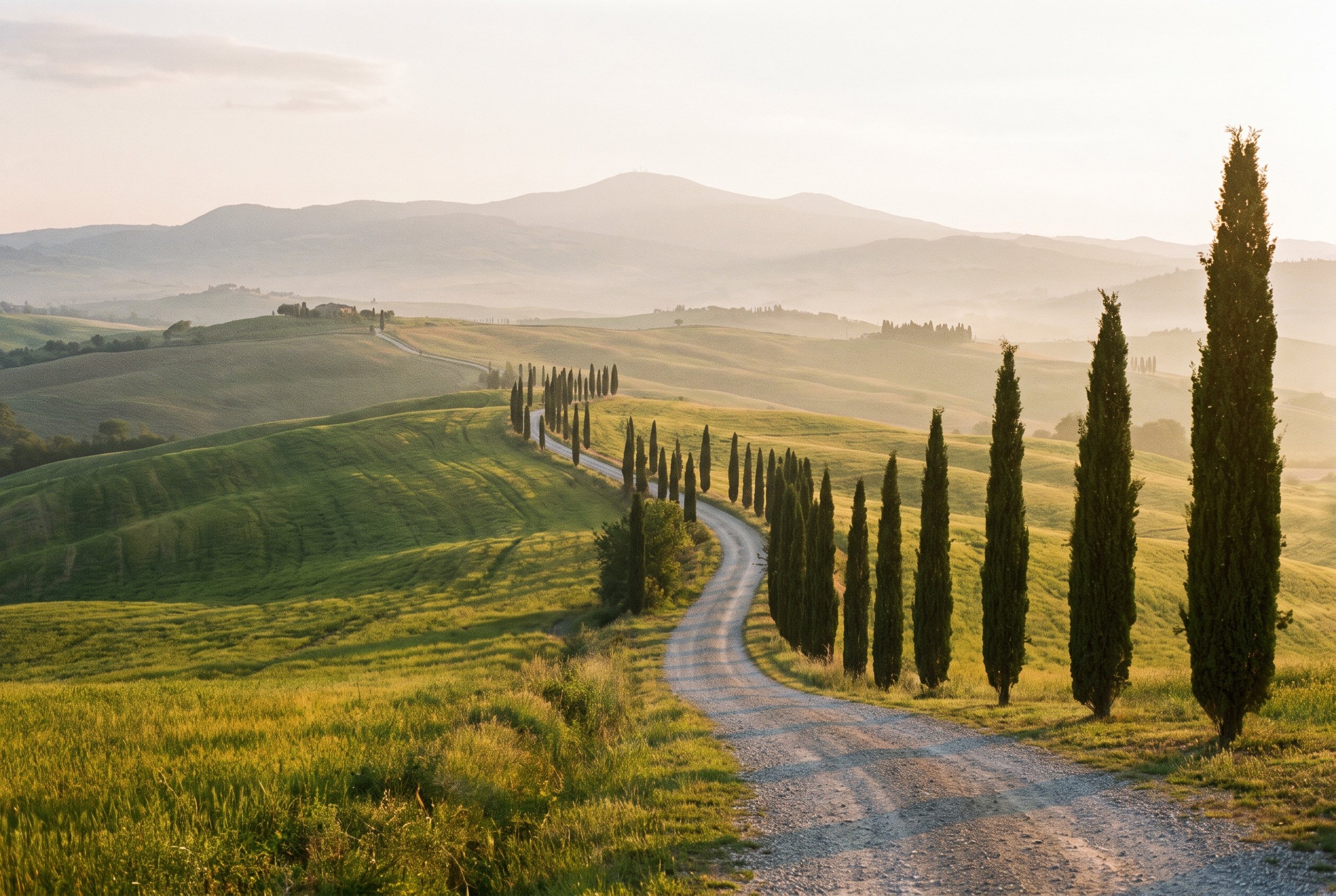
Val d'Orcia sits at roughly 43 degrees north, in a Mediterranean climate that stays mild for most of the shooting season. Even in the depths of winter you are rarely dealing with temperatures much below freezing, and through spring, summer, and autumn you are contending with heat and haze far more than cold. The terrain is gentle rolling clay hills with paved and gravel farm roads, and most of the classic shots are taken within a short walk of wherever you parked or wherever your guide dropped the group.
Iceland is a completely different physical environment. You are shooting near or above the Arctic Circle in a country shaped by glaciers, volcanic rock, and constant coastal wind, and the weather can shift from calm to a genuine squall in the time it takes to change a lens. Even a "warm" Icelandic summer day can turn cold and wet within an hour near a waterfall, where the spray alone will soak an unprotected camera bag. That combination of cold, wet, and windy is the single biggest driver of every gear decision that follows in this guide, far more than any specific subject matter you are trying to photograph.
A kit built around "landscape photography" in the abstract will always be a compromise somewhere. Two destination specific kits, even sharing sixty or seventy percent of their contents, beat one generalized bag every time.
Camera bodies and lenses: warm vs cold
Any modern weather sealed mirrorless body handles both climates fine mechanically, so this is really a lens conversation more than a body conversation. In Val d'Orcia I reach for a 70 to 200mm f/2.8 or f/4 zoom for the majority of my frames, because the region's whole visual identity comes from compressing layered ridgelines, isolated farmhouses, and rows of cypress trees on top of each other. A wide angle, something in the 24 to 35mm range, still earns its place for maybe a third of my shots, mostly when I am close to a foreground subject like a single tree or a stretch of gravel road leading into the frame, but the telephoto does more of the heavy lifting than most first time visitors expect.
In Iceland the ratio flips hard. A wide zoom in the 16 to 24mm range becomes the workhorse lens, because Icelandic compositions are built around massive foreground elements, a moss covered lava field, a black sand beach littered with ice chunks, a waterfall close enough to feel the spray, paired with a dramatic sky or distant mountain that still needs to read clearly behind it. I do carry a telephoto to Iceland too, mostly for compressing distant mountain ridges or isolating a small detail like a single iceberg on the beach, but it comes out of the bag far less often than it does in Tuscany.
Aperture and ISO habits shift too, mostly because of how differently the two locations handle depth of field. In Tuscany I shoot most rolling hill compositions between f/8 and f/11 to hold a foreground row of vines and a background ridge both in reasonably sharp focus, with ISO parked at base, usually 100, since golden hour still gives you plenty of light to work with at those settings. In Iceland, especially near waterfalls where I am stacking a long exposure with an ND filter, I will often open up slightly to f/8 to keep shutter speeds reasonable even with a strong filter attached, and I am more willing to bump ISO to 200 or 400 during the darker stretches of an overcast Icelandic day than I ever am under a Tuscan sky.
Filters that actually matter in each climate
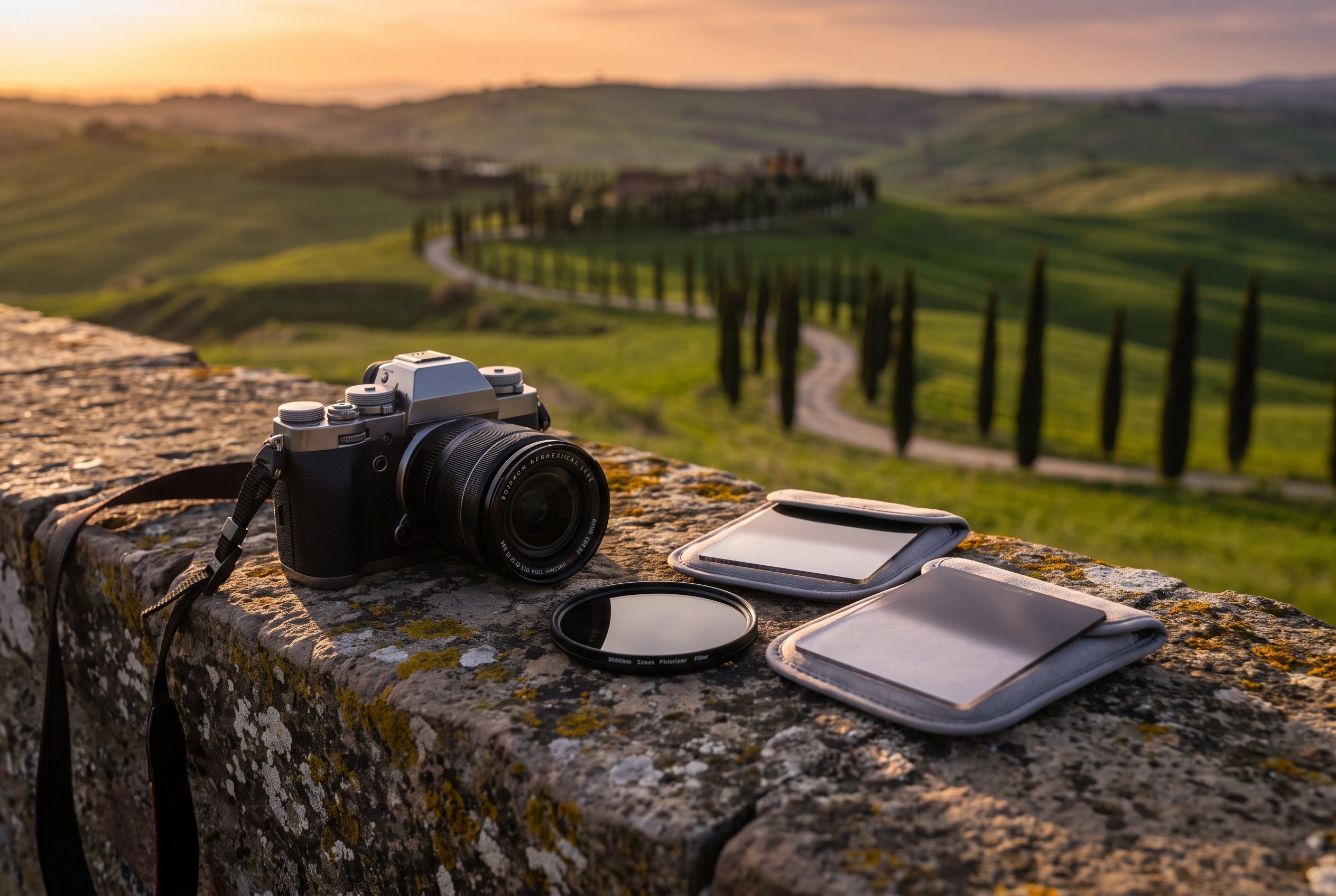
If you only pack one filter for Tuscany, make it a circular polarizer. Val d'Orcia's summer haze flattens contrast and mutes the saturation that makes the hills look like the postcards, and a polarizer rotated to the right angle relative to the sun cuts through a surprising amount of that atmospheric interference, deepening the greens and golds and giving the sky real depth instead of a washed out white. I keep mine on for probably eighty percent of my daytime Tuscany shooting, only pulling it off for genuine long exposure work where a polarizer's light loss becomes a liability rather than a benefit.
Iceland's filter priorities are almost the reverse. A solid ND filter in the three to six stop range is what actually gets used most, because Iceland's abundant moving water, waterfalls, incoming surf on black sand beaches, glacial rivers, is exactly the kind of subject that benefits from a slower shutter speed even in daylight. A graduated ND earns its place too, for holding back a bright Icelandic sky while keeping a darker foreground properly exposed, something you need far less often in Tuscany where the dynamic range between sky and hillside is usually more manageable straight out of camera.
Pro Tip: Buy filter mounts for whichever destination you shoot less often, and standardize the filter thread size across every lens you bring for it. Fumbling with step up rings on a windy Icelandic coastline with cold hands is a genuinely miserable way to miss a shot, and it happens to nearly every photographer at least once before they learn to standardize.
Clothing and layers that affect how you shoot
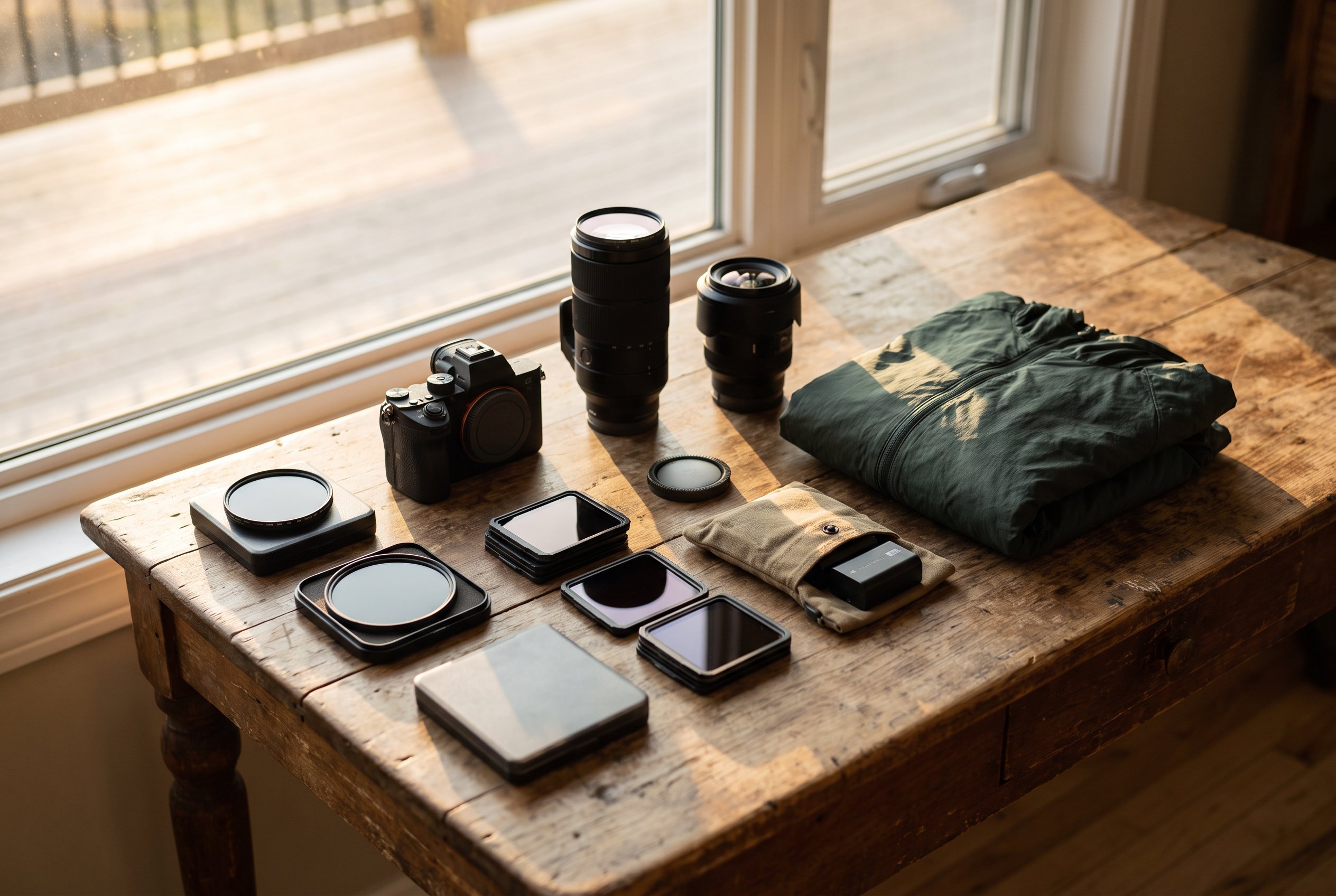
Clothing sounds like a strange thing to include in a photography gear guide, but what you are wearing directly affects how long you can comfortably stay in position for a shot, and that matters more than people realize. In Tuscany, mornings before a spring or autumn sunrise shoot can genuinely be cold, often in the 40s Fahrenheit, but that cold burns off fast once the sun climbs, and by mid morning you are usually down to a light layer. I pack a packable down jacket I can stuff into a small pocket of my camera bag once it warms up, plus a light rain shell for the occasional April shower, and that covers nearly every Tuscany shoot from spring through autumn.
Iceland demands a completely different approach. You need genuine waterproof, wind resistant outerwear, not just water resistant, because you will be standing near waterfall spray or exposed coastline in weather that can turn from calm to a stinging horizontal drizzle within minutes. Layering matters more too, since you are managing a wider temperature range across a single day and need to add or remove layers without breaking your shooting flow. Waterproof boots with real ankle support are not optional in Iceland the way they arguably are in Tuscany, since Icelandic terrain near the best viewpoints is often wet volcanic rock or uneven lava fields rather than a paved farm road.
Gloves are the detail most first time Iceland visitors forget entirely. A thin pair of touchscreen compatible gloves lets you operate camera dials and your phone without losing dexterity, and they make the difference between comfortably working a scene for twenty minutes and giving up early because your fingers have gone numb. I have never once needed gloves for a Tuscany shoot outside of the coldest days in January.
Battery management: the biggest difference of all
If there is one gear habit that genuinely separates a smooth Iceland trip from a frustrating one, it is battery management, and it is the single biggest difference between packing for Iceland and packing for Tuscany. Cold temperatures slow the chemical reactions inside a battery that produce power, which means a battery that reads nearly full at room temperature can drain noticeably faster once it has spent twenty minutes exposed to a cold Icelandic wind. Lithium ion batteries, which is what almost every modern mirrorless camera uses, hold up better in the cold than older battery chemistries, but they are still meaningfully affected, and I plan around losing somewhere between a quarter and a third of my expected shot count on a cold Icelandic day compared to the same battery's performance back home.
The fix is simple but easy to forget: carry more spare batteries than you think you need, and keep the ones you are not actively using in an inner jacket pocket close to your body rather than in an outer bag pocket exposed to the cold. A battery that has gone cold and sluggish will often recover a meaningful amount of charge once it warms back up, which is why swapping a chilled battery for a warm one mid shoot, then rewarming the chilled one in your jacket, keeps you shooting through a long Icelandic session without carrying an unreasonable number of spares.
Tuscany simply does not present this problem. Val d'Orcia's climate rarely drops cold enough to meaningfully affect battery performance, and I typically pack two spares for a full day of Tuscany shooting, sunrise through sunset, compared to the four or five I bring to Iceland for the same length of day. According to B&H Photo's guidance on cold weather battery care, avoiding USB battery packs to recharge a fully drained battery in freezing conditions is also worth knowing, since attempting to force a charge into a battery that hit zero percent in the cold can damage it.
Pro Tip: In Iceland, start each day with every battery fully charged the night before, even the ones you do not expect to use, and buy a small battery pouch with individual slots rather than tossing loose batteries into a bag pocket. It sounds like a minor organizational detail until you are trying to identify a charged battery from a dead one with cold fingers in low light.
Tripod and support gear
A mid weight carbon fiber tripod is genuinely fine for most Tuscany shooting. Val d'Orcia's hilltop viewpoints are calm enough most mornings that you are not fighting serious wind, and the terrain is firm enough that you rarely need to worry about a leg sinking into soft ground. I use the same tripod for both destinations, but in Iceland I add a few habits that Tuscany never requires: hanging my bag or a rock from the tripod's center hook for extra stability in wind, and choosing a lower, wider stance over a fully extended one whenever the composition allows it, since a tall extended tripod catches far more wind resistance than a shorter, more stable setup.
Ball heads versus pan tilt heads is mostly personal preference for Tuscany, but I lean toward a ball head with a reliable friction adjustment for Iceland specifically, because it lets me make quick compositional adjustments with one gloved hand while bracing the tripod with the other in wind, something a fiddly pan tilt head makes noticeably harder when your fingers are cold and you are working fast before a wave comes in on a black sand beach.
Bag and carry considerations
For Tuscany, I use a mid sized shoulder bag rather than a full backpack for most days, since the shooting style tends to be short walks from the car to a viewpoint rather than long hikes, and easy access to swap between the telephoto and wide lens matters more than maximum carrying capacity. A simple rain cover lives in an outer pocket for the occasional April shower, but I rarely need it.
Iceland calls for a proper weather sealed backpack, ideally one with a built in or included rain cover you can deploy in seconds, because you genuinely will get caught in sudden weather near a waterfall or on an exposed coastal trail. I also pack a dry bag or two inside the backpack for anything that cannot get wet at all, spare batteries, memory cards, a phone, since even a rated weather sealed bag can let moisture in during a genuinely bad squall, and the redundancy has saved a memory card or two over the years.
If you are still deciding what actually goes in the bag before either trip, our complete Tuscany photography packing list walks through the full checklist for US travelers, from carry on camera rules to power adapters, in more detail than this comparison piece covers.
Side by side packing comparison
| Item | Tuscany | Iceland |
|---|---|---|
| Primary lens | 70 to 200mm telephoto zoom | 16 to 24mm wide angle zoom |
| Must have filter | Circular polarizer | Solid ND, 3 to 6 stop |
| Secondary filter | Occasional graduated ND | Graduated ND for bright skies |
| Spare batteries per full day | 2 | 4 to 5 |
| Outerwear | Packable down layer, light rain shell | Genuine waterproof, windproof shell and boots |
| Bag style | Mid sized shoulder bag | Weather sealed backpack with rain cover and dry bags |
| Gloves | Rarely needed | Thin touchscreen gloves, essential |
| Tripod setup | Standard height, calm conditions | Low, wide stance with added stability in wind |
What actually overlaps in both kits
It is worth being clear that the two kits are not entirely separate. A weather sealed camera body works fine in both places without modification. A sturdy tripod, even if you adjust how you use it, does not need to be destination specific. Spare memory cards, a rocket blower for sensor dust, a basic cleaning cloth, and a headlamp for pre dawn setups all belong in both bags without any changes. If you are building a travel kit from scratch and trying to minimize what you own rather than what you pack for any single trip, start with that shared core and treat the lens, filter, and clothing choices above as the swappable layer on top of it.
This is also where a guided trip genuinely simplifies the packing question. On our Tuscany photo tours, your guide already knows exactly which lens and filter combination earns its place at each stop on the itinerary, so you can pack lighter and more confidently instead of guessing which of everything you own might be useful on a given morning. It is one less variable to plan around when you are trying to build or rebuild a kit for a specific destination.
Frequently asked questions
Can I use the exact same lens kit for both Tuscany and Iceland? You can, and plenty of photographers do, but you will be working against the strengths of one destination or the other. A wide to mid telephoto zoom covers both reasonably well if you genuinely cannot pack two dedicated kits, but a dedicated telephoto for Tuscany and a dedicated wide angle for Iceland will get you noticeably stronger results in each place.
Do I really need that many extra batteries for Iceland? In summer, when days are long and temperatures milder, you can get away with fewer. In shoulder season or winter, when cold is more pronounced and you are shooting for extended twilight sessions, four to five spares for a full shooting day is a realistic number, not an exaggeration.
Is a circular polarizer ever useful in Iceland? Yes, particularly for cutting glare off wet black rock and enhancing the color of glacial water, but it takes a back seat to ND filters for most Icelandic landscape work, which is the reverse of the priority order in Tuscany.
What is the single most overlooked item for either trip? For Tuscany, it is a packable layer for the genuinely cold pre dawn starts that first timers underestimate because the days end up warm. For Iceland, it is proper gloves, since cold fingers end more shoots early than any equipment failure does.
Should I bring a drone to both destinations? Rules and conditions differ enough between the two that it deserves separate research for each trip rather than assuming one set of regulations and wind tolerances applies to both.
So what should you actually pack
If you are choosing one kit and heading to Tuscany first, lean into the telephoto, the polarizer, and lighter layers, and trust that the region's mild climate will not punish you for under packing outerwear the way Iceland will. If Iceland is first, over invest in batteries, waterproofing, and a wide angle lens, because the climate there is far less forgiving of a kit that is even slightly wrong for the conditions. Photographers who end up booking both destinations, which happens more often than you might expect once people fall in love with landscape photography, generally find that owning both a telephoto and a wide angle zoom, one solid polarizer, and one ND filter set covers the vast majority of situations in either place, with the clothing and battery strategy being the part that actually needs to change trip to trip.
None of this needs to be intimidating. Both destinations are forgiving of photographers who show up with a reasonably capable kit and a willingness to adapt once they see the conditions in person. These are optimizations for the best possible results, not a bare minimum required to come home with good photographs.