When Is the Best Time to Photograph Iceland? A Season by Season Guide
A season by season breakdown of daylight hours, aurora visibility, ice cave access, waterfall power, and crowds, so you can match your Iceland trip to the exact photograph you want to bring home.
When Is the Best Time to Photograph Iceland? A Season by Season Guide
Every group I guide through Iceland asks me the same question before they have even landed: when should they have come instead. Someone who flew in for the aurora in November wonders if February's ice caves would have been worth waiting for. Someone shooting Jökulsárlón in July wonders what the glacier lagoon looks like rimmed with snow. The honest answer is that Iceland does not have one best month. It has a different best month for every kind of photograph on your list, and the trick is matching your travel dates to the specific image you actually want to bring home rather than to a generic "Iceland is beautiful" calendar.
This guide breaks the year down season by season and, where it matters, month by month, covering daylight hours, aurora visibility, ice cave access, waterfall conditions, road reliability, and crowd levels. If you have not read it yet, our Iceland Winter Photography guide covers the destinations and gear in more depth. This piece is specifically about timing.
Key Takeaways
There is no single best month for Iceland. There is a best month for the specific photograph you are chasing, and this guide will help you find it.
| Point | Details |
|---|---|
| Best for aurora | Late September through March, when nights are dark enough and long enough for a real chance |
| Best for natural ice caves | Roughly November through March, while winter cold keeps the meltwater tunnels intact |
| Best for waterfalls at full power | April and May, during peak snowmelt |
| Best for all-night golden light | Mid May through late July, around the summer solstice |
| Best all-around balance | September and October, splitting the difference between returning darkness and still-manageable roads |
| Quietest months | The core winter months, well behind the summer peak in visitor numbers |
Table of Contents
- The quick answer: best month for every type of shot
- Iceland's photography seasons at a glance
- Winter: aurora, ice caves, and the shortest days
- Spring: waterfalls at full power
- Summer: the nearly endless light
- Autumn: the sweet spot
- Month by month cheat sheet
- Frequently asked questions about timing an Iceland trip
- So when should you actually go
The quick answer: best month for every type of shot
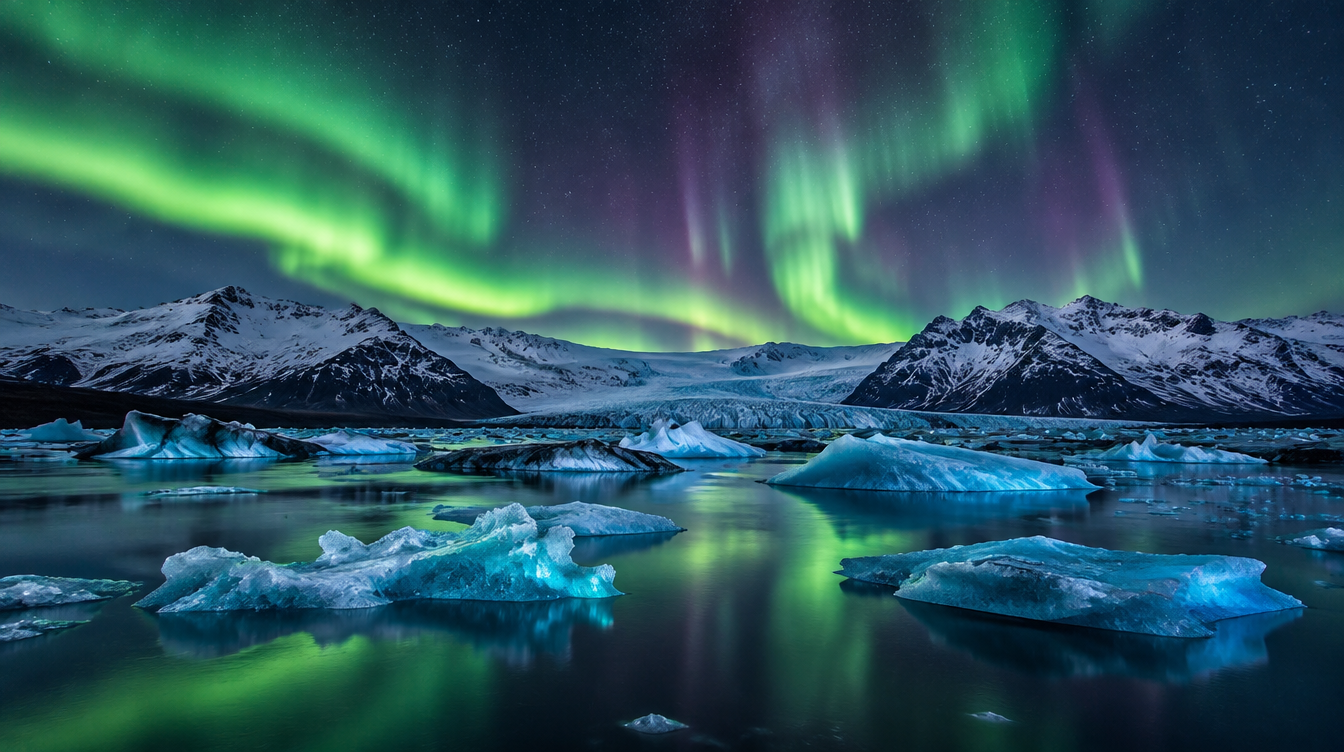
If you only read one section of this guide, read this one. For the northern lights, you want genuine darkness, which rules out late April through early August entirely in Iceland and points you toward late September through March, with January most reliably dark but October and September offering milder weather and steadier roads alongside the returning aurora window. For natural ice caves, the window is roughly November through March, since these meltwater-carved tunnels under the glaciers only stay structurally stable while winter cold holds them together; a separate, man-made ice tunnel cut into the Langjökull glacier is a different experience and is generally accessible outside that window too. For waterfalls at their most powerful, April and May catch peak snowmelt feeding Seljalandsfoss, Skógafoss, and Kvernufoss. For all-night golden light and the closest thing Iceland has to a midnight sun, aim for mid May through late July around the June solstice. And if you want one single best-all-around compromise between darkness, weather, and road access, most photographers who have shot Iceland across multiple seasons land on September or October.
Pro Tip: Pick your subject first, then your season, not the other way around. Booking a "general Iceland trip" and hoping to catch the aurora, the ice caves, and raging waterfalls all in one week is how people end up disappointed by at least two of the three. Decide what matters most, then build the calendar around it.
Iceland's photography seasons at a glance
Iceland sits just south of the Arctic Circle, which is the single fact that explains almost everything else in this guide. It means the country swings between the short, dark days of winter and the nearly sunless nights of summer more dramatically than almost anywhere else that is this easy to fly into from the United States. Reykjavík's own climate records show the scale of that swing clearly: average monthly sunshine runs from a bare 22.6 hours in January up to a peak of 209 hours in May, based on the 1991 to 2020 climate normals compiled from the Icelandic Meteorological Office and NOAA data for Reykjavík. That is roughly a nine-fold difference in available daylight between the darkest and brightest months, and it reshapes everything about how a photography day works, from how many shots you can realistically fit in to whether golden hour is a brief event or an hours-long window.
Temperature is the other variable, and it is far milder than most Americans expect for a country with "ice" in its name. Winters are relatively mild for the latitude thanks to the surrounding ocean: southern coastal lowlands average close to freezing in winter while the interior highlands can drop far lower, and the country's record low of −39.7°C was set well away from the coast, according to the Wikipedia entry on the climate of Iceland, which draws on Icelandic Met Office data. Summers are cool rather than hot, with July averaging 10 to 13°C in the south and the national record high, 30.5°C, set as far back as 1939 in the Eastern fjords. None of that is dangerous for a photographer, but it does mean wind, not cold, is usually the bigger practical problem: lowland areas see gale-force wind on roughly 10 to 20 days a year, and highland areas on 50 or more, which matters far more for a tripod on an exposed black sand beach than the air temperature does.
Winter: aurora, ice caves, and the shortest days
Winter is Iceland's photography headline season, and for good reason: it is the only time of year you can realistically combine the northern lights with ice cave access in a single trip. The trade-off is daylight. December gives Reykjavík barely four hours of usable daylight around a low midday sun, which sounds brutal until you realize that short day is effectively one long, low-angle golden hour rather than a brief bookend to a long bright afternoon. We cover the exact camera settings, forecasting tools, and the Kp index in detail in our guide to northern lights photography settings and forecasts, so this section focuses specifically on when and where in Iceland that darkness actually pays off.
The aurora itself needs two things working together: real darkness and clear enough skies, which is exactly how the Icelandic Meteorological Office frames its own aurora forecast, noting plainly that "the spectacle of Aurora Borealis requires dark and partly clear skies." Their forecast runs on a 0 to 9 activity scale, and the office's own instructions for reading that forecast point out that even grade 2, low activity, can look beautiful, and grade 3, moderate, can be dazzling, so you do not need a historic geomagnetic storm to come home with a strong frame. That darkness window runs roughly from late September, once nights are long enough again, through late March, and it is deepest and most reliable from November through February. One detail worth knowing before you plan an evening around it: the standard online forecast timings for sunset, darkness, sunrise, and moonrise are calculated for Reykjavík specifically, so if you are shooting from the south coast or the Snæfellsnes Peninsula, treat those times as a close approximation rather than an exact local schedule. For the deeper mechanics of how light pollution and sky darkness actually work, our guide to the Bortle scale and finding dark skies is the companion piece to this section.
Ice caves are the other winter headline, and they are worth separating into two completely different experiences. Natural ice caves are meltwater-carved tunnels inside glaciers like Vatnajökull, and they only exist in a stable, safely enterable form while winter cold keeps them structurally sound, which is why access to any specific cave typically opens sometime in the November to December range and closes by March or April, shifting from year to year with that winter's ice conditions. A separate, man-made ice tunnel bored into the Langjökull glacier is a built structure rather than a seasonal formation, and it is commonly described as accessible across more of the year, which makes it a reasonable fallback if your travel dates miss the natural cave window entirely. Either way, ice caves are not a solo-photographer activity: they require a certified glacier guide, and conditions change often enough that "roughly November through March" is the honest, non-specific answer rather than a fixed date range.
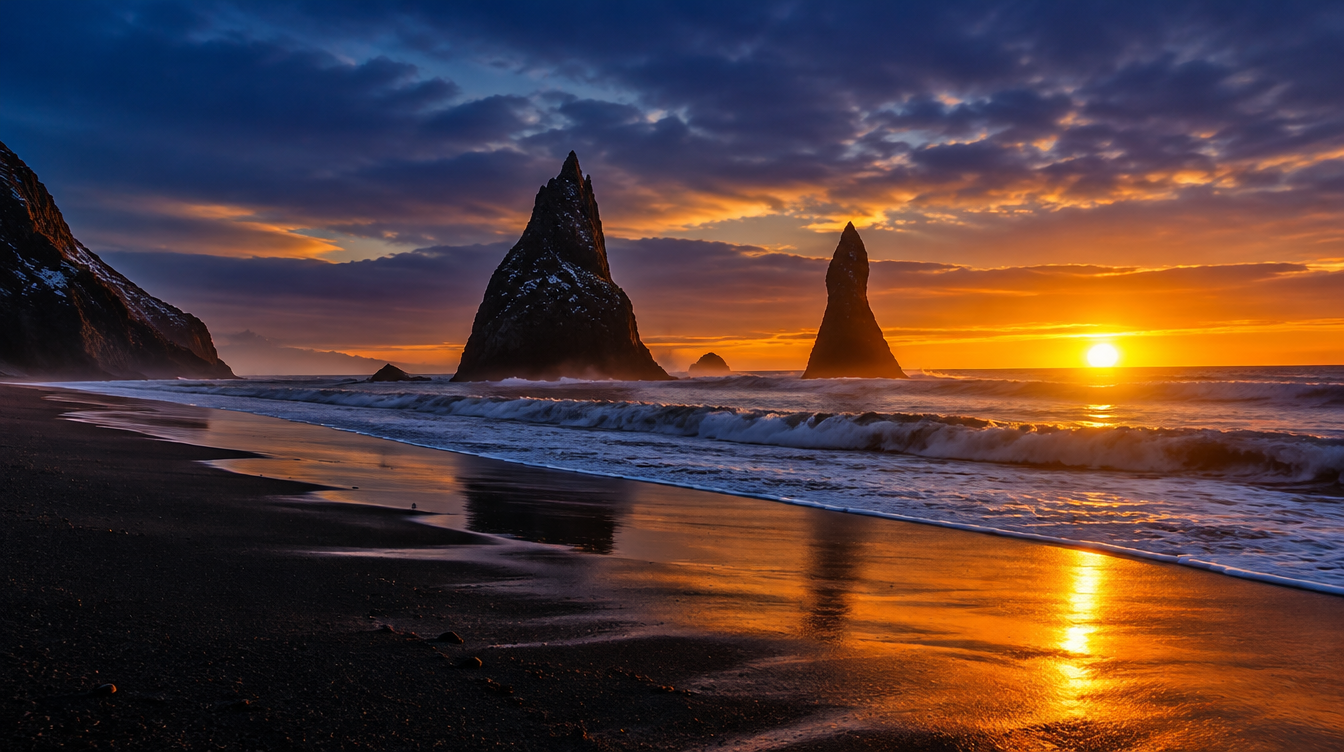
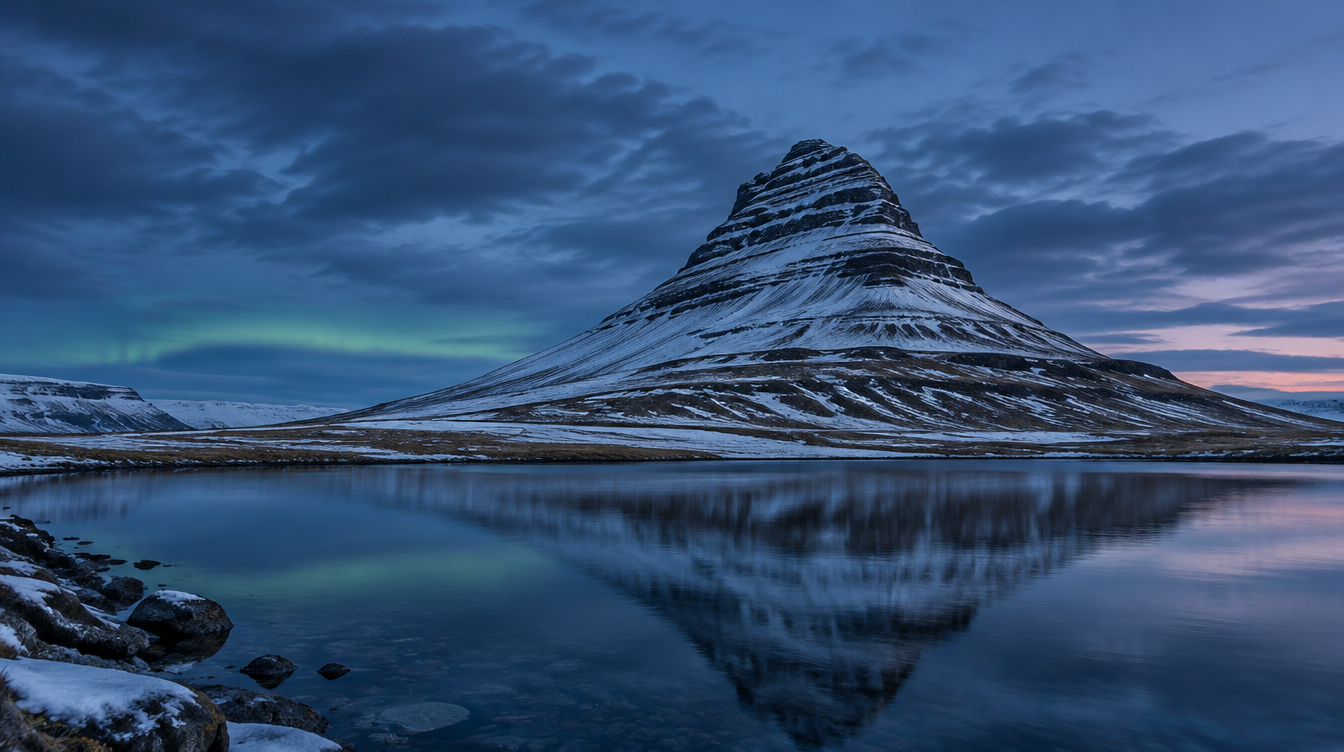
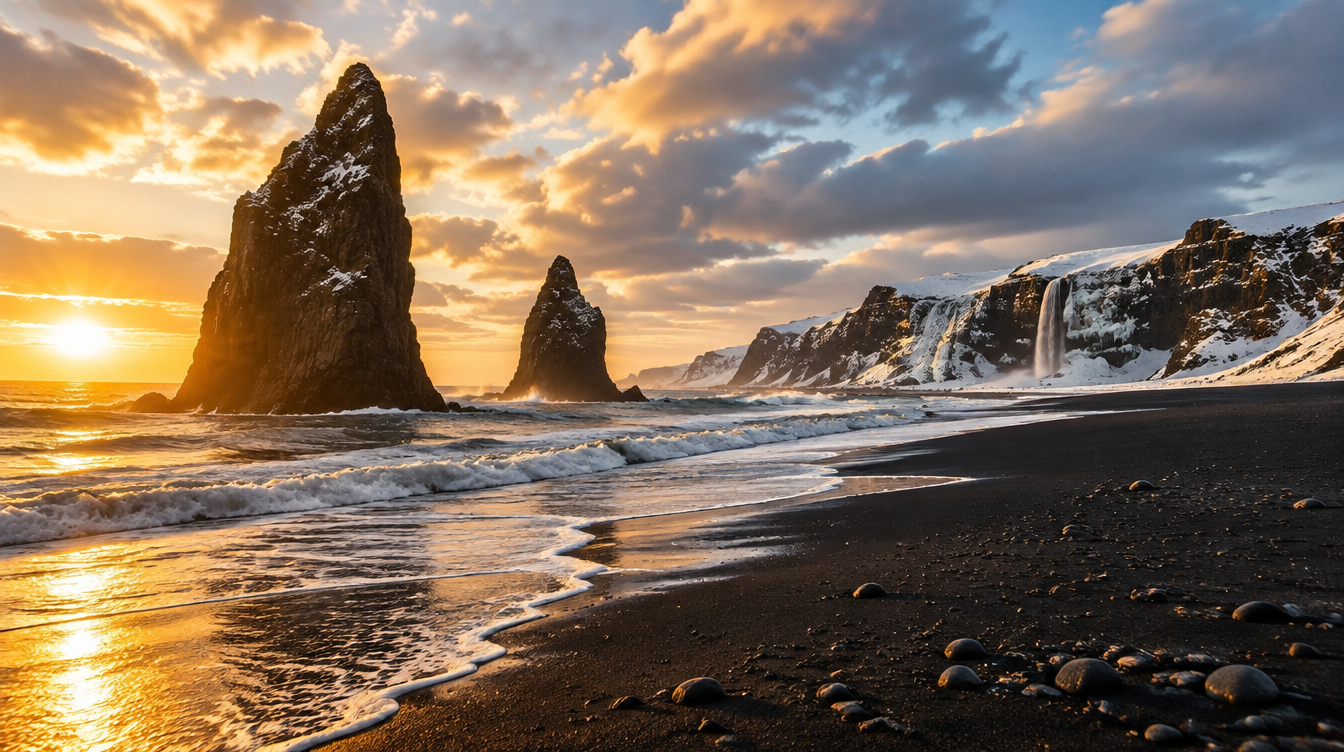
Driving is the practical variable that most seasonal guides skip. Winter roads can close during storms, and the short daylight window means a self-driven itinerary has far less margin for error than the same drive would in July. This is a genuine reason, not a sales pitch, that most winter aurora and ice cave trips, including ours, run with included ground transportation rather than a rental car: it removes the single biggest source of wasted shooting time and risk from the trip. Our Iceland Winter Aurora tour is built entirely around this window: seven days and seven nights, a maximum of ten photographers, one professional guide, and all ground transportation and airport transfers from Keflavík included, with departures currently running in February and March. It threads together Kirkjufell, the Snæfellsnes Peninsula, Seljalandsfoss, Skógafoss, Vestrahorn, Jökulsárlón and Diamond Beach, and the black sand beaches and sea stacks around Vík, with the aurora chased each night the forecast allows.
Spring: waterfalls at full power
April and May are Iceland's genuine shoulder season, and the single best reason to come then is water. Spring snowmelt feeds Iceland's rivers at their highest volume of the year, which turns Seljalandsfoss, Skógafoss, and the quieter Kvernufoss nearby into noticeably more powerful, more dramatic subjects than the same falls carry for most of the rest of the year. The trade-off is that aurora darkness is already fading fast by April, and the ice cave window is closing, so spring is really a one-subject season: it rewards photographers prioritizing waterfalls and transitional, moody weather over night photography.
Daylight by this point has swung dramatically from winter's low. Reykjavík's sunshine hours climb from roughly 39.7 hours in November to a May peak of 209 hours, the highest of any month in the Icelandic Met Office and NOAA climate normals, which gives spring photographers long, workable days without yet tipping into summer's nearly sunless nights. Crowds are also meaningfully thinner than summer, since spring falls before the main tourist season ramps up, which means a cleaner frame at famous stops like Seljalandsfoss than you will get in July.
Summer: the nearly endless light
Summer is where Iceland's reputation for endless light actually comes from, though the common shorthand of "midnight sun" oversells what most visitors will see. Grímsey, a small island off Iceland's north coast, sits north of the Arctic Circle and genuinely gets the sun above the horizon at midnight. The Icelandic mainland, including Reykjavík, sits just south of the Arctic Circle, so what you actually get through most of June and into early July is near-continuous twilight rather than literal unbroken sunlight, as Wikipedia's entry on the midnight sun lays out plainly. In practice, that distinction barely matters for a photographer: the sky simply never gets dark enough for stars or aurora, but golden hour effectively stretches for several hours on either side of a sun that barely dips below the horizon, which is a completely different creative problem than winter's short, intense light and well worth building a trip around on its own terms.
Summer is also when the Highlands genuinely open up. Many of Iceland's F-roads into the interior are only passable roughly from mid June to early September, weather and that year's snowpack depending, so if remote highland landscapes rather than the Ring Road's classic stops are on your list, summer is effectively the only window. The cost is crowds: this is comfortably Iceland's busiest season for visitors, which means famous, easily reached stops like Kirkjufell and Jökulsárlón require either very early mornings or a willingness to compose around other people in the frame.
Pro Tip: If you are chasing all-night golden light in June, do not treat it as one long golden hour you can shoot start to finish. Scout a location at what would normally be midday, then return close to the actual low sun angle, because the light quality still shifts meaningfully even when the sky never goes fully dark.
Autumn: the sweet spot
If pressed to name one single best window for a first Iceland trip, most photographers who have shot the country across multiple seasons point to September or October. Nights are getting long enough again for the aurora to return as a real possibility, but the weather and road conditions have not yet deteriorated into full winter's storm risk, and daylight is still generous enough that a day's itinerary has real flexibility built in. Crowds have also thinned out considerably from the summer peak without the trip feeling like deep off-season.
This is the honest reason autumn gets recommended so often: it is not the single best month for any one subject on this list, but it is the best month for not having to give anything up. You get a real, if shorter than winter's, aurora window; roads that are still reasonably reliable; waterfalls still carrying reasonable flow from the tail end of summer melt; and noticeably fewer people between you and the shot.
Month by month cheat sheet
This is a planning snapshot, not a substitute for checking a real-time forecast before any specific shoot. Use it to pick your season, then check conditions closer to your actual travel dates.
| Month | Daylight | Aurora chance | Ice caves | Waterfalls | Crowds | Roads |
|---|---|---|---|---|---|---|
| January | Shortest, under 5 hours | Strong, fully dark | Open, stable ice | Partly frozen, scenic | Quiet | Variable, storm risk |
| February | Still short, lengthening | Strong | Open, often most stable ice of the season | Partly frozen | Quiet | Variable, storm risk |
| March | Lengthening fast | Good, fading late month | Open, closing by month end | Thawing, rising flow | Quiet to moderate | Improving |
| April | Long | Fading fast | Mostly closed | Strong, rising snowmelt | Moderate | Good, Highlands still closed |
| May | Very long, peak sunshine hours | Minimal, too bright | Closed | Peak flow | Moderate to busy | Good, Highlands opening late |
| June | Near-continuous twilight | None, too bright | Closed | Strong, easing | Busy | Highlands opening |
| July | Near-continuous twilight | None, too bright | Closed | Moderate | Busiest | Highlands fully open |
| August | Long, shortening | Returning late month | Closed | Moderate, easing | Busiest | Highlands open |
| September | Moderate | Good, returning | Closed to early season | Lower flow | Easing | Good, Highlands closing |
| October | Shortening fast | Good | Early season opening | Low flow | Quiet to moderate | Variable |
| November | Short | Strong | Opening | Freezing up | Quiet | Variable, storm risk |
| December | Shortest, under 5 hours | Strong | Open | Frozen, scenic | Quiet, holiday bump | Variable, storm risk |
Frequently asked questions about timing an Iceland trip
What is the single best month to photograph Iceland? There is not one, but if you need a single answer, September or October balances returning aurora darkness, manageable roads, and thinning crowds better than any other month. February is the better pick if ice caves and deep winter darkness are your priority.
When can you visit natural ice caves in Iceland? Roughly November through March, while winter cold keeps the meltwater-carved tunnels structurally stable, though the exact window shifts year to year with that winter's ice conditions and always requires a certified glacier guide. A separate, man-made ice tunnel in the Langjökull glacier is accessible across more of the year.
When is the best time to see the northern lights in Iceland? Roughly late September through late March, when nights are dark enough, with the deepest, most reliable window from November through February. Darkness alone is not enough; you still need a clear or partly clear sky, which is why checking a real-time aurora and cloud forecast matters more than picking a single calendar date.
Does Iceland really have a midnight sun? Only technically, and only on Grímsey island north of the Arctic Circle. The mainland, including Reykjavík, sits just south of the Arctic Circle, so around the June solstice it experiences near-continuous twilight rather than the sun staying visibly above the horizon at midnight, which is still more than enough light for hours of usable golden-hour shooting.
When are Iceland's waterfalls most powerful? April and May, during peak snowmelt, give Seljalandsfoss, Skógafoss, and Kvernufoss their highest flow of the year. Winter offers a different, quieter version of the same falls with ice formations and far fewer visitors in frame.
Is driving in Iceland harder in winter than summer? Yes. Winter brings short daylight, ice, and occasional Ring Road closures during storms, while many Highland F-roads are only open roughly from mid June to early September. Most winter aurora and ice cave trips, ours included, run with included ground transportation rather than a self-drive rental for exactly this reason.
When is Iceland least crowded? The core winter months, December through February, see the thinnest visitor numbers, which also means cleaner compositions at famous stops like Kirkjufell and Jökulsárlón compared with the summer peak.
So when should you actually go
If you want one-word answers: choose February for the deepest combination of aurora darkness and stable ice cave access, choose May for waterfalls at their most powerful, choose June for all-night golden light and open Highland roads, and choose September or October if you want the best overall balance without planning your entire trip around one single phenomenon. None of this is a hard rule. Photographers have made extraordinary images in every month on this list, and the "worst" month for one subject is very often the best month for a completely different one.
Winter remains the season most worth a closer look if you have not considered it, specifically because it is the only time the aurora and the ice caves are both realistically on the table in a single trip, and because the short days that sound like a drawback are really just one long, dramatic golden hour stretched across the middle of your day. Our Iceland Winter Aurora tour runs seven days and seven nights with a maximum of ten photographers, a professional guide, all ground transportation, and image review and post-processing sessions built into the itinerary, with current departures in February and March priced at $4,500 per person and a $1,350 deposit to hold your spot. If winter's darkness and ice are what pulled you into this guide, that is exactly the window it is built around.
Whatever season you choose, the single most important habit for photographing Iceland well is flexibility. Build a shot list by subject rather than by fixed date, check the real-time aurora, weather, and road forecasts in the days before you shoot rather than trusting a seasonal guide written months in advance, and treat any single "wrong" season as simply a different, equally valid photograph waiting to be made.
Sources
- Icelandic Meteorological Office: aurora forecast and the conditions aurora visibility requires
- Icelandic Meteorological Office: instructions for reading the aurora activity scale
- Wikipedia: Climate of Iceland, seasonal temperature and wind data sourced to the Icelandic Met Office
- Wikipedia: Reykjavík, monthly sunshine hour climate normals sourced to the Icelandic Met Office and NOAA
- Wikipedia: Midnight sun, including why Grímsey is the exception on Icelandic territory