Jökulsárlón and Diamond Beach: Photographing Iceland's Glacier Lagoon
A location guide to Iceland's Jökulsárlón glacier lagoon and Diamond Beach across the road, covering ice floe composition, boat traffic, and why each side needs a completely different exposure approach.
Jökulsárlón and Diamond Beach: Photographing Iceland's Glacier Lagoon
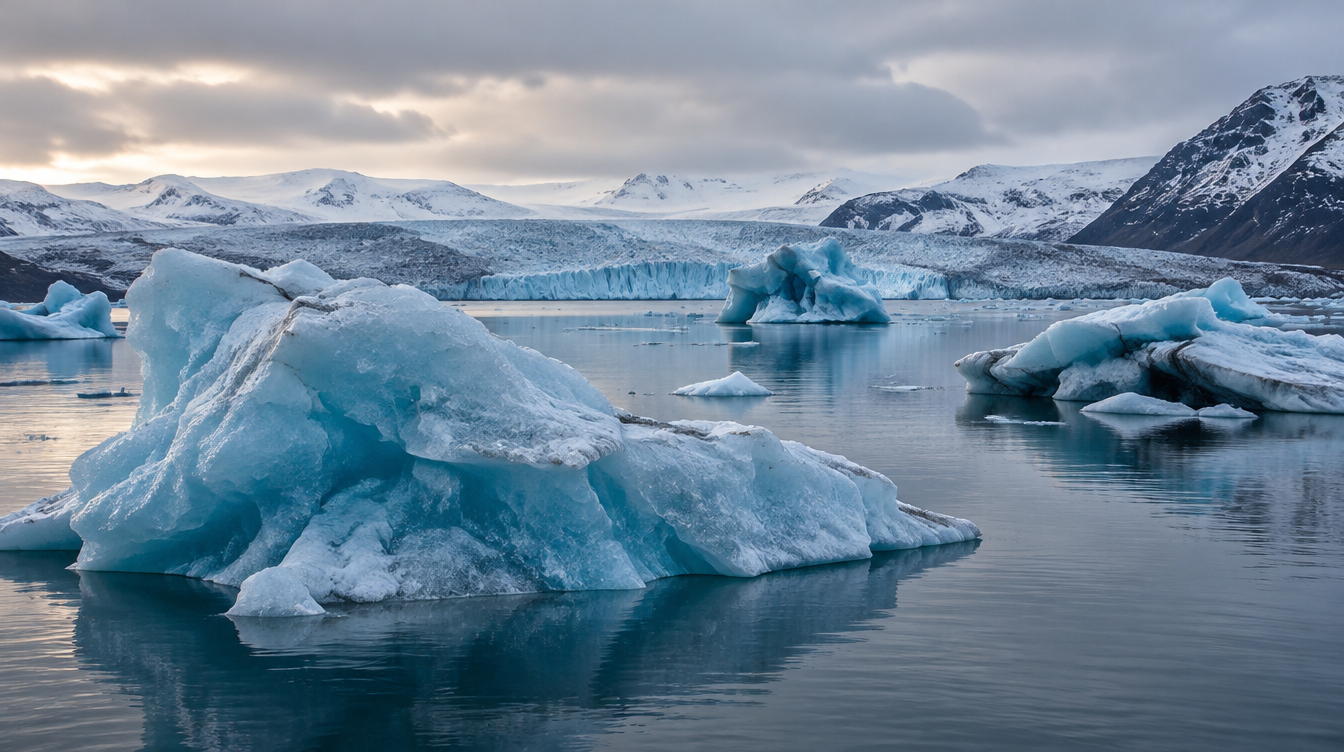
There is one stretch of Route 1 in southeast Iceland where you can park once and shoot two completely different landscapes without moving the car. On one side of the road, icebergs drift across a still, glacial lagoon with a crumbling glacier filling the background. On the other side, those same icebergs wash up on a beach of jet black volcanic sand and sit there like sculpture until the tide or the sun takes them apart. Most visitors treat Jökulsárlón and Diamond Beach as one photo stop. I treat them as two separate assignments, because the light, the hazards, and the exposure decisions on each side of the road have almost nothing in common.
I have guided groups through this stretch of coast on more winters than I can count on one hand, and the questions I get are almost always the same. How do you keep the tour boats out of frame. Why does every shot of the beach come back looking muddy. Is it actually safe to walk out there. This guide answers all three, plus the composition and timing questions that separate a postcard shot from something that actually looks like you were there.
Key Takeaways
Jökulsárlón and Diamond Beach sit across one road from each other but demand opposite photographic approaches, and treating them as a single stop is the most common mistake visiting photographers make.
| Point | Details |
|---|---|
| The core problem | The lagoon is bright ice, water, and sky; the beach is near black sand under bright ice, so each side needs its own metering strategy |
| Boat traffic | Amphibian and Zodiac tours cross the lagoon seasonally and will drift into a wide composition if you do not plan around their route and timing |
| Ice supply | The lagoon's ice volume and look change year to year because Breiðamerkurjökull, the glacier feeding it, has been retreating for over a century |
| Biggest safety risk | Shore surf on Diamond Beach can produce a sudden, oversized "sneaker wave" with no warning system in place, the same physics behind the well known hazard at nearby Reynisfjara |
| Best light strategy | Plan the lagoon and the beach as two separate lighting problems rather than one, since they face different directions and the low winter sun flatters them at different times |
| Where it fits a trip | WeShoot's Iceland Winter Aurora tour dedicates a full day of its seven day itinerary to this stretch of coast |
Table of Contents
- Where the ice actually comes from
- Jökulsárlón: composing the lagoon
- Working around the boat traffic
- Crossing the road to Diamond Beach
- The exposure flip: why each side needs a different approach
- Staying safe around the ice and the surf
- When to go: season, light, and the boat tour mismatch
- Logistics: parking and moving between the two sides
- How this fits an Iceland winter itinerary
- Frequently asked questions
Where the ice actually comes from
It helps to know why there is any ice here to photograph in the first place, because the answer explains why the lagoon looks different every time you visit. Jökulsárlón sits in a basin carved out by Breiðamerkurjökull, an outlet glacier of the much larger Vatnajökull ice cap. A proglacial lagoon formed here around 1933 or 1934, in the depression left behind as the glacier retreated from where it had previously stood. That retreat has not stopped. Breiðamerkurjökull's east and central lobes pulled back at an average of roughly 28 meters a year between 1980 and 1998, while the west lobe retreated even faster, around 30 meters a year on average over the same stretch of time. The lagoon that resulted from a century of that slow withdrawal is now reported to be over 200 meters deep where the glacier's snout originally sat, and in one 2009 survey it was measured at more than 284 meters, making it the deepest lake in Iceland.
What that means for you as a photographer is simple: the ice floating in front of you did not arrive on a schedule, and it will not look the same next winter. Every calving event sends a different mix of shapes and sizes into the lagoon, and the overall volume of visible ice shifts from year to year as the glacier continues to retreat. Treat the ice field you see on any given morning as a one time arrangement, not a fixed backdrop, and you will shoot it with more urgency and less frustration when the "perfect" iceberg from someone else's photo is nowhere to be found.
The lagoon and its surrounding ice fields sit inside Vatnajökull National Park, established in 2008 and inscribed as a UNESCO World Heritage Site in 2019 for what the inscription calls the dynamic nature of fire and ice. That protected status is worth remembering once you are standing at the water's edge deciding whether to climb onto a beached ice block for a better angle. Do not. More on that below.
Jökulsárlón: composing the lagoon
Start on the lagoon side with a wide lens, something in the 16 to 35mm range on a full frame body, because the strongest compositions here usually rely on layering a chunk of ice in the foreground against Breiðamerkurjökull or the broader Vatnajökull ice cap in the background. Walk the shoreline before you commit to a tripod position. The viewing platform nearest the parking area gives you the easiest access, but five minutes of walking in either direction usually finds you a foreground ice block nobody else is using, which matters more here than almost anywhere else in Iceland simply because of how many photographers pass through on a summer afternoon.
Once you have a foreground anchor, think in three layers: a piece of ice close enough to show texture and translucency, the open water and smaller floating ice in the middle distance, and the glacier or mountains behind everything. Icebergs are generally white because they are coated in snow, but seawater, trapped algae, and differences in trapped air create a real range of blues, greens, and almost clear tones in the ice itself, which is why a polarizing filter earns its place in your bag here. Cutting glare off the wet surface of the ice with a polarizer will pull out blue tones that a flat, glare heavy shot completely loses.
Pro Tip: Get low. Kneeling or lying flat near the shoreline exaggerates the size of a foreground iceberg against the glacier behind it, and it also puts you below eye level with any boats crossing the lagoon, which helps keep them out of a clean composition without needing to crop them out later.
A 70 to 200mm telephoto earns its keep too, for isolating a single ice formation against the dark water or compressing the layered mountains behind the lagoon into a tighter, more graphic frame. On a calm morning with no wind, the lagoon's surface turns into a mirror, and a telephoto shot of a single iceberg and its reflection, with nothing else in frame, is one of the cleanest images you can bring home from this location.
Working around the boat traffic
Commercial boat tours on Jökulsárlón have been running since 1985, when the premiere of the James Bond film "A View to a Kill" is credited with kicking off tourism here in earnest, and amphibian and Zodiac boats remain a regular sight on the water during the operating season. Nobody writing about this location tells you how to actually work around them, and it matters more than any lens choice if you are after a quiet, wilderness feeling shot.
The boats run set routes between the dock and the main ice field, so the fastest fix is simply shifting your own position away from that route before you set up. A composition framed toward the glacier itself, rather than back toward the dock and parking area, keeps most boat traffic out of frame by default. If a boat does cross your frame and you want it gone, patience works better than editing: boats run on a cycle, and waiting five or ten minutes for a gap between departures is usually faster than trying to clone one out in post.
If you want the opposite effect, a boat can also make the shot. A slower shutter speed, something around 1/15 to 1/30 of a second on a tripod, turns a passing boat into a soft streak of motion against the still ice and water, which communicates scale and activity in a way a static, boat free shot cannot. Decide which story you are telling before you set your shutter speed, not after.
Crossing the road to Diamond Beach
Cross Route 1 and you are on what locals actually call Eystri-Fellsfjara, though every visitor knows it as Diamond Beach, named for the way sunlight catches the ice scattered across the black volcanic sand. The ice here has made a full journey: it calved from the glacier, drifted across the lagoon, shrank as it melted near the lagoon's narrow outlet channel until it was small enough to float out to the ocean, and then washed back onto shore by wave action, arriving as the clear, rounded chunks that give the beach its name.
Composition here works almost in reverse from the lagoon side. Instead of layering a big scene, look for a single strong piece of ice and isolate it. A low angle, shot from a few feet away with a wide lens, exaggerates the contrast between a clear or blue ice chunk and the black sand surrounding it, and it is one of the few places in the world where that specific color pairing occurs naturally. A macro or close focusing lens is worth packing too, since some of the most interesting images on this beach are not wide landscapes at all but tight studies of air bubbles and cracks frozen inside a single piece of ice.
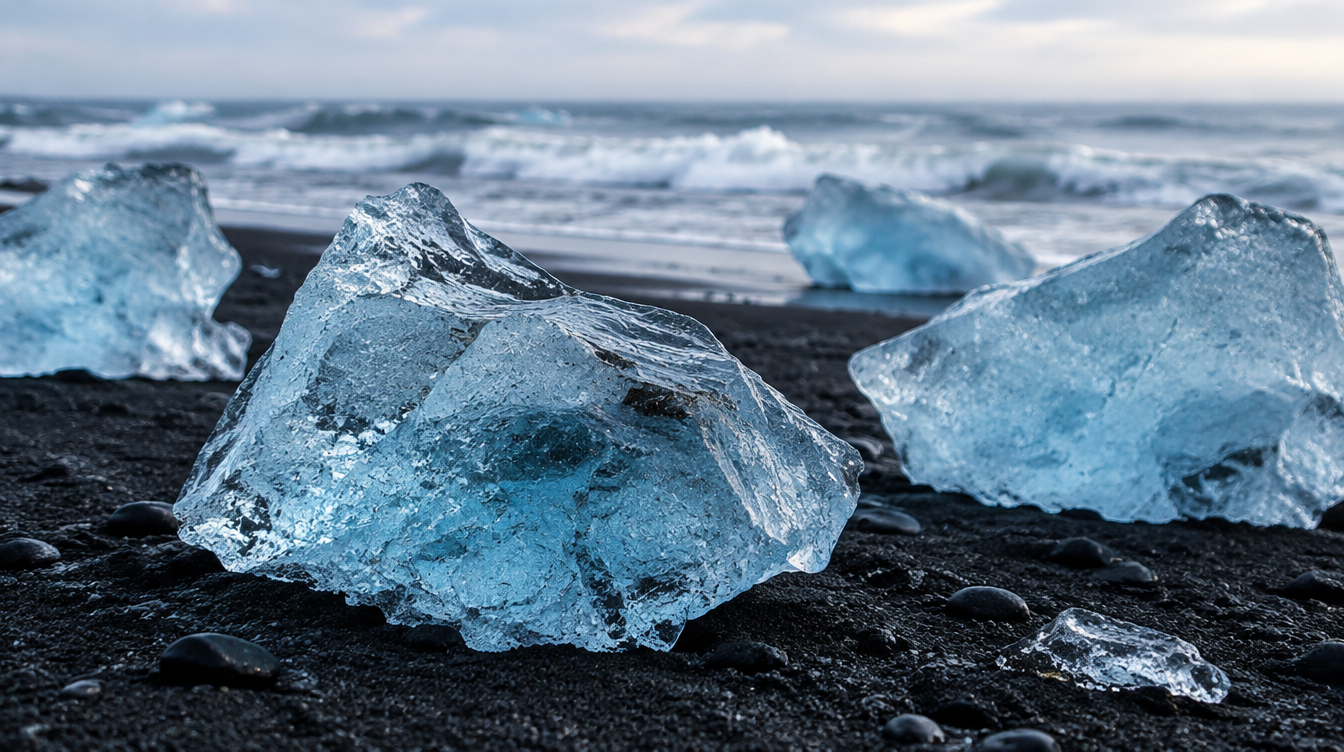
Watch the surf line as you work. Waves regularly push new ice higher up the beach or drag existing pieces back into the water, which means the same ice chunk you photographed ten minutes ago may already be gone, or in a completely different position relative to the waterline. Treat every composition here as temporary and work quickly once you find one that is working.
The exposure flip: why each side needs a different approach
This is the single most useful thing I can tell you about shooting this location, and it is the reason so many visitor photos of Diamond Beach come back looking flat and muddy. Your camera's metering system tries to average a scene toward a middle gray tone. On the lagoon side, that scene is dominated by bright ice, pale sky, and reflective water, so an unadjusted exposure tends to read too dark, pulling detail out of the brightest ice and making the whole image feel underexposed and dull. The fix is to expose slightly brighter than your camera suggests, usually by three quarters to a full stop of positive exposure compensation, and to watch your histogram for a comfortable gap below the right edge rather than trusting the LCD preview in bright outdoor light.
Diamond Beach has the opposite problem. Black volcanic sand pulls the camera's average exposure reading down, and if you do not correct for it, the sand renders a muddy, overexposed gray while the bright ice sitting on top of it blows out with no detail at all. Here you want to expose for the ice, not the scene average. Spot meter directly on a mid sized piece of ice, let the sand fall where it falls, and recover shadow detail in the sand during editing rather than trying to brighten everything evenly in camera. A three stop graduated neutral density filter can help balance a bright sky against the dark foreground sand on the rare clear day, but on an overcast day, which is common here, you likely will not need one at all.
Pro Tip: Bracket three frames at each composition on both sides of the road, one at your metered exposure, one a stop brighter, one a stop darker. It costs you almost nothing in the field and saves you from discovering back at the hotel that you underexposed the one shot you actually wanted.
Staying safe around the ice and the surf
Two separate hazards deserve direct attention here, because neither is obvious until you already know about it. The first is the ice itself. Beached ice blocks on Diamond Beach can be undercut by water from underneath and flip or shift with no warning, and climbing onto one for a dramatic angle is a genuinely bad idea, both for your safety and for the protected status of the national park the beach sits within. Photograph the ice from the sand, not from on top of it.
The second hazard is the surf, and it deserves more respect than most visitors give it. A rogue wave is technically defined as a wave more than twice the significant wave height of the surrounding sea, and researchers studying the phenomenon have noted that rogue waves occur more frequently near coastal inlets and shallow water, exactly the kind of setting you find along this stretch of coast. A rogue wave that reaches the shore is sometimes specifically called a sneaker wave, the same mechanism behind the well publicized drownings at Reynisfjara, a black sand beach about ninety minutes down the coast. Diamond Beach does not have Reynisfjara's warning light system, which makes it easy to assume the surf here is calmer. It is not necessarily. Keep a buffer of several meters from the waterline at all times, never turn your back on the ocean while you are composing a shot, and treat a stretch of sand that looks dry and safe as capable of being reached by a wave anyway, because that is exactly how a sneaker wave catches people off guard.
When to go: season, light, and the boat tour mismatch
Winter gives you Iceland's lowest, longest light of the year, and our full breakdown of when to photograph Iceland season by season goes deep on how that plays out across the whole country. For this specific stretch of coast, the practical detail is that the lagoon and the beach face different directions, so the same sunrise that lights the glacier and the back of the lagoon beautifully may leave Diamond Beach in flat, shadowed light for another hour. Plan to shoot both sides at different times rather than trying to catch them both in one golden window. Because winter days in Iceland can run under five hours of real daylight, as we cover in detail in our guide to just how short Iceland's winter days actually get, that long, low light stretches across nearly the entire day rather than compressing into a short sunrise and sunset, which gives you far more usable shooting time at this location than a summer visit would.
There is also a mismatch worth knowing about between ice volume and boat season. Reported ice volume on the lagoon tends to run highest in late winter and early spring, while the amphibian and Zodiac boat tours operate on a warmer season schedule that runs roughly from late spring into autumn, so the two do not fully overlap. Visit in winter and you generally get more ice and far less boat traffic to work around, which, combined with the composition advice above, is the single biggest argument for shooting this location on a winter trip rather than a summer one. For the technique behind using that low winter sun well beyond this one location, our guide to mastering golden hour photography in Iceland is worth reading before you go.
Logistics: parking and moving between the two sides
The two sites sit on opposite sides of Route 1, close enough to walk between in a few minutes, with separate parking areas serving each. Entry to both the lagoon viewing area and Diamond Beach is free, and parking is managed through a paid system at the lot, so bring a card or have the relevant app ready rather than assuming cash will work. Fees and exact payment methods shift from year to year, so check current signage or the park's own channels on the day rather than relying on a number from an old blog post, including this one.
Give yourself more time at this stop than you think you need. Between walking the lagoon shoreline to find an uncrowded foreground, crossing the road, and then working the beach at a completely different pace because you are chasing individual ice pieces rather than a single wide view, two to three hours is a realistic minimum if you actually want strong images from both sides rather than a quick drive by stop.
How this fits an Iceland winter itinerary
This is exactly the kind of location where having a guide who already knows the current ice conditions, the boat schedule, and the safe margins on the surf pays for itself, rather than guessing at all three on your own after a long flight. Our Iceland Winter Aurora photo tour builds a full day of its seven day, seven night itinerary around Jökulsárlón and Diamond Beach, with a maximum of ten participants and one professional photographer guide, Lorenzo Ranieri Tenti or Marco Carotenuto depending on the departure, leading the group through both sides of the road at the times of day that actually work for each. The trip runs at $4,500 per person with a 30 percent deposit, includes luxury accommodation throughout, all ground transportation and airport transfers from Keflavík, most meals, professional coaching, image review sessions, and a dedicated post processing workshop, with only international flights and travel insurance left for you to arrange separately. If you would rather read the full scope of what an Iceland winter trip covers before committing to a single location, our complete Iceland winter photography guide is the right place to start.
Frequently asked questions
How do icebergs get from the glacier to Diamond Beach? They calve off Breiðamerkurjökull, drift across Jökulsárlón, shrink as they melt near the lagoon's outlet, float out to the ocean once small enough, and then wash back onto the black sand by wave action, arriving as the smaller, clearer chunks the beach is named for.
Why is some ice blue and some white? Icebergs are generally white because they are covered in snow. Clearer and bluer tones come from denser ice with fewer trapped air bubbles, with additional variation caused by seawater and algae.
Is it safe to walk on Diamond Beach? The sand itself is fine, but stay well back from the waterline. The surf here carries the same rogue, or sneaker, wave risk found along other exposed Icelandic coastlines, and unlike Reynisfjara down the coast, this beach has no formal warning light system, so there is no visual cue that conditions have turned dangerous.
Will the tour boats ruin my shot of the lagoon? Not if you plan for them. Frame away from the main boat route, be patient for a gap between departures, or lean into a slower shutter speed and let a passing boat add a sense of motion and scale instead of fighting to keep it out of frame.
Why does the lagoon look different every time I see photos of it? Breiðamerkurjökull has been retreating for over a century, and the volume and shape of ice reaching the lagoon shifts from year to year as a result, so there is no single "correct" look to expect.
Is there a parking fee? Yes, at both the lagoon and beach lots, though the exact amount and payment method can change, so check current signage or the park's channels on the day of your visit rather than relying on an old source.
Sources
- Jökulsárlón: Wikipedia entry on the lagoon's depth, formation, Diamond Beach's name, and boat tour history
- Breiðamerkurjökull: Wikipedia entry on the glacier's retreat rates and the lagoon's formation
- Vatnajökull National Park: Wikipedia entry on the park's establishment and UNESCO World Heritage inscription
- Iceberg: Wikipedia entry on ice coloration and size classification
- Rogue wave: Wikipedia entry on rogue and sneaker wave physics and frequency
- Icelandic Meteorological Office: national aurora activity and cloud cover forecast