Renting a Car in Tuscany for a Photography Trip: What US Drivers Should Know
What American drivers need to know before renting a car for a Tuscany photography trip, from International Driving Permits and manual transmissions to ZTL restricted zones and the unpaved back roads that lead to the best shots.
Renting a Car in Tuscany for a Photography Trip: What US Drivers Should Know
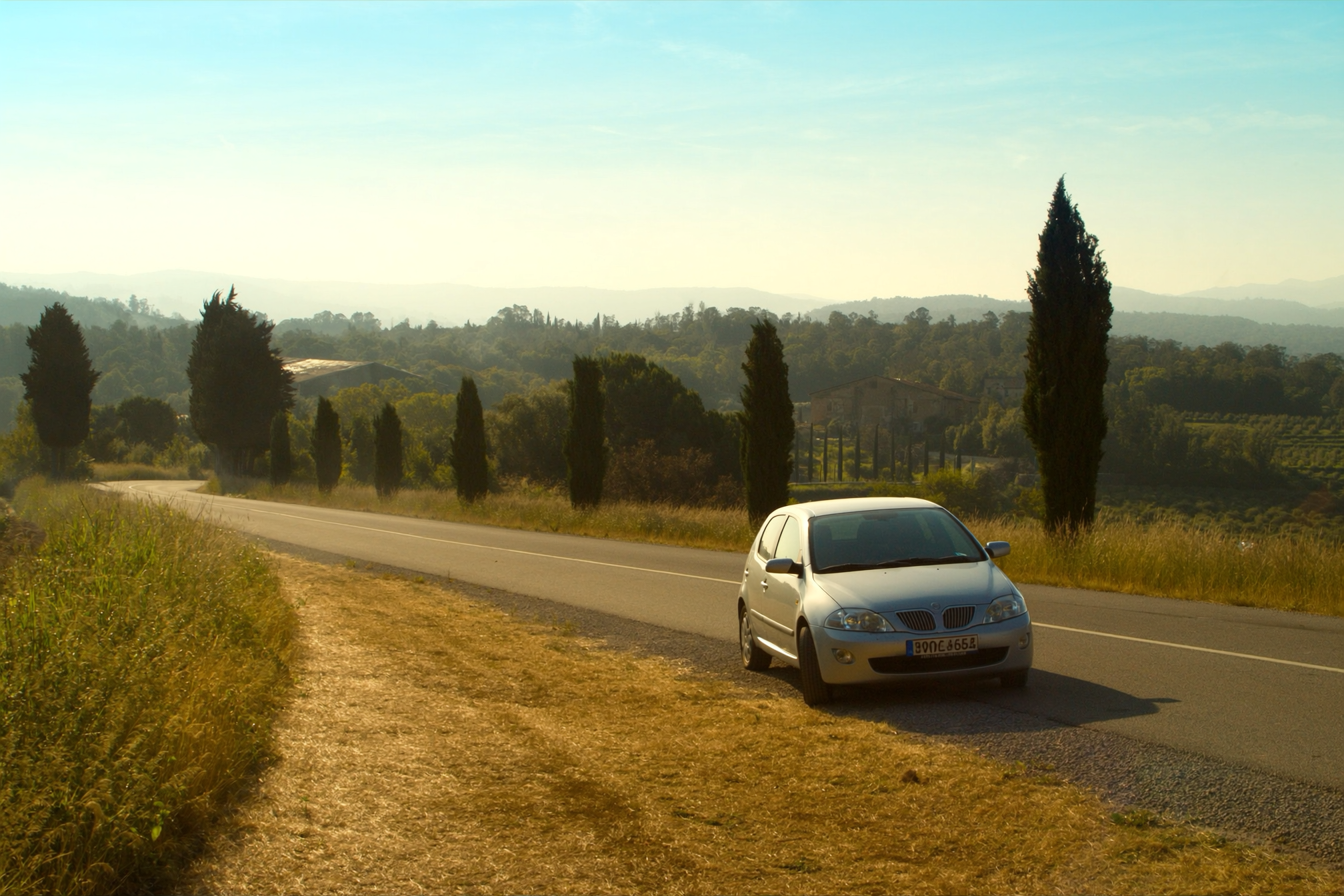
I get some version of the same message every week from someone planning a Val d'Orcia trip: can I really do this without a rental car? The honest answer is no, not if you actually want the photographs you have been looking at on Instagram. The cypress roads, the fog viewpoints above San Quirico, the farm tracks that put you in the right spot for sunrise over the hills, none of it is reachable by train or bus. A car is not optional for a serious Tuscany photography trip. It is the single piece of gear that determines whether you get the shot or watch the light happen from the wrong hillside.
But renting and driving a car in a foreign country, especially one with rules that are genuinely different from anything you deal with at home, is where a lot of first time visitors get nervous, and where a smaller number of them get an unpleasant surprise in the mail two months after they are already home. This is the guide I wish someone had handed me before my first Tuscany trip: what paperwork you actually need, how to pick the right car for a kit full of camera gear, what a ZTL zone is and why it matters more than you think, and how to drive the back roads that get you to the photographs everyone else is missing.
Key Takeaways
A rental car is essential for photographing Val d'Orcia properly, and a little preparation avoids the two most common mistakes: ZTL fines and picking the wrong car for your gear.
| Point | Details |
|---|---|
| Documents you need | A valid US driver's license plus an International Driving Permit (IDP), obtained before you leave the US, not in Italy |
| Automatic vs manual | Automatics exist but cost more and sell out early; book months ahead if you cannot drive a manual |
| ZTL zones | Restricted historic centers with camera enforced fines that arrive by mail months later; never drive past a white sign with a red circle unless your hotel has cleared you |
| Best car type | A compact wagon or small SUV with a real trunk, not a tiny city car, for tripods and multiple bags |
| Road surfaces | Many of the best viewpoints sit on unpaved strade bianche; a car with slightly higher clearance handles them more comfortably |
| Insurance | Check what your credit card and travel insurance already cover before buying the rental counter's full coverage |
Table of Contents
- Why you actually need a car here
- The paperwork: get this done before you fly
- Automatic or manual, and what size to book
- Understanding ZTL zones before you get a fine
- Driving the back roads and strade bianche
- Parking with a full camera kit
- Insurance: what you actually need
- Fuel, tolls, and the small stuff nobody mentions
- Planning drives around the light, not the map
- Frequently asked questions about renting a car in Tuscany
- Sources
- Recommended
Why you actually need a car here
Val d'Orcia is not a place with a train line running past the good viewpoints. The closest station of any use is in Chiusi or Buonconvento, and from either one you are still twenty minutes from anything worth photographing, with no bus that runs at 5am for sunrise. The famous cypress lined roads near San Quirico, the ridge you need for the classic Pienza terrace shot, the farm tracks above Monticchiello that put you above the autumn fog line, every one of these locations exists on a private or semi private road that only makes sense to reach by car. If you are weighing whether a self driven trip or a guided workshop is the better fit for you, the driving logistics are honestly one of the biggest factors, because someone has to get you to the light on time every single morning of the trip.
Even if your itinerary is mostly built around a home base in Pienza or San Quirico, you will still want to range out ten or fifteen miles most days, chasing whichever village has the better cloud forecast or driving to a specific field before the light on it disappears. A car turns Val d'Orcia into a flexible, responsive trip where you can change plans an hour before sunset. Without one, you are stuck wherever you can walk, which in practice means you are photographing the same handful of overexposed viewpoints as every other tourist on foot.
The paperwork: get this done before you fly
A US driver's license is not, by itself, enough to drive legally in Italy. You also need an International Driving Permit, usually called an IDP, which is a simple translation document that pairs with your home license. It is not a separate test and it is not hard to get, but it has to be issued in the United States before you leave. AAA and the American Automobile Touring Alliance are the two organizations authorized to issue one, the process takes about fifteen minutes at a AAA office if you bring two passport photos, your license, and a small fee, and it is valid for a year. Do not wait until you land to sort this out. There is no equivalent office at the airport in Rome or Florence, and rental counters do sometimes ask to see it, particularly if you have any kind of incident during the rental.
Pro Tip: Photocopy or photograph both sides of your license and your IDP and store the images somewhere you can access offline, like a saved photo on your phone. If your wallet gets lost or stolen partway through the trip, you can still show a rental counter or a police officer proof that you were legally licensed to drive.
You will also want your passport on hand for the rental pickup itself, a credit card in the driver's name for the security deposit, and your confirmation number printed or easily accessible, since airport wifi at Florence or Rome can be unreliable exactly when you need to pull up a reservation. If you are renting through a US based broker rather than directly with an Italian company, double check that your confirmation actually guarantees a specific car class rather than "similar," because Tuscany rental counters run out of popular categories fast in peak season.
Automatic or manual, and what size to book
Most rental cars in Italy are still manual transmission, which comes as a genuine surprise to a lot of American drivers who have never driven a stick in their life. Automatics are available, but they are a smaller percentage of the fleet, cost noticeably more per day, and sell out first during the busy April through October stretch that also happens to be prime photography season. If you cannot drive a manual, or would simply rather not learn on unfamiliar narrow Tuscan roads, book the automatic the moment your travel dates are locked in. Waiting until a month out is genuinely risky in high season.
For size, resist the instinct to book the cheapest, smallest city car you see. Those cars are built for parking in Rome, not for hauling two camera bodies, three lenses, a tripod, a filter kit, and two people's luggage for a week. I recommend a compact wagon or a small SUV, the kind of car European rental sites often list as a "station wagon" or "crossover" class. You want a trunk deep enough to lay a tripod flat, not just a hatch you have to fold seats down for every single day. If there are two photographers traveling together, upgrade one class higher than you think you need. Squeezing two full kits into a subcompact for a week gets old by day three.
| Car class | Good for | Downside for photographers |
|---|---|---|
| Subcompact city car | Solo traveler with one small bag, tight village parking | Trunk too small for a tripod plus luggage together |
| Compact wagon / estate | Two photographers, full kit, best all round choice for Val d'Orcia | Slightly higher daily rate than the cheapest class |
| Small SUV / crossover | Groups of three or more, extra ground clearance on farm tracks | Wider, less comfortable on the narrowest hill town streets |
| Full size sedan | Highway comfort on longer transfers | Awkward on unpaved roads and in medieval village parking |
Understanding ZTL zones before you get a fine
ZTL stands for Zona a Traffico Limitato, or Limited Traffic Zone, and it is the single most common way visiting drivers accidentally get a fine in Italy. Nearly every historic town center in Tuscany, including Pienza, San Quirico, and Montepulciano, has a ZTL covering its old core, meaning only residents, permitted vehicles, and sometimes hotel guests with prior authorization are allowed to drive inside during restricted hours. The entrances are marked with a round white sign with a red circular border reading "Zona Traffico Limitato," and increasingly they are enforced by an automatic camera rather than a person, which means there is no warning at the moment you drive through. The fine simply appears in the mail, addressed through your rental company, sometimes two or three months after the trip is already over.
The good news is that avoiding a ZTL fine is completely manageable once you know what to look for. If your hotel is inside a historic center, ask them directly, before you arrive, whether they can register your rental plate for temporary access, which many do as a routine courtesy for guests who are driving in to check in or drop luggage. Outside of that specific arrangement, park in the free or paid lots just outside the walls, which every one of these towns has, and walk in. It typically adds five to ten minutes and it completely removes the risk. Google Maps and Apple Maps both do a reasonable job flagging ZTL restricted streets on the route preview now, but do not rely on that alone, since data quality varies by town and update frequency lags actual signage changes.
Pro Tip: If you do end up driving into a ZTL by mistake, most towns give you a short grace window, often somewhere between fifteen minutes and an hour, before the plate is actually logged as a violation. If you realize your error immediately, turn around and exit the same way you came in rather than continuing forward looking for another way out.
Driving the back roads and strade bianche
Some of the most photographed roads in Val d'Orcia, including sections of the famous cypress avenues, are strade bianche, literally "white roads," meaning unpaved gravel and packed dirt rather than asphalt. They are almost always well maintained and entirely drivable in a normal rental car at a sensible speed, but they do reward a bit of extra ground clearance and reward you paying attention to your speed on the washboard sections that develop after dry stretches. Slow down before a blind crest, since farm equipment, cyclists, and other photographers pulled half onto the shoulder for a shot are all genuinely common on these roads.
Respect for private land matters enormously here, more than most visitors realize before they arrive. A large share of the cypress roads and rolling hill viewpoints you have seen in photographs sit on working farmland, and the owners have become understandably protective after years of tourists parking across gates, trampling planted fields for a better angle, or blocking tractor access during harvest. Stay on the road itself unless you have a specific, confirmed reason to be on the land, close any gate you find closed, and never park in a way that blocks a farm entrance, even briefly for "just one photo." A five minute conversation with a farmer who is annoyed about tourists is a bad way to start a shoot, and it damages access for every photographer who comes after you.
Parking with a full camera kit
Camera gear theft from rental cars is not common in rural Val d'Orcia the way it can be in a big city parking garage, but it is not zero either, and a smashed window costs you both money and irreplaceable shooting time. The simple habit that solves most of the risk is never leaving visible gear in the car, even for a quick coffee stop. Put bags in the trunk before you arrive somewhere, not after you park in front of the cafe with everyone watching. If you are staying somewhere with off street parking, use it, and if your accommodation only offers street parking, ask the host which side of the street or which specific spot they consider safest, since local knowledge on this is genuinely more useful than a generic online opinion.
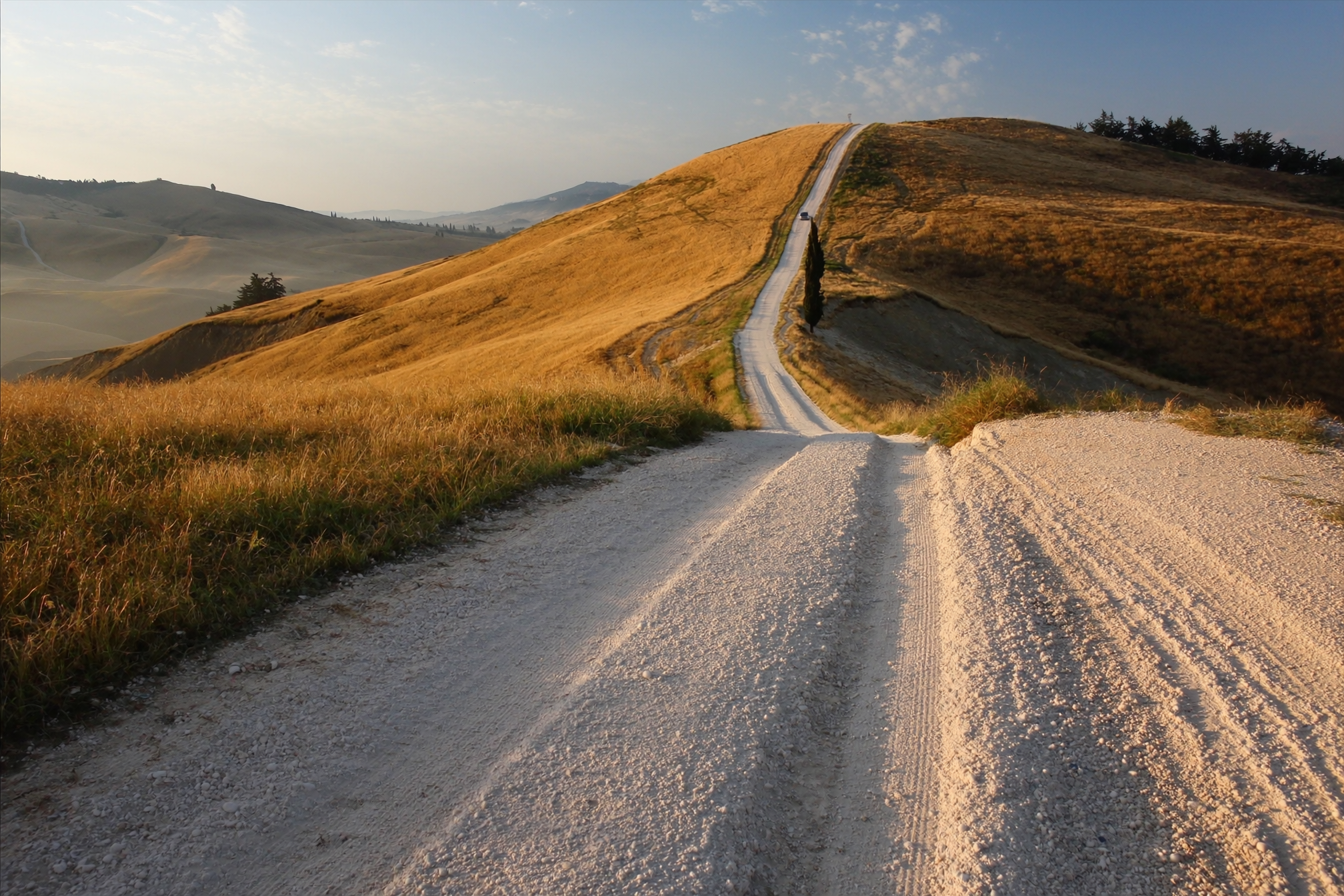
For actual shooting stops along a rural road, a hazard light pull off onto the wide gravel shoulder is normal and expected practice here, since local drivers see photographers doing this constantly during peak season. Just make sure you are fully off the drivable surface, not stopped in a travel lane around a blind curve, and that you are not blocking a gate or a farm access point even for the five minutes it takes to get the shot.
Insurance: what you actually need
Every rental counter in Italy will offer you a full coverage upgrade at the desk, usually with a fairly aggressive sales pitch about how much a scratched bumper or a chipped windshield can cost without it. Before you say yes on the spot, check two things ahead of time. First, many US credit cards include rental car collision coverage as a card benefit, though a meaningful number of them explicitly exclude Italy or exclude countries where you are required to decline the rental company's own collision damage waiver to activate the card's coverage, so read the fine print for your specific card rather than assuming. Second, check whether your travel insurance policy, if you bought one, already includes a rental car damage benefit.
If either of those already covers you adequately, the desk upgrade is often an unnecessary expense stacked on top of coverage you already have. If neither one clearly covers you, or if the fine print is confusing enough that you are not confident, buying the rental company's coverage removes the ambiguity entirely and is usually worth the daily cost for the peace of mind on unfamiliar narrow roads. Either way, decide this before you are standing at the counter with a line of tired travelers behind you, because that is not the moment for careful reading.
Fuel, tolls, and the small stuff nobody mentions
Fuel in Italy is sold by the liter and priced noticeably higher than most US drivers are used to per gallon equivalent, so budget accordingly, especially if you are covering ground across multiple villages every day. Confirm whether your car takes benzina (gasoline) or gasolio (diesel) before you pull up to a pump, since putting the wrong fuel in a rental is an expensive and entirely avoidable mistake, and the labeling at Italian stations is not always as obvious as at home. Many rural stations are self service and card only outside business hours, which is worth knowing if you are driving back from a sunset shoot with a low tank.
Highway tolls on the autostrada are common if you are transferring in from Florence or Rome airport, paid at booths that take cash or card, but Val d'Orcia itself is mostly non toll regional roads once you are off the main highway. Return the car with a full tank whenever your contract calls for it, since the rental company's own refueling charge is reliably more expensive than filling up yourself the evening before drop off.
Planning drives around the light, not the map
The single biggest adjustment for photographers coming from a normal road trip mindset is planning your driving around light rather than around distance. A twenty minute drive that looks trivial on a map becomes a genuine scheduling problem if it means leaving your fog viewpoint above San Quirico at the exact moment the light is breaking, just to make a dinner reservation on time. Build slack into every plan, plan your route the evening before in daylight if a location is unfamiliar, and treat sunrise and sunset departure times as fixed non negotiable anchors that everything else in the day bends around, not the other way around.
If the planning side of this sounds like a lot to manage on top of actually making photographs, it is worth being honest with yourself about that. This is exactly the piece of the trip that a guided WeShoot photography tour through Val d'Orcia removes entirely. Someone else handles every drive, every ZTL zone, every fuel stop and parking decision, timed against the light rather than against a rental contract, so your only job each morning is showing up with your camera ready. For a first time visitor especially, that trade is worth seriously weighing against the independence of a self driven trip.
Frequently asked questions about renting a car in Tuscany
Do I really need an International Driving Permit? Legally, yes, alongside your US license. Enforcement in practice is inconsistent, but if you are stopped without one, or involved in any kind of incident, it can turn a minor situation into a genuinely expensive one. It costs very little and takes fifteen minutes at a AAA office, so there is no good reason to skip it.
Can I drive into a hill town like Pienza or San Quirico at all? Yes, but only up to the ZTL boundary unless you have specific authorization, usually arranged through your hotel. Park in the lots just outside the walls and walk in, which is standard practice for every visitor, not just a workaround.
Is it safe to drive on the unpaved strade bianche roads? Yes, in a normal rental car at a reasonable speed. They are well maintained gravel roads used daily by local residents, not off road trails, though a bit of extra ground clearance from a small SUV or wagon makes the washboard sections more comfortable.
Should I rent through a US company or book directly with an Italian rental agency? Either can work, but always confirm your specific car class is guaranteed rather than a "similar vehicle" category, and read the insurance fine print carefully regardless of which you choose, since the confusing terms tend to be similar across both.
What if I get a ZTL fine after I am already home? It happens, and it is usually legitimate if you did drive through a restricted zone. The fine, plus an administrative fee charged by the rental company for handling it, will typically show up on the credit card used for the rental within a few months. Paying it promptly avoids further penalties.
Sources
- US Department of State: Italy travel information, including local driving laws and road safety guidance
- Limited Traffic Zone (ZTL): Wikipedia overview of Italy's restricted traffic zones