Pienza for Photographers: The Renaissance Town Every Tuscany Itinerary Needs
A photographer's guide to Pienza, from the symmetrical Piazza Pio II to the panoramic terrace over Val d'Orcia, with a realistic timing plan for beating the tour bus crowds.
Pienza for Photographers: The Renaissance Town Every Tuscany Itinerary Needs
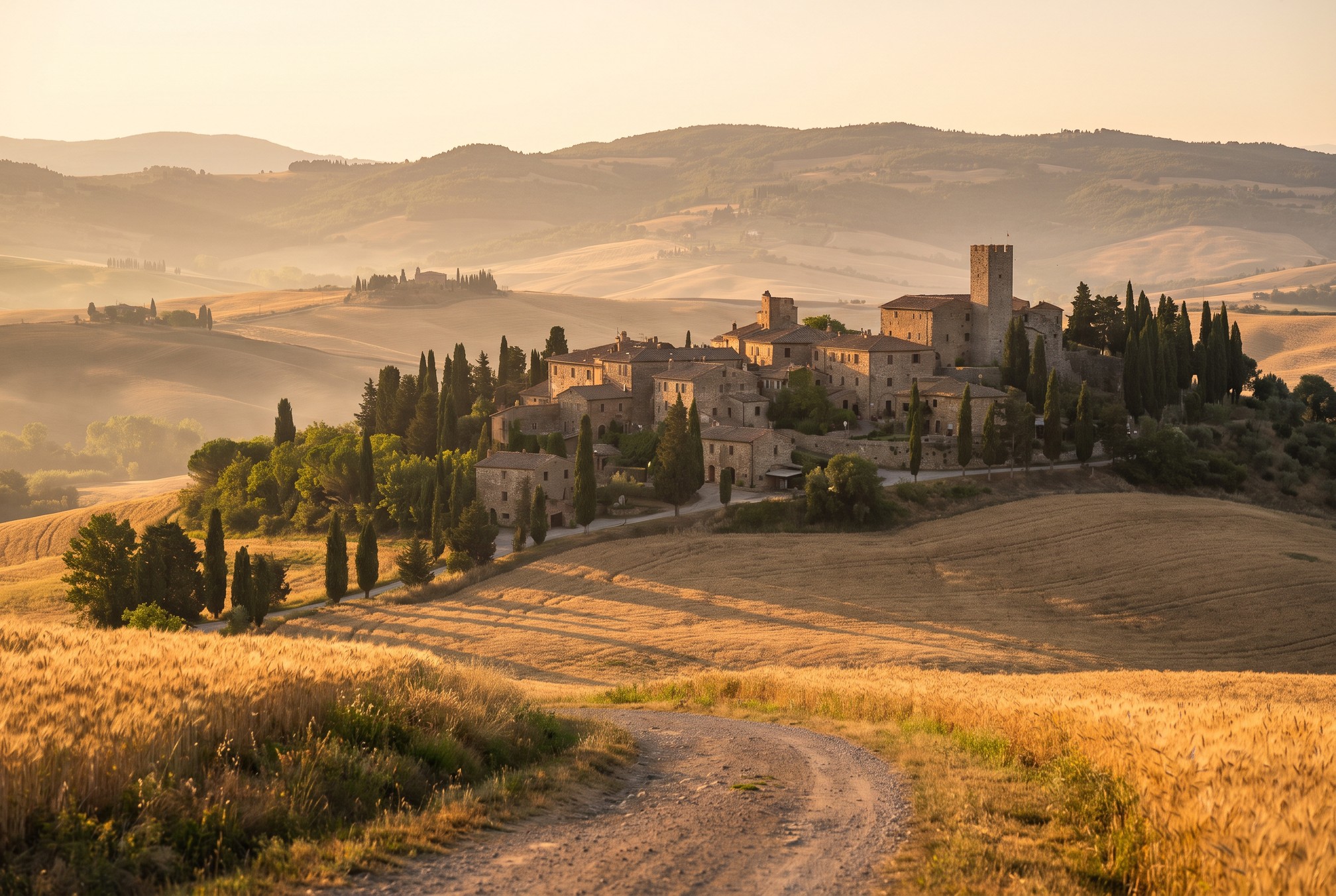
Most travelers pass through Pienza in under two hours, snap a photo of the main street, and move on to Montepulciano or Montalcino for lunch. Photographers who do that leave with the same three frames as everyone else and miss the reason Pienza matters at all. This is not just another pretty hill town. Pienza was built, in a single decade of the fifteenth century, as an experiment in what a perfect Renaissance city should look like, and that experiment is still standing, still lived in, and still one of the most photographable places in Val d'Orcia.
What makes Pienza worth a dedicated stop rather than a drive by is the combination of two very different kinds of frame. Inside the walls you get tight, symmetrical Renaissance architecture, warm stone facades, and quiet side streets with almost no traffic. Step onto the terrace behind the cathedral and the town falls away into one of the best open views of Val d'Orcia's rolling hills anywhere in the region. Few towns give you both a strong architectural subject and a strong landscape subject within a five minute walk of each other.
Key Takeaways
Pienza rewards photographers who slow down and treat it as two separate shoots, one architectural and one landscape, rather than a quick photo stop.
| Point | Details |
|---|---|
| Best time to shoot the piazza | Before 9am or after 6pm, when tour buses are not parked outside the walls |
| Best time for the terrace view | Sunrise for soft light and low fog chances, or an hour before sunset for warm side light on the hills |
| Main subject inside the walls | Piazza Pio II and the travertine facade of the Duomo |
| Main subject outside the walls | The panoramic terrace along Via del Casello with Val d'Orcia spread below |
| Time needed | Two to three hours minimum for both the town and the terrace, longer if you want both sunrise and sunset light |
| Nearby pairing | Monticchiello, a fifteen minute drive, for a quieter alternative once Pienza fills up |
Table of Contents
- Why Pienza looks different from every other Tuscan town
- Piazza Pio II: the heart of the ideal city
- The terrace walk: Via del Bacio and Via dell'Amore
- Corso Il Rossellino and the side streets
- Beating the crowds: a realistic timing plan
- Shooting the valley from outside the walls
- What gear actually earns its place here
- Frequently asked questions about photographing Pienza
- A simple half day plan
Why Pienza looks different from every other Tuscan town
Nearly every hill town in Tuscany grew organically over centuries, one building added to the next as families and guilds needed space. Pienza did not. Pope Pius II, born Enea Silvio Piccolomini in the small village then called Corsignano, decided in 1459 to rebuild his birthplace into a model Renaissance city. He hired the architect Bernardo Rossellino and gave him roughly three years and a tight budget to redesign the town center around a single unified plan. The result is Piazza Pio II, a small square where the cathedral, the Palazzo Piccolomini, the town hall, and the bishop's palace were all designed to work together as one composition, rather than accumulated piecemeal.
That single decision is why Pienza photographs so differently from Montepulciano or San Gimignano. The lines are cleaner. The proportions were planned by one designer instead of negotiated by a dozen builders across three centuries. UNESCO recognized this in 1996, listing the historic center as a World Heritage Site specifically for its role as the first application of Renaissance urban planning concepts to an existing town. For photographers, the practical upshot is a piazza where symmetry, converging lines, and a genuinely unusual travertine and brick color palette are available without much creative effort. You are photographing a plan, not an accident, and it shows.
Piazza Pio II: the heart of the ideal city
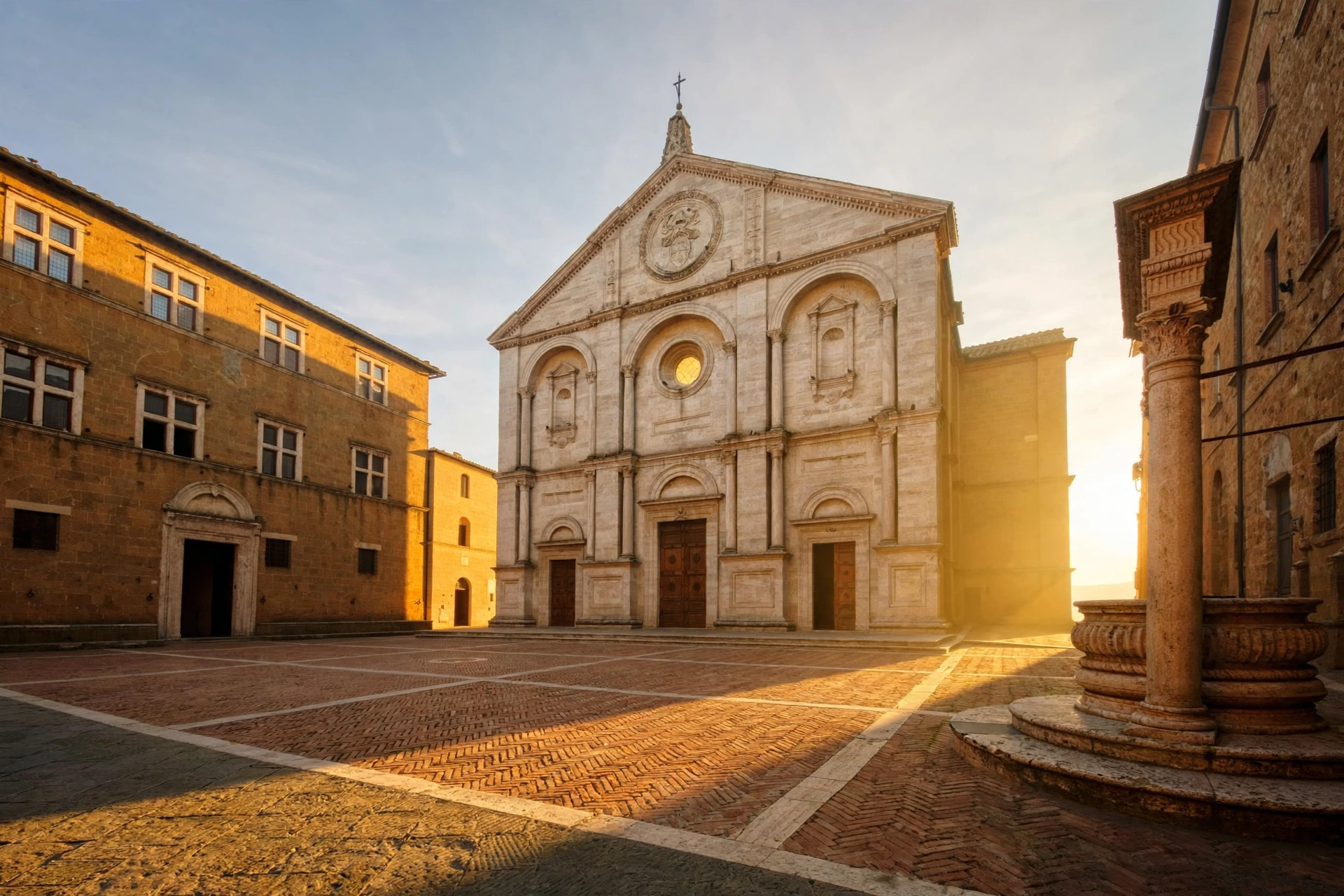
Start here, and start early. The piazza is small, trapezoidal rather than square, and Rossellino used that shape deliberately to make the cathedral facade appear larger when viewed from the entrance of the square. Position yourself near the well at the piazza's edge and the cathedral's travertine front catches direct light for a good part of the morning, which pairs well with the warm tone of the surrounding buildings.
The interior of the Duomo is worth ten minutes even if you are focused on exteriors. It was built with an unusually tall, bright nave for its time, since Pius II wanted a Gothic-influenced hall church flooded with light, a deliberate departure from the darker Gothic churches common further north. A tripod is generally fine inside outside of active services, but keep an eye on posted signage, since rules shift depending on the season and any events booked in the cathedral.
Pro Tip: Shoot the piazza from a low angle near the well looking toward the cathedral first thing in the morning, then walk the same fifteen feet again in the last hour of daylight. The raking side light on the travertine facade in the evening produces a completely different texture than the flatter morning light, and having both versions gives you a stronger edit to choose from later.
The terrace walk: Via del Bacio and Via dell'Amore
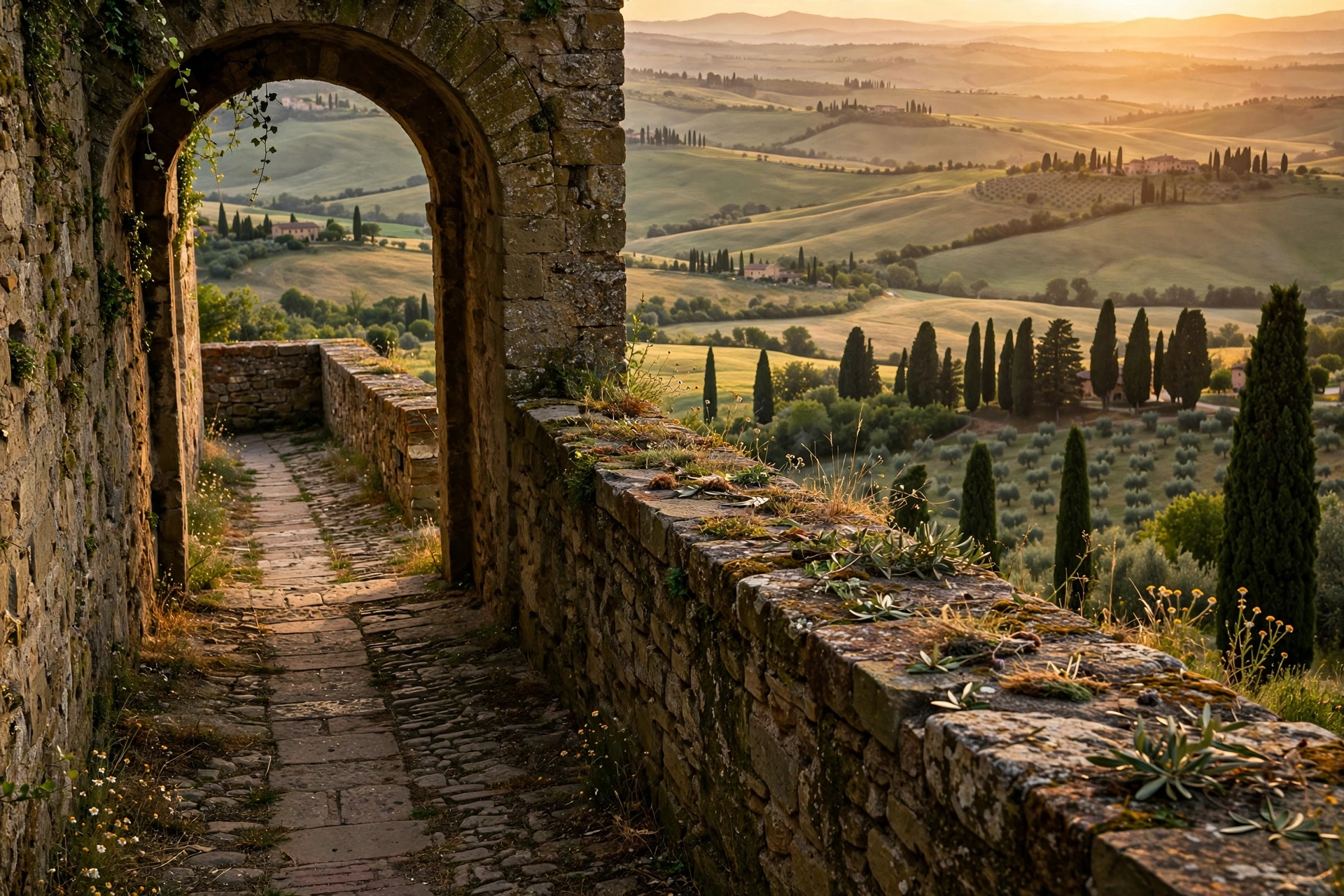
Behind the cathedral, a narrow pedestrian terrace runs along the southern edge of town, offering an uninterrupted view over the Val d'Orcia hills toward Monte Amiata. Two of the small streets leading to this terrace carry nicknames rather than formal names in most guidebooks: Via del Bacio, the Street of the Kiss, and Via dell'Amore, the Street of Love, both narrow lanes framed by stone walls that lead your eye straight out toward the open countryside.
This terrace is arguably the single best composition in Pienza for a landscape photographer, because it lets you combine a hard architectural foreground, the town wall and a stone archway, with the soft rolling hills of Val d'Orcia in the background in one frame. A wide angle lens in the 16 to 24mm range on a full frame body captures the full sweep of the valley while still keeping enough of the foreground wall or archway to anchor the composition, an approach covered in more detail in our guide to photographing rolling hills with real depth.
Corso Il Rossellino and the side streets
The main pedestrian spine of Pienza, Corso Il Rossellino, is lined with cheese shops selling the region's famous pecorino, small galleries, and enotecas, and it photographs best either very early, before shops open and set up their outdoor displays, or in soft evening light when the crowds have thinned. During the middle of the day this street can be genuinely packed with day trippers from coach tours, and getting a clean frame without dozens of strangers in it becomes close to impossible.
The real reward in Pienza is usually found off the main corso. Turn down any of the narrow side streets running perpendicular to the terrace and you will find quiet stone stairways, potted plants against weathered doors, and small framed views of the valley appearing unexpectedly between buildings. These side streets rarely see more than a handful of other visitors even at midday, and they are where a lot of the more distinctive, less generic Pienza photographs actually come from.
Beating the crowds: a realistic timing plan
Pienza is a popular half day stop for tour groups traveling between Siena and Montepulciano, and the crowd pattern is fairly predictable once you know it. Coach parking fills up mid morning, typically between 9:30 and 11:30, and again after lunch from roughly 1:30 to 4:00. The two reliable windows for a quieter town center are early morning, ideally arriving before 8am, and the last ninety minutes before sunset, when day tour groups have already left for their next stop or dinner reservation.
| Time of day | What to expect |
|---|---|
| Before 8am | Nearly empty streets, soft light, shops still closed |
| 9:30am to 11:30am | Heaviest coach tour traffic in the piazza and main corso |
| Midday | Harsh overhead light, moderate crowds, good time for a lunch break instead |
| 1:30pm to 4:00pm | Second wave of day trip groups, generally the busiest window overall |
| Last 90 minutes before sunset | Groups gone, warm side light on the piazza, best terrace light |
If your schedule only allows one visit, choose the evening window over the morning one. The light on the cathedral facade and the valley view from the terrace is noticeably warmer and more dramatic in the last hour before sunset than it is at sunrise, and you will likely have the terrace almost entirely to yourself.
Shooting the valley from outside the walls
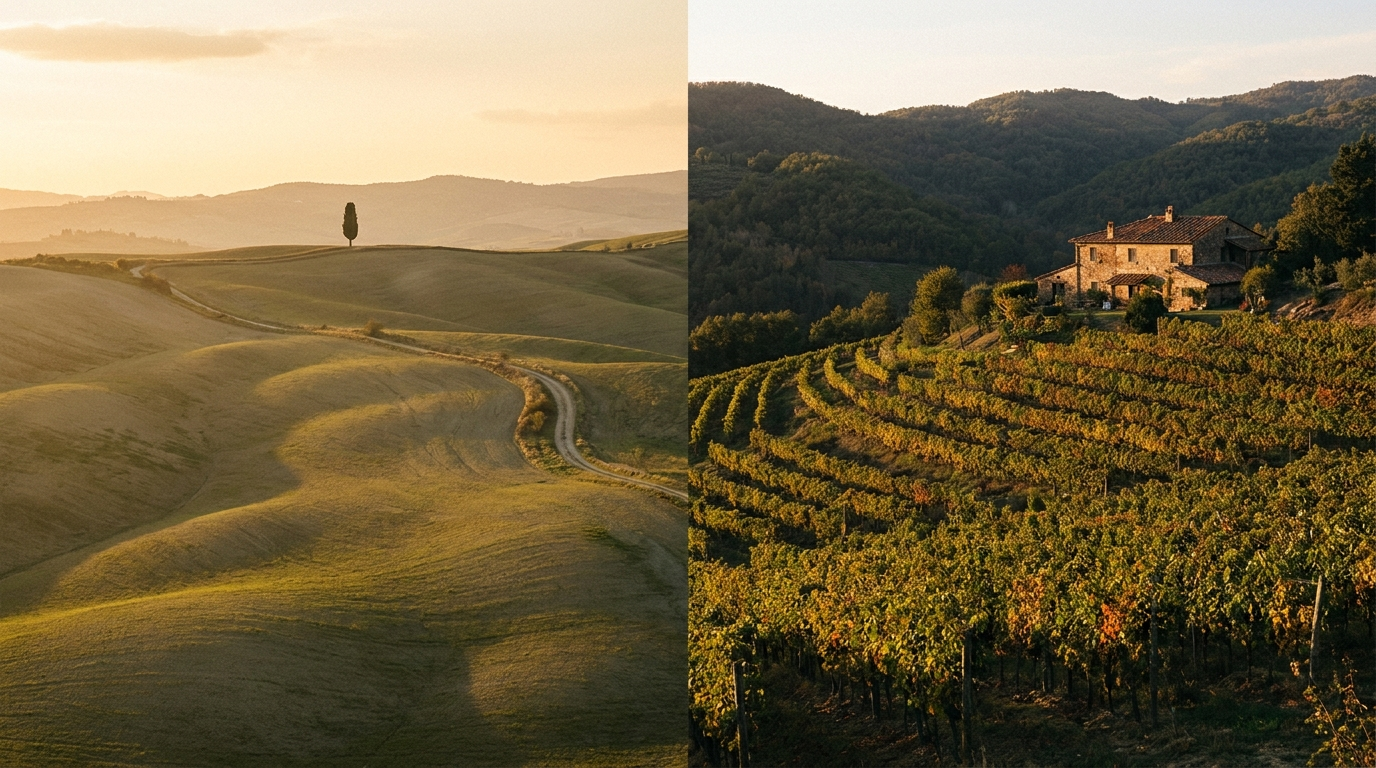
Beyond the terrace inside town, the road leading south out of Pienza toward San Quirico d'Orcia offers several informal pull off spots with wide views back toward the town walls themselves, useful if you want Pienza as the subject rather than the viewpoint. Shooting the town from a distance with a longer lens, in the 70 to 100mm range, compresses the hills in front of it and can produce a strong layered composition, particularly on mornings with a light haze or residual fog in the low ground between you and the town.
For readers building a wider itinerary, Pienza pairs naturally with two other stops covered elsewhere in this series. Val d'Orcia Explained covers the broader geography and history of the region Pienza sits inside, and San Quirico d'Orcia's walking guide is a fifteen minute drive away and works well as either a same day pairing or a separate morning.
What gear actually earns its place here
Pienza does not demand a large kit. A wide angle zoom covers the terrace views and the piazza's tight architectural lines, while a mid range zoom in the 24 to 70mm range handles the street level shots along Corso Il Rossellino and the side alleys. A tripod is genuinely useful on the terrace for a longer exposure at blue hour, when the ambient light over the valley falls faster than most cameras handle cleanly handheld, but it is not required for the rest of the town. Given how crowded the narrow streets get at peak hours, a compact setup you can move quickly is more valuable here than a heavier kit that slows you down navigating tight corners.
Pro Tip: If you only bring one lens into Pienza, make it something in the 16 to 35mm range. The terrace view, the piazza, and the narrow side streets all reward a wider field of view more than a telephoto does, and you can always crop in post if a tighter frame turns out to work better.
Frequently asked questions about photographing Pienza
Is a tripod allowed in Piazza Pio II? Generally yes for personal, non commercial photography, but avoid blocking pedestrian traffic in the tighter parts of the square, especially during the busier midday hours, and be prepared to pack up quickly if an event is set up in the piazza.
How long should I spend in Pienza? Two to three hours covers the essentials comfortably. Serious photographers who want both sunrise and sunset light, or who plan to shoot the interior of the Duomo and the diocesan museum as well, should budget closer to half a day or split the visit across two separate trips.
Is Pienza worth visiting if I have already seen San Quirico or Montepulciano? Yes. Pienza's planned Renaissance layout genuinely looks different from the organically grown towns nearby, and the terrace view over Val d'Orcia is one of the strongest single viewpoints in the region.
What is Pienza famous for besides architecture? Pecorino di Pienza, a sheep's milk cheese aged in various ways including under ash or walnut leaves, is sold throughout the town and is worth tasting alongside any photography stop.
A simple half day plan
Arrive before 8am and shoot Piazza Pio II and the cathedral facade in the quiet early light. Walk the terrace along Via del Bacio and Via dell'Amore while the town is still nearly empty, then explore the side streets off the main corso before shops fully open. Take a break through the crowded midday hours, ideally with a plate of pecorino and a glass of local wine, then return in the last ninety minutes before sunset to catch the warm side light back on the piazza and a final pass along the terrace as the valley below turns gold. This simple loop, repeated with attention to light rather than rushed for a single photo, is enough to walk away with a genuinely varied set of images from a town most visitors reduce to one quick snapshot.
Pienza is a compact stop on paper, easy to dismiss as a quick add on between bigger name towns. Photographers who give it the time it deserves usually find it becomes one of the strongest single stops on the whole trip. For the full picture of how Pienza fits into a broader Val d'Orcia itinerary, our Tuscany Photography Guide lays out the other villages, cypress roads, and seasonal timing worth building a trip around.
Sources
- Comune di Pienza: official municipal tourism information
- Pienza: Wikipedia entry on history and UNESCO World Heritage status