San Quirico d'Orcia: A Photographer's Walking Guide to the Historic Center
A street level walking guide to San Quirico d'Orcia, from the medieval gates and the Horti Leonini gardens to the cypress lined farm roads just outside the walls.
San Quirico d'Orcia: A Photographer's Walking Guide to the Historic Center
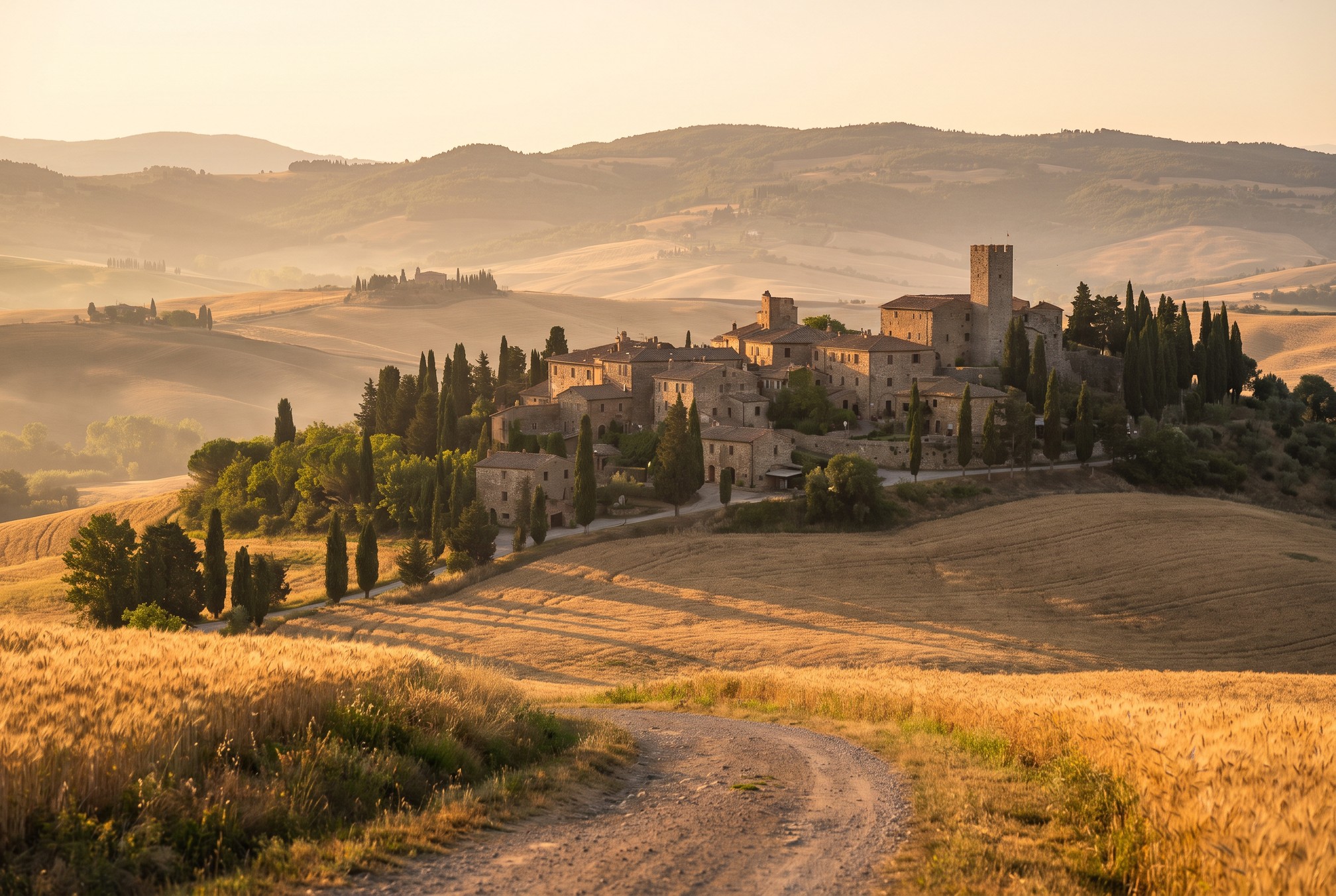
San Quirico d'Orcia is the village most photographers pass through without stopping, and that is a mistake. It sits almost exactly at the center of Val d'Orcia, which makes it the easiest base for day trips to Pienza, Montalcino, and the cypress roads, but the town itself rewards a slow morning far more than a quick lunch stop. Medieval gates, a walled historic center small enough to cover on foot in a couple of hours, and one of the best formal gardens in the region all sit inside a town most itineraries treat as a pass through point rather than a destination.
This is a street level guide built for a single day stop. It covers where to enter the walls, what the Horti Leonini gardens actually offer a photographer beyond a green lawn, and the cypress lined roads just outside town that are as good a warm up as any for the more famous avenues elsewhere in the valley.
Key Takeaways
San Quirico rewards a slow walk more than a quick photo stop, and its position in the middle of Val d'Orcia makes it a natural base for a single day or a full stay.
| Point | Details |
|---|---|
| Best entry point | Porta dei Cappuccini on the eastern edge, quietest gate at sunrise |
| Signature location | Horti Leonini, a walled Renaissance garden open and free most of the day |
| Best light window | First 90 minutes after sunrise, before day trip buses arrive from Siena |
| Time needed | 2 to 3 hours to walk the full historic center at a photographer's pace |
| Nearby bonus | Cypress lined farm roads within a 10 minute walk of the town walls |
Table of Contents
- Why San Quirico belongs on your shot list
- The medieval gates and where to start
- Horti Leonini: the gardens inside the walls
- The Collegiata and the main street
- The cypress roads just outside town
- A short history worth knowing before you shoot
- A suggested walking route
- Timing, crowds, and practical notes
- Frequently asked questions about photographing San Quirico
Why San Quirico belongs on your shot list
Most first time visitors to Val d'Orcia build their itinerary around Pienza and Montalcino and treat San Quirico as the town they drive through between the two. That is understandable given how much attention those two towns get, but it means most of the photographs coming out of San Quirico are taken from a moving car window rather than an actual walk through the streets. The town has a complete circuit of medieval walls, four gates, a genuinely important Romanesque church, and a garden that most Pienza day trippers never see because it sits a few streets off the main piazza.
For a general introduction to why this whole region looks the way it does in photographs, our piece on what makes Val d'Orcia the soul of Tuscany is worth reading before you plan the specific stops below. San Quirico sits right in the geographic and historical middle of everything that guide covers.
The medieval gates and where to start
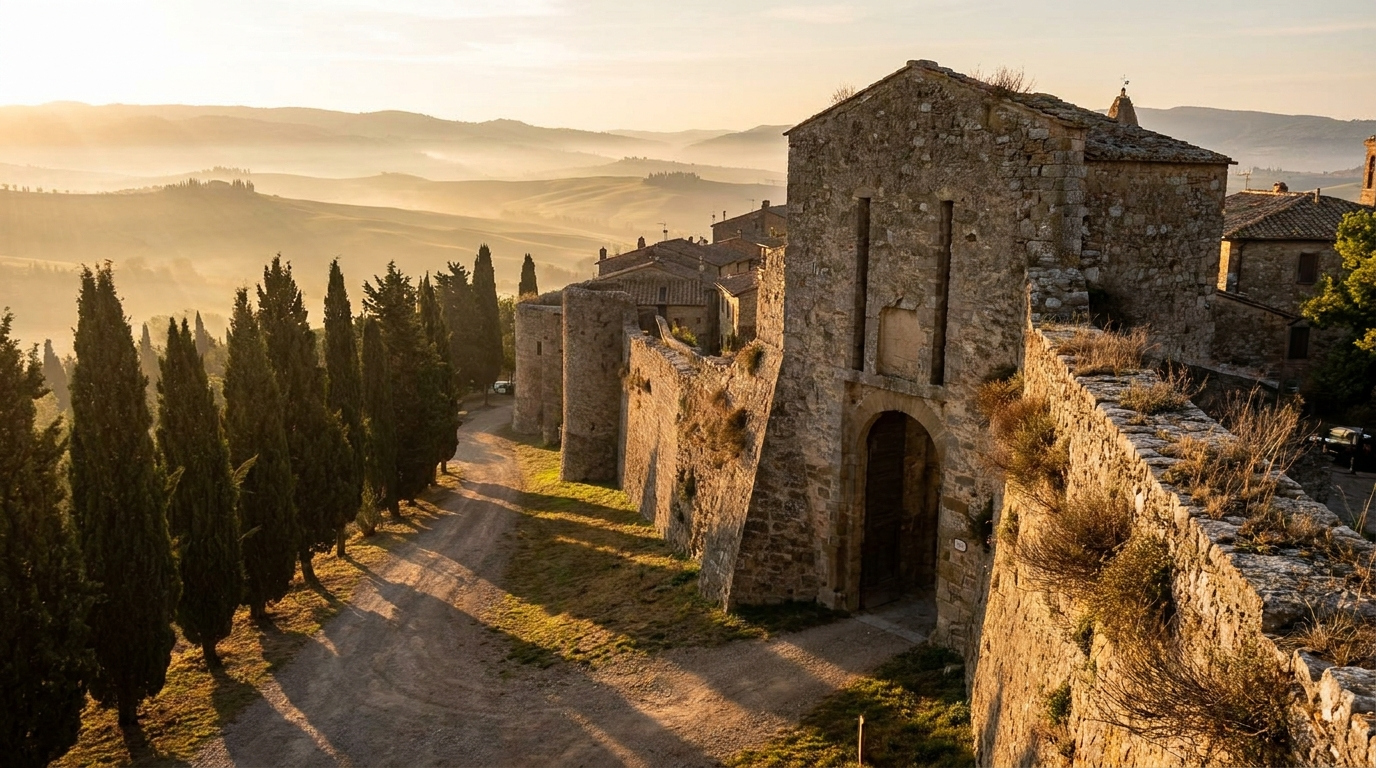
San Quirico's town walls date back to the medieval period and remain largely intact, which is unusual even by Tuscan standards. Four gates lead into the historic center, and where you start changes the whole shape of your walk. Porta Nuova, on the northwestern side facing the main road from Siena, is the gate most cars and buses pass through, which means it sees more foot traffic earlier in the day.
Porta dei Cappuccini, on the eastern edge, is the quieter option and the one worth using for a sunrise shoot. The narrow street just inside this gate catches early light nicely against the stone facades, and you will often have it entirely to yourself before eight in the morning. Starting here and working west toward Porta Nuova gives you a natural progression from empty morning streets to a livelier town center by the time cafes open.
Pro Tip: Park just outside Porta dei Cappuccini rather than trying to find space near the main piazza. The free lot on the eastern side is a two minute walk to the gate and almost always has space before nine in the morning, even in high season.
Horti Leonini: the gardens inside the walls
Horti Leonini is the single reason San Quirico deserves more than a coffee stop on your itinerary. Laid out in 1580 by Diomede Leoni, it is a formal Italian garden built directly into the town walls, with geometric box hedges arranged around a central statue and a raised terrace that looks out over the surrounding countryside. Unlike most gardens attached to villas or private estates, this one is free to enter and open through most of the day, which makes it an easy addition to a morning walk rather than a scheduled ticketed stop.
The geometric hedge patterns photograph well from the raised walkway that runs along the old wall, giving you a high angle over the full garden layout. Come back in late afternoon and the same view picks up warm side light that rakes across the hedges and brings out the texture that flat midday light flattens out completely. If your schedule only allows one visit, favor the late afternoon slot over morning for this specific location, which is the reverse of most of the rest of the town.
The Collegiata and the main street
The Collegiata dei Santi Quirico e Giulitta anchors the town's main piazza and is worth photographing for its carved Romanesque portals alone, particularly the main door with its intricate stone figures. The building's facade catches direct light for a relatively narrow window around mid morning, since the piazza is tight enough that surrounding buildings shade it for much of the rest of the day.
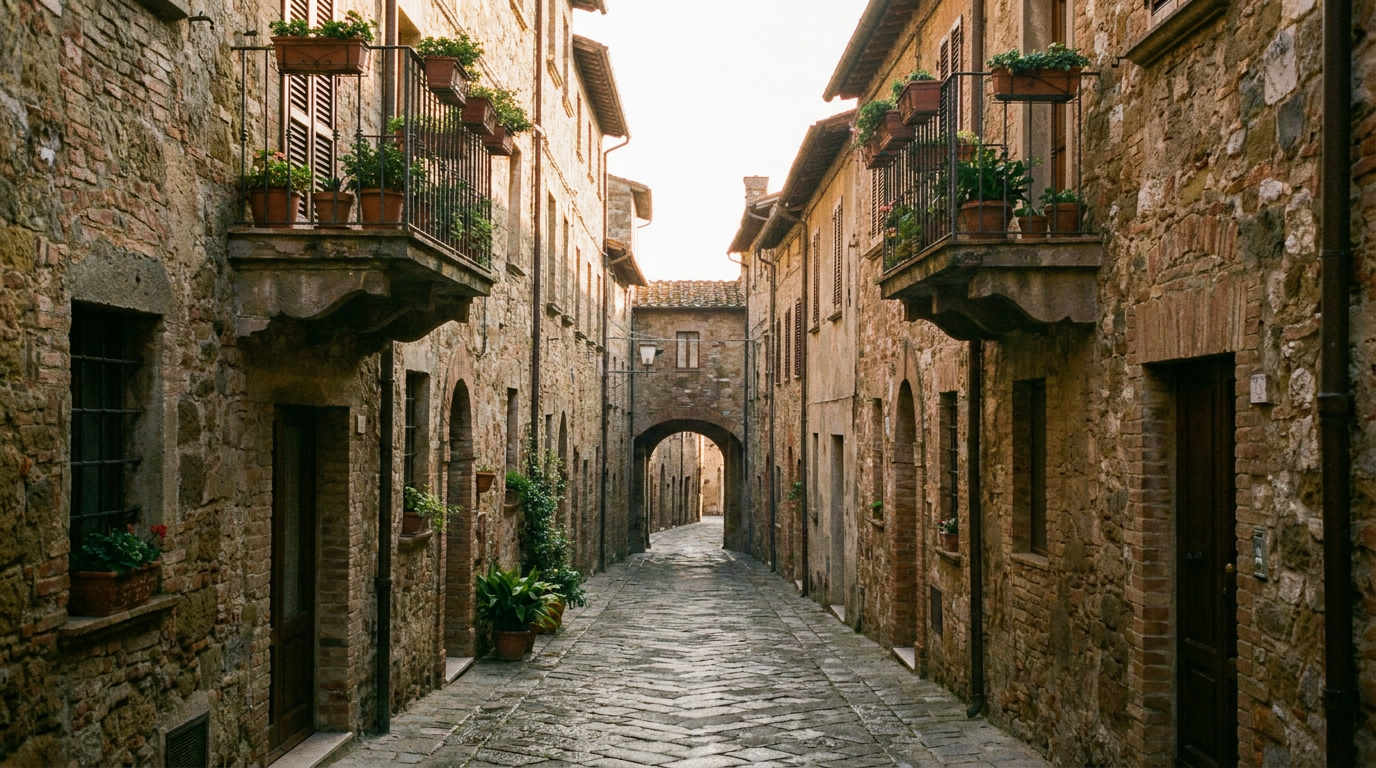
From the piazza, Via Dante Alighieri runs through the heart of the historic center and is lined with the kind of weathered stone facades, iron balconies, and small shopfronts that make for reliable street level compositions without much searching. It is narrow enough that a wide angle lens captures the full height of the buildings on either side, an approach we cover in more general terms in our guide to photographing Tuscany's villages and landscapes.
The cypress roads just outside town
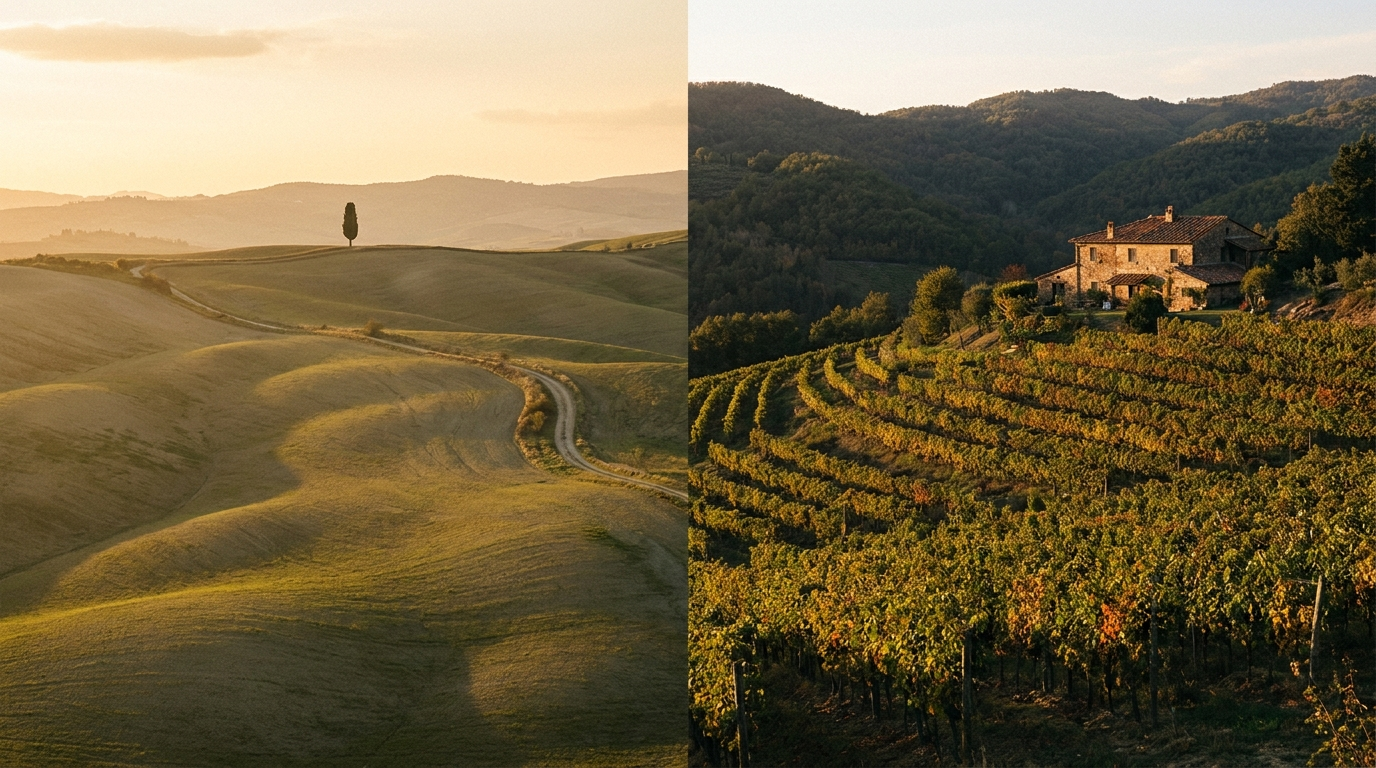
San Quirico sits close to several of the cypress lined farm roads that show up in nearly every Tuscany photography feature, and a short walk or drive from the town gates gets you to compositions that rival the more famous ones further south near Monticchiello. The roads southeast of town, visible from the SR2 as you approach San Quirico from Pienza, offer the classic double row of cypress trees framing a farmhouse in the distance, usually without another photographer in sight outside of peak sunrise hours.
| Location | Best for | Distance from walls |
|---|---|---|
| Porta dei Cappuccini street | Empty morning street scenes | Inside the walls |
| Horti Leonini terrace | Formal garden geometry, late afternoon light | Inside the walls |
| Collegiata facade | Romanesque stone carving detail | Inside the walls |
| SR2 cypress rows | Classic cypress avenue compositions | 5 to 10 minute drive |
A short history worth knowing before you shoot
San Quirico grew up along the Via Francigena, the pilgrim route that once carried travelers from Canterbury to Rome, and the town's layout still reflects that role as a waypoint rather than a fortress built to dominate the valley. Pilgrims stopped here to rest before pushing on toward Radicofani and eventually the Lazio border, and the mix of churches and hospices built to serve them is part of why the historic center feels dense with religious architecture relative to its small size. Knowing this changes how you read the town while you walk it. The Collegiata was not built as a grand civic statement the way some larger Tuscan cathedrals were. It was built to serve a steady flow of travelers, which is part of why its scale feels intimate rather than monumental up close.
The town walls themselves date to the twelfth and thirteenth centuries, built during a period when San Quirico changed hands repeatedly between Siena and various local powers before eventually settling under Sienese control. That contested history is why the fortifications are as complete as they are today. A town this size would not normally have kept its full circuit of walls intact for eight hundred years without a real defensive need behind them. For a photographer, the practical result is a historic center with a clean, legible edge. You can frame a shot from just outside the walls with the stone fortifications as a foreground layer and the rest of Val d'Orcia rolling out behind them, a composition that is harder to find in towns whose walls were partially demolished for later expansion.
San Quirico sits inside the Val d'Orcia UNESCO World Heritage Site, a designation covering the broader landscape rather than any single monument, which recognizes the region as a deliberately shaped agricultural landscape rather than an untouched natural one. That distinction matters for how you compose images here. The farmhouses, cypress rows, and terraced fields around town are not incidental scenery. They are the actual subject the UNESCO listing is protecting, which is part of why access etiquette on the surrounding farmland matters as much as it does.
A suggested walking route
Enter through Porta dei Cappuccini shortly after sunrise and walk west along the quiet inner streets while the light is still low and soft. Reach the main piazza and photograph the Collegiata facade as the sun climbs high enough to hit the front of the building directly. Continue to Horti Leonini for a first pass through the garden, noting the composition you want to return for later, then head to a cafe on the main street for a break once the crowds start arriving from Siena and Pienza day trips.
In the late afternoon, return to Horti Leonini for the raking side light on the hedges, then exit through Porta Nuova and drive the short distance to the SR2 cypress rows for sunset. This route covers the entire town at a relaxed pace with two natural breaks and puts you in the right place for the two strongest light windows of the day.
Pro Tip: The raised terrace inside Horti Leonini gets crowded with tour groups between eleven and one in the afternoon, when day coaches typically stop for lunch nearby. Plan your garden visits outside that window if you want clean compositions without strangers in frame.
Timing, crowds, and practical notes
San Quirico sees a steady flow of day trip traffic because of its position on the main road between Siena and the southern part of Val d'Orcia, but it never reaches the density of Pienza's main piazza in high season. Most visitors stop for under an hour, which means the town thins out again by mid afternoon before the late day light arrives. Weekdays are noticeably quieter than weekends, particularly outside of July and August.
Parking is straightforward compared to Pienza or Montepulciano. Free lots sit just outside both Porta Nuova and Porta dei Cappuccini, and neither fills up before mid morning outside of major local events. There is no restricted traffic zone inside the historic center itself, though the streets are narrow enough that walking is the only practical way to see the town properly regardless.
Frequently asked questions about photographing San Quirico
Is Horti Leonini free to visit? Yes, the garden is free and generally open through daylight hours, though exact hours can shift seasonally, so check locally if you are planning around a specific closing time.
How long do I need in San Quirico? A photographer's pace through the full historic center, including the gardens, takes about two to three hours. Add another hour if you plan to drive out to the nearby cypress roads.
Is San Quirico worth staying overnight in, or just a day stop? Both work well. Its central location makes it a practical base for exploring the rest of Val d'Orcia, and staying overnight gives you access to the empty early morning streets without needing to drive in before sunrise.
Where are the cypress roads near San Quirico exactly? The most photographed stretch runs along the SR2 southeast of town toward Pienza. There are several access points, and we cover the etiquette for shooting on the surrounding farmland in more detail in our upcoming guide to Tuscany's cypress roads.
Sources
- Comune di San Quirico d'Orcia: official municipal website
- San Quirico d'Orcia: Wikipedia entry on history and geography