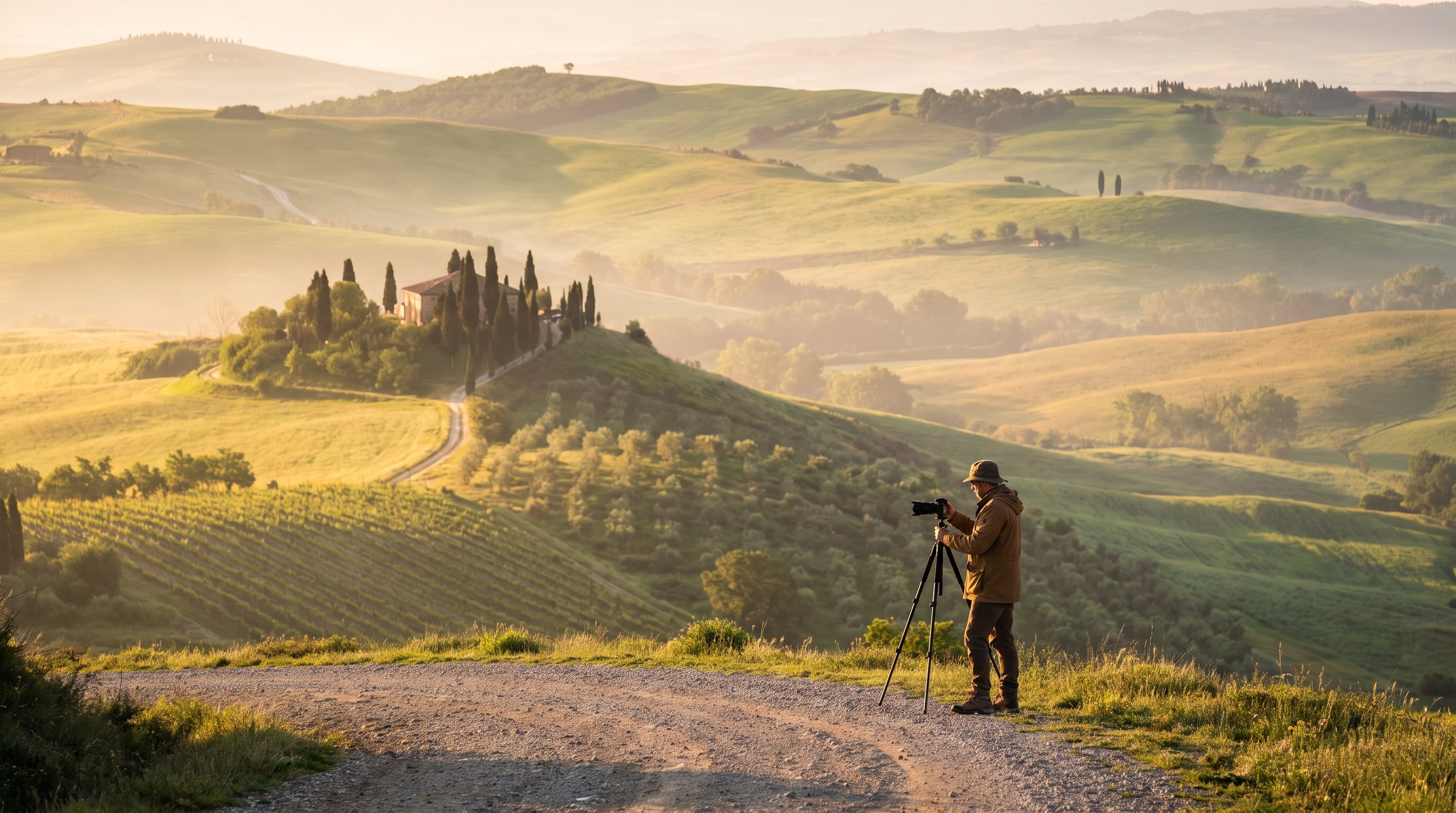
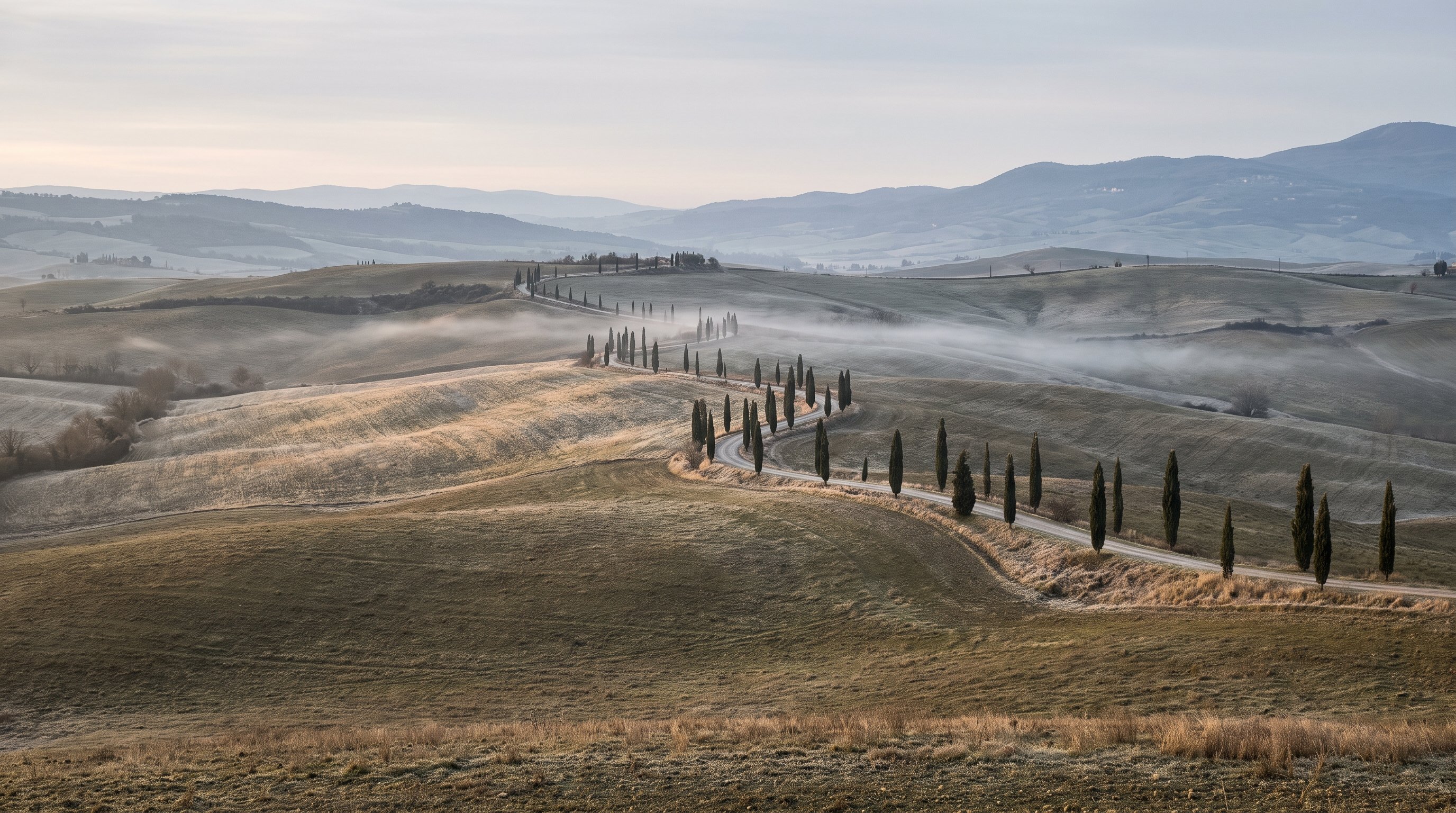
When Is the Best Time to Photograph Tuscany? A Month by Month Guide
A month by month breakdown of light, crops, crowds and weather in Val d'Orcia, so you can match your travel dates to the kind of Tuscany photographs you actually want to bring home.
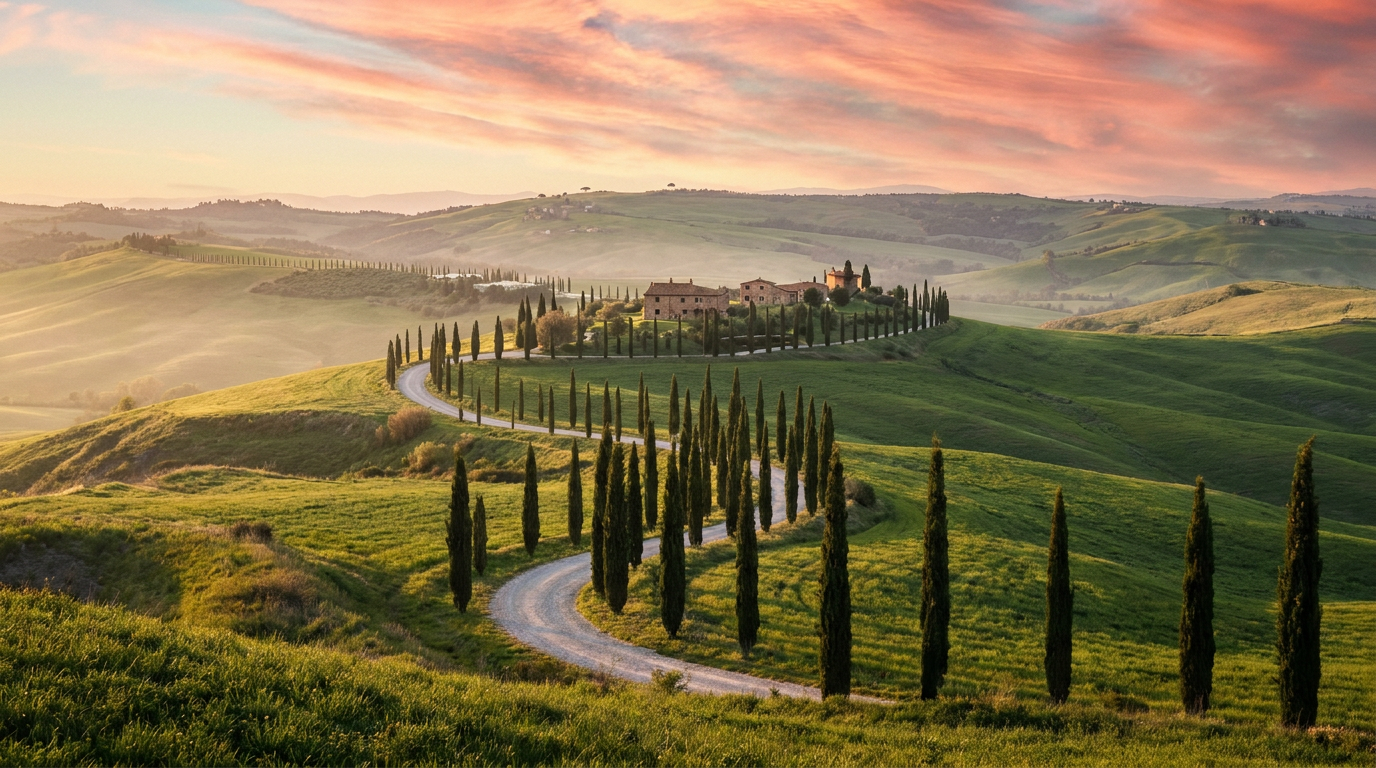
When Is the Best Time to Photograph Tuscany? A Month by Month Guide
Ask ten photographers when to visit Tuscany and you will get ten different answers. Some swear by the poppy fields of May. Others will not travel any other time than the misty mornings of late October. A few stubborn shooters insist that a quiet, overcast January is when the region actually looks its best. All of them are right, which is the honest but slightly unhelpful truth about timing a Tuscany photography trip.
The more useful question is not "when is Tuscany beautiful," because Tuscany is beautiful nearly every week of the year. The better question is which version of Tuscany you are trying to photograph. Do you want green rolling hills or golden dry ones? Fog pooling in the valleys or a clear blue sky over Val d'Orcia? Crowded piazzas full of summer tourists or empty medieval streets you can shoot without a single stranger walking into frame? This guide breaks the year down month by month so you can match the light, the crops, and the crowd levels to the kind of images you actually want to bring home.
Key Takeaways
There is no single best month for Tuscany. There is a best month for the specific photograph you are after, and this guide will help you find it.
| Point | Details |
|---|---|
| Two strongest windows | Late April through late May for green hills, and mid September through late October for harvest color and fog |
| Best for solitude | January and February, when winter light stays low and soft nearly all day |
| Hardest month | August, due to harsh midday light and persistent summer haze |
| Fog window | Mid October through November, triggered by clear skies, calm wind, and a sharp overnight temperature drop |
| Poppy bloom | Scattered from late April, fullest and most reliable in May |
Table of Contents
- The quick answer
- January and February: the quiet season
- March and April: the valley wakes up
- May and June: the classic green season
- July and August: heat, haze, and hard light
- September and October: the photographer's secret season
- November and December: fog season and quiet roads
- How to actually catch the fog window
- Frequently asked questions about timing a Tuscany trip
- So what is actually the best month for Tuscany photography
- A quick reference by priority
The quick answer
If you only read one paragraph of this guide, read this one. For most landscape photographers, the two strongest windows are late April through late May, when the hills are still green and the light is soft, and mid September through late October, when the harvest is underway, the heat has broken, and fog becomes a real possibility in Val d'Orcia. Winter, particularly December and January, is a genuine dark horse for anyone who wants quiet villages and low, dramatic light without another photographer in sight. Summer, June through August, is the toughest month to recommend for pure landscape work, though it has its own advantages we will get to below.
Pro Tip: Book flights and lodging around your target season, not fixed calendar dates. A trip shifted by even four or five days into late April instead of mid April can be the difference between scattered green and full, saturated green in every wide shot.
January and February: the quiet season
Winter in Tuscany rarely makes anyone's shortlist, and that is exactly why it is worth considering. The hills lose their intense summer color and take on a flatter, more muted palette of greens and browns. What you lose in saturation you gain in solitude. San Quirico d'Orcia, Pienza, and Montepulciano empty out almost completely once the Christmas visitors go home, and you can walk streets that are shoulder to shoulder with tourists in July without seeing another camera.
The sun stays low all day in winter, which means the harsh midday light that ruins so many summer photographs simply does not happen in January. You can shoot productively from mid morning through mid afternoon, not just at the two golden hours. Snow is rare in Val d'Orcia but not impossible, and a light dusting on the cypress trees along the famous roads near San Quirico is one of the more unusual images you can bring home from Tuscany, simply because almost nobody else has one.
March and April: the valley wakes up
Late winter rain gives way to the first real green of the year by mid March, and by April the hills have that saturated, almost unreal green that only lasts a few weeks. This is also when the first wildflowers begin appearing in the fields around Pienza and San Quirico, a preview of the poppy season that peaks slightly later in spring. Rain is still common in April, so pack a rain cover for your bag and expect more dramatic, moody skies than you would find in summer. Those skies, with breaking light through clouds over the hills, often produce stronger images than a flat blue sky ever could.
May and June: the classic green season
May is probably the single most photographed month in Val d'Orcia, and for good reason. The hills are at their deepest green, wildflowers and poppies are in full bloom in scattered fields, and the days are long enough to shoot a proper sunrise, take a long midday break, and still catch sunset with energy left over. Temperatures are warm but not yet punishing, and the summer haze that builds up later in the season has not fully arrived.
June starts to bring more visitors and a hazier atmosphere as the heat builds, but early June mornings can still deliver the clean, saturated look most people associate with a classic Tuscany photograph. If your trip has any flexibility at all, aim for the back half of May over June.
July and August: heat, haze, and hard light
This is the season most serious landscape photographers try to avoid, and the reasons are practical rather than aesthetic snobbery. Midday light is genuinely harsh, temperatures regularly climb past 90 degrees Fahrenheit, and a summer haze settles over the valley that flattens contrast and mutes the crisp layering that makes Val d'Orcia hills look three dimensional in a photograph. Golden hour still works, but you are working with a narrower window and more atmospheric interference than in spring or autumn.
That said, summer is not without value. The wheat fields around Crete Senesi turn a rich gold by mid July, which is a completely different color story than the green months, and the long days give you more flexibility to scout locations at midday and return for the actual shoot at sunrise or sunset. If summer is the only time you can travel, you can absolutely come home with strong images. You will just be working harder for them.
September and October: the photographer's secret season
If pressed to pick one single best window, most photographers who have shot Tuscany across multiple seasons will point to late September and October. The oppressive summer heat has broken, the light softens noticeably, and the grape harvest brings a burst of activity and color to the vineyards around Montalcino and Montepulciano. Crowds thin out considerably compared to summer, especially on weekdays.
October is also when the region's famous fog becomes a realistic possibility for the first time since the previous spring. Cool nights combined with warm days create the temperature swings that produce valley fog at sunrise, and a foggy October morning above Val d'Orcia is one of the images every landscape photographer visiting Tuscany hopes to capture. It is not guaranteed on any single morning, but the odds improve steadily as the month goes on.
November and December: fog season and quiet roads
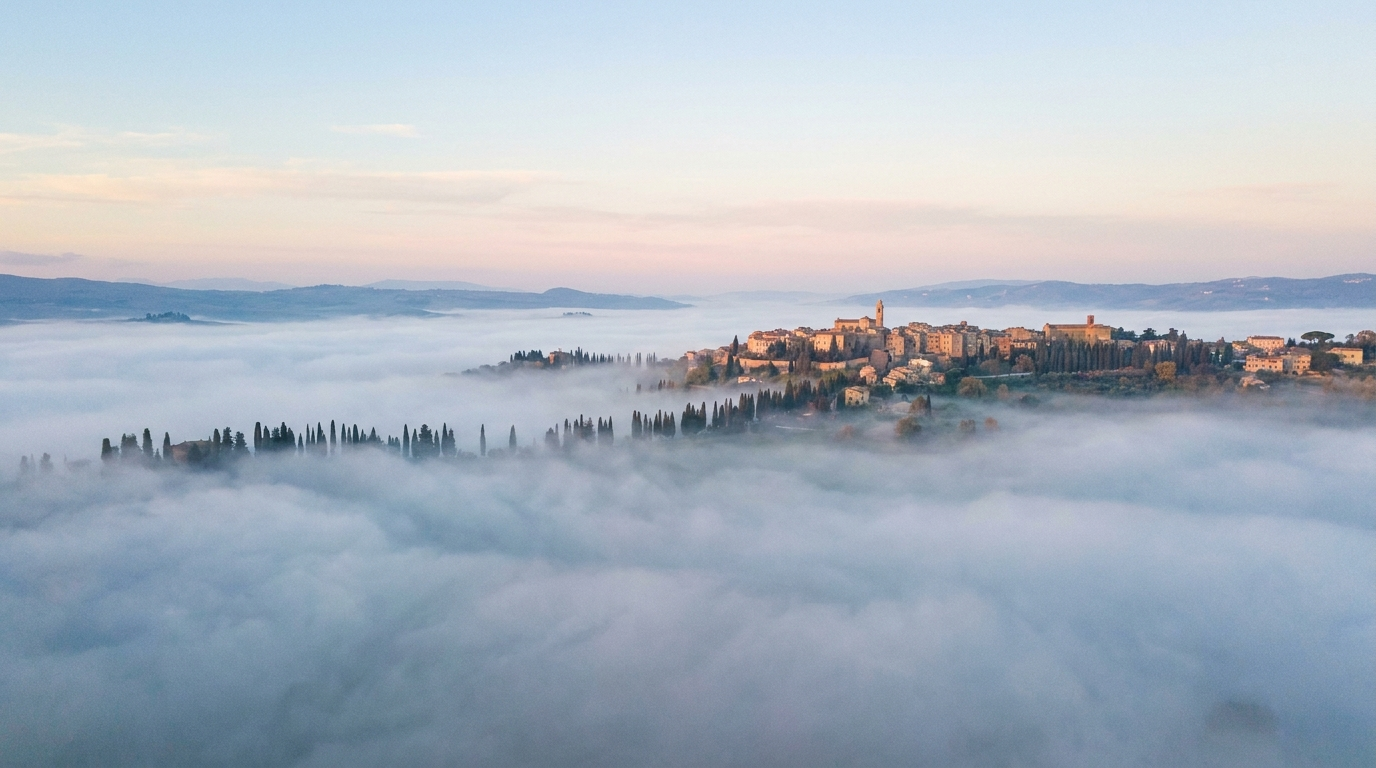
November is when fog photography in Val d'Orcia moves from occasional to genuinely likely, particularly in the first half of the month before the coldest winter weather sets in. Mornings with a clear sky, cool overnight temperatures, and light wind are the classic recipe for the low lying fog that pools in the valleys and leaves the hilltop towns like San Quirico and Pienza floating above the cloud layer. If a single fog photograph is on your shot list, this is arguably the best four to five week window of the entire year.
December brings shorter days and a real chance of rain, but also a stillness to the villages that is hard to find any other time of year. Christmas week brings a small bump in visitors, but the weeks before and immediately after are close to silent.
How to actually catch the fog window
Fog is the single most requested image on any Tuscany photography trip, and it is also the least predictable one if you do not know what to look for. The pattern to watch for is a clear evening sky combined with a noticeable drop in overnight temperature, ideally with little to no wind. That combination allows cool air to settle into the low points of the valley overnight, and as the sun rises it heats the surrounding hillsides faster than the pooled air below, which is what creates the layered fog you see floating below hilltop towns like Pienza and San Quirico in classic Val d'Orcia photographs.
In practical terms, check the forecast the night before rather than days in advance. Look for a forecast showing clear skies, calm wind, and a temperature drop of at least fifteen degrees Fahrenheit between the daytime high and the overnight low. If those three conditions line up, set an alarm well before sunrise and get to a hilltop viewpoint early, because the fog usually burns off within an hour or two of sunrise and the window for a strong photograph can close quickly once direct light hits the valley floor.
Pro Tip: Scout your hilltop viewpoint the evening before, in daylight, so you are not picking your footing on an unfamiliar edge in the dark. The best fog viewpoints are often just outside town on farm roads, not inside the historic centers themselves.
Frequently asked questions about timing a Tuscany trip
What is the rainiest month in Tuscany? November and, to a lesser extent, April tend to bring the most rainfall. Rain itself is not a reason to avoid a trip, since overcast and stormy skies often produce more dramatic light than a plain blue sky, but pack accordingly and build flexibility into your itinerary.
Is August too hot for photography in Tuscany? August is the hottest month of the year in Val d'Orcia, often reaching the low to mid nineties Fahrenheit by midday, and the associated haze reduces contrast in landscape shots. It is workable if you shoot only in the early morning and evening and rest during the heat of the day, but it is the least forgiving month for photographers with limited time.
Can you photograph Tuscany in winter? Yes, and it is underrated. Winter light stays low and soft for most of the day, villages are close to empty, and occasional fog or frost adds an unusual look that most visitors never capture simply because most visitors never come.
When do the poppies bloom in Val d'Orcia? Poppies typically begin appearing in scattered fields from late April, with the fullest, most reliable blooms in May. Exact timing shifts by one or two weeks depending on that year's rainfall, so treat any specific date as an estimate rather than a guarantee.
What month has the fewest tourists? January and February are the quietest months by a wide margin, followed by late November and early December outside of the Christmas holiday week.
So what is actually the best month for Tuscany photography
If you want one word answers: choose May for green hills and reliable weather, choose October for fog, harvest color, and softer light, and choose January if empty streets and low winter light matter more to you than warm weather. Avoid the second half of July and all of August if landscape photography is your main goal and you have any flexibility in your travel dates. None of this is a hard rule. Photographers have made extraordinary images in every single month covered in this guide, and the "worst" month for crowds is often the best month for a specific kind of light.
A quick reference by priority
| Priority | Best window |
|---|---|
| Green hills | Late April through May |
| Fog | Mid October through November |
| Harvest colors | Late September through October |
| Solitude | January and February |
| Long shooting days | June |
| Hardest month to recommend | August |
Once you have picked a season, the next question is where to actually point your camera. Our full Tuscany Photography Guide covers the specific villages, cypress roads, and viewpoints that make Val d'Orcia one of the most photogenic regions in Europe, and it is the natural next stop if this month by month breakdown has helped you settle on your travel dates. Over the next several weeks we will also be publishing deep dives on individual seasons and locations, including a dedicated guide to the spring poppy bloom, the summer haze, and exactly how to chase the autumn fog once you land in Val d'Orcia.
Whatever month you end up choosing, the single most important habit for a successful Tuscany photography trip is flexibility. Weather in the hills can change faster than any forecast predicts, and some of the best images in this guide came from photographers who were willing to wake up early on a whim because the sky looked promising, rather than sticking rigidly to a plan made months in advance from another continent.
Sources
- Visit Tuscany: official regional tourism board, seasonal events and weather guidance
- Val d'Orcia: Wikipedia entry on geography and UNESCO World Heritage background