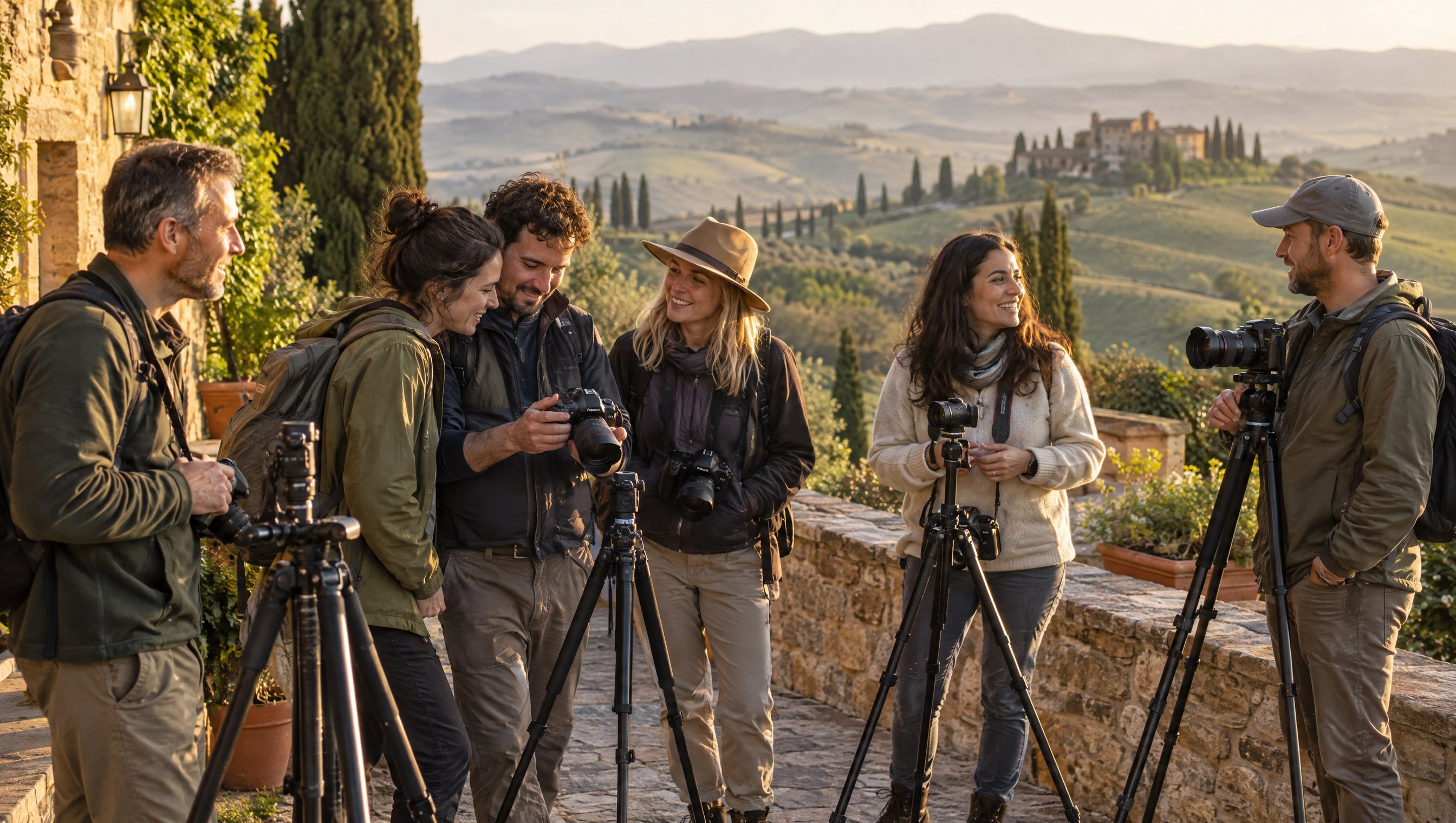
What a Typical Day Looks Like on a Small Group Photography Tour
Wondering what you're actually signing up for on a photography tour? Here is the real, hour-by-hour structure of a representative day, from the pre-dawn wake-up call through two shooting blocks, a long midday break, and the evening image review.
What a Typical Day Looks Like on a Small Group Photography Tour
Before someone books a photography tour, the question that actually keeps them up at night is rarely "will I get good photos." It is "what am I actually agreeing to for seven straight days." Do I have to get up before dawn every single morning? Is there any downtime or is it shoot, drive, shoot, drive from sunrise to sunset? Can I skip a session if I am tired? I get versions of this question in almost every pre-trip call I do, so instead of answering it one email at a time, I wrote down the actual structure. Not a marketing itinerary with vague phrases like "golden hour magic," but the real, hour by hour shape of a day, the kind you could hold up against your own tolerance for early mornings and decide honestly whether this trip fits you.
This is a companion piece to a more personal account we published earlier, a narrative walk through a single day on our Val d'Orcia tour. That piece is worth reading if you want the texture and the feel of it. This one is different on purpose. It is the reference version, the one you can skim in five minutes to know exactly what time the alarm goes off, how long each block runs, and where the actual free time sits in the schedule.
Key Takeaways
A representative day on a small group photography tour follows a predictable rhythm built around light, not a rigid tourist schedule, with real rest built into the middle of the day.
| Point | Details |
|---|---|
| Wake up call | Typically 4:30 to 5:30am for a sunrise shoot, shifting earlier or later with the season and sunrise time |
| Shooting blocks | Two per day, sunrise and golden hour, each running two to three hours including travel, scouting, and shooting time |
| Midday window | Three to five hours completely unscheduled, used for sleeping, editing, wandering a town, or a scheduled masterclass on some days |
| Evening structure | Dinner, then an informal image review most nights, usually 30 to 60 minutes |
| Physical demand | Moderate. Mostly standing at a tripod and short walks on gravel or farm roads, not technical hiking |
| What you never have to do | Book a table, plan a route, check a weather forecast, or figure out where the light will actually be good |
Table of Contents
- The short answer
- Before dawn: the wake-up call
- The sunrise shooting block
- Breakfast and the slow part of the morning
- The midday window: the part nobody explains well
- When a masterclass replaces free time
- The golden hour shooting block
- What is actually in the bag each day
- Dinner and the evening image review
- A sample day at a glance
- How the schedule shifts by season
- What you do not have to think about
- How this differs from a typical guided bus tour
- Frequently asked questions about a typical day
- So what should you actually expect
The short answer
A typical day on our Val d'Orcia tour has two shooting blocks built around sunrise and golden hour, each two to three hours long, with a long unstructured break in the middle of the day and dinner followed by a casual image review most evenings. The wake up call lands somewhere between 4:30 and 5:30am depending on the season, and the day usually wraps by 9 or 9:30pm. Nothing about the middle of the day is rigid. Some people nap. Some walk into the nearest hilltop town with a camera and shoot casually. Some sit on a terrace and start culling the morning's take in Lightroom. The only fixed points are the two shoots, because those are built around light that will not wait for anyone.
Pro Tip: If early wake ups worry you, the trick is not fighting the schedule, it is shifting your whole sleep window a few hours earlier for the week. Most guests are in bed by 9:30 or 10pm within two nights, which makes a 4:45am alarm feel a lot less brutal than it sounds on paper.
Before dawn: the wake-up call
The alarm goes off well before sunrise, usually 45 minutes to an hour before first light so there is time to dress, grab a quick espresso or a piece of bread, and load gear into the van without rushing. In April or October that means somewhere around 5:15am. In peak summer, when the sun is up before 6am, it can mean a 4:30am alarm, which surprises people who assume summer trips are easier mornings. They are not. Longer days cut both ways.
This is also the point where gear checks matter most, and it is worth doing the same routine every single morning rather than trusting memory at 5am. Battery in the camera, spare battery in a jacket pocket, memory card actually in the slot and not still in the card reader from the night before, tripod plate attached, lens cap somewhere you will not lose it in the dark. I have watched more than one good photographer miss a sunrise because a battery was charging in a room two floors up. It happens to experienced shooters just as often as beginners.
The sunrise shooting block
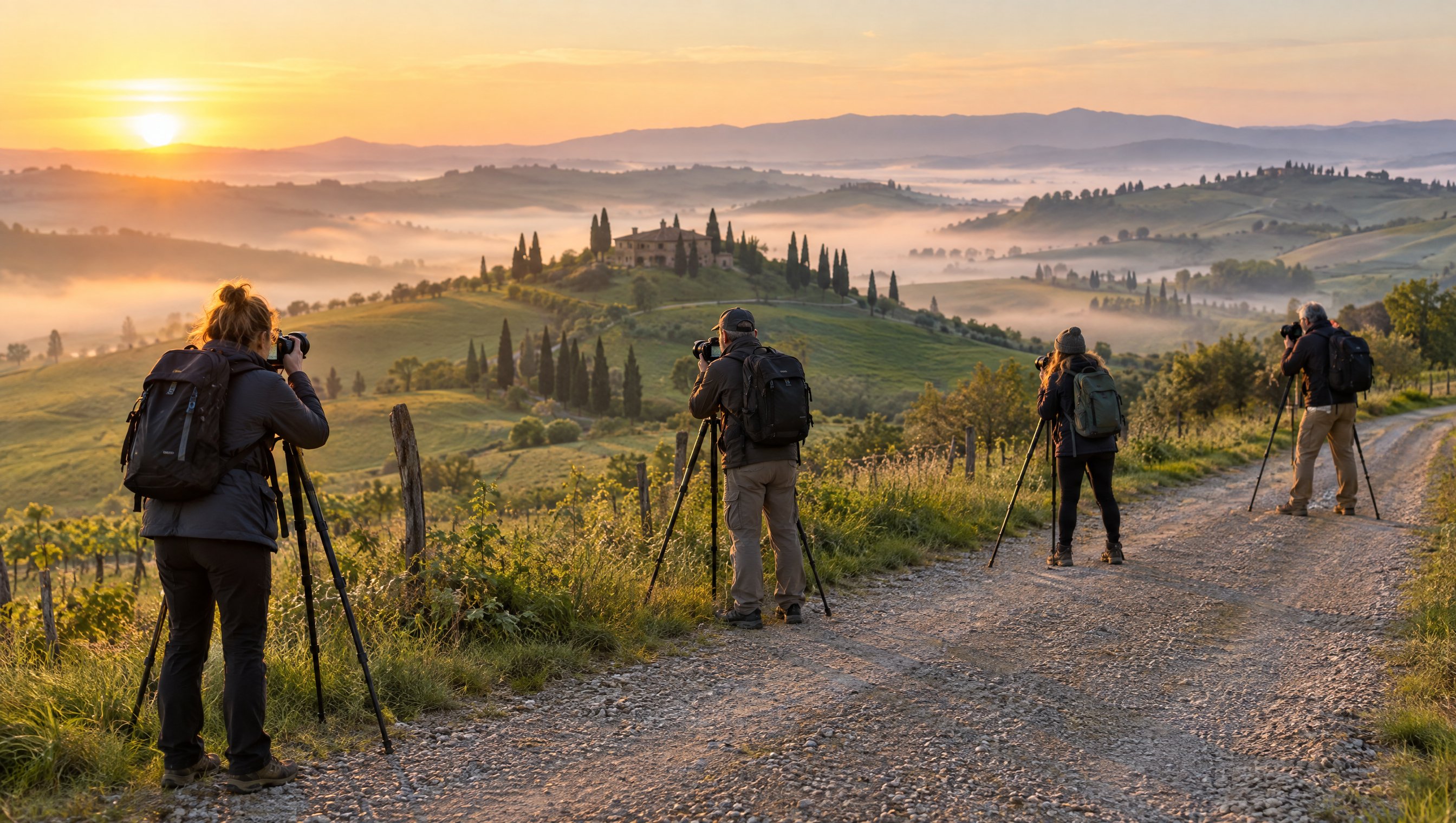
The group loads into the van in the dark and drives to whichever location the guides picked the night before based on the forecast, usually 15 to 30 minutes away. This is where a guided trip earns its price in a way that is hard to replicate on your own: the decision of where to be is made by two people who have shot that specific stretch of road or hillside dozens of times and know which spot holds fog longest, which ridge blocks the first light, and which composition actually works once the sun clears the horizon rather than looking good only in theory.
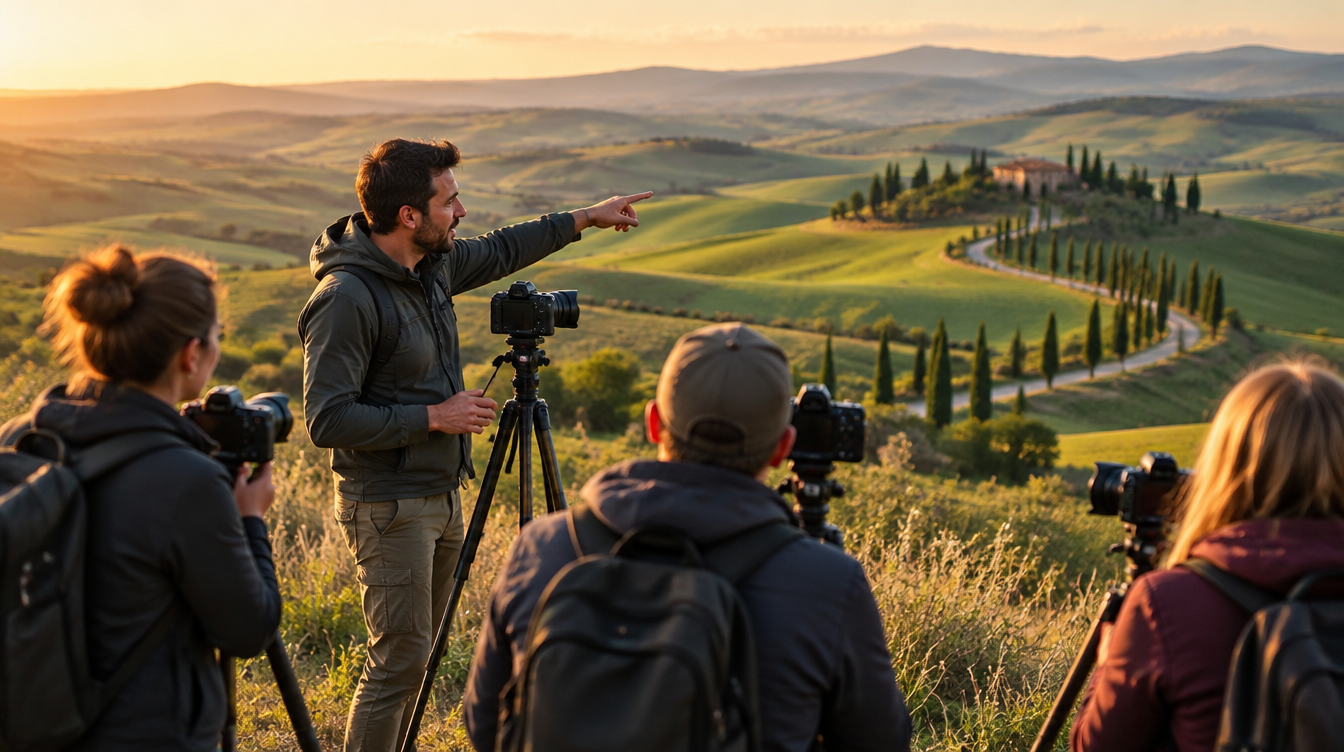
On location, the shoot itself runs a loose but real structure. Everyone spreads out along a stretch of road or a ridge line, tripods go down, and for the next hour or so it is mostly quiet concentration punctuated by a guide walking the line checking compositions. A typical piece of in-field coaching sounds less like a lecture and more like "try a two stop graduated ND here, the sky is about to blow out a full stop past your foreground" or "drop to 24mm, you are losing the scale of the valley at 50mm." Small, specific, usable in the next five minutes rather than general advice you file away for later.
Breakfast and the slow part of the morning
Once the light flattens out, usually 60 to 90 minutes after sunrise, the group heads back for a proper sit down breakfast at the villa. This is unhurried on purpose. Espresso, fresh bread, local cheese and cured meat, eggs if you want them, and enough time to actually eat rather than grab something on the way out the door. It is also when the first informal photo talk of the day happens, people passing phones around showing a shot from twenty minutes ago, which does more for morale than anything scheduled ever could.
The midday window: the part nobody explains well
This is the part of the day most people underestimate before they book, and it is genuinely long, usually three to five hours with nothing scheduled at all. Some of that time is simply rest, and it matters more than it sounds. A 4:45am start followed by two hours of concentrated shooting is real physical and mental effort, and a nap or a slow hour with a book is not wasted time, it is what makes the golden hour session sharp instead of sloppy.
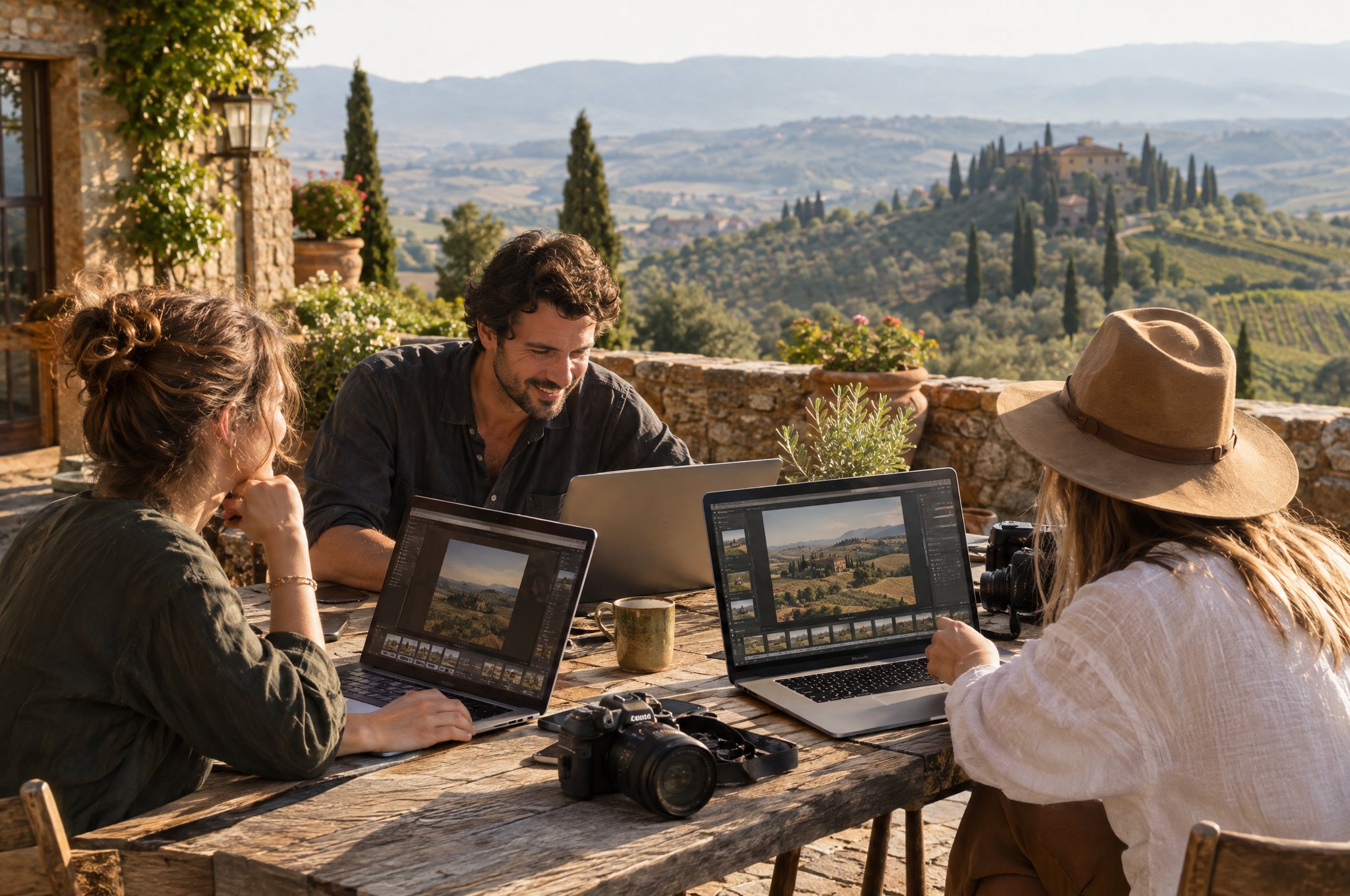
Plenty of people do not nap at all. A common alternative is a short walk into whichever hilltop town is closest, shooting casually with no agenda, or sitting on the villa terrace with a laptop starting to cull and rate the morning's frames while the memory of the light is still fresh. A few bring a second camera body loaded with a macro lens and spend the break photographing details around the villa itself, an old door, a row of terracotta pots, texture shots that never make the final portfolio but keep the shutter finger busy.
When a masterclass replaces free time
On two or three days of the week, part of this midday window is used for a structured post-processing masterclass instead of being fully open. These run 60 to 90 minutes and cover real technique, not a generic software tour: dodging and burning to guide the eye through a composition, blending exposures for a scene with a dynamic range no single frame can capture, or building a consistent color treatment across a full set of images from the same location so a gallery reads as one cohesive body of work rather than ten unrelated edits. These sessions are also where one on one image review time happens, a guide sitting down with your laptop and your actual files rather than talking in the abstract.
If structured, hands on editing instruction is something you specifically want out of a trip rather than a nice bonus, it is worth building your expectations around that up front, since not every operator includes it, and it genuinely changes how much you take home from a week like this beyond the raw files themselves.
The golden hour shooting block
The second shoot of the day starts with enough lead time to reach the location, scout it briefly if the group has not shot there before, and set up before the light turns. This block tends to run a little longer than sunrise, sometimes two and a half to three hours once you count the walk in, the actual golden hour window, and the extra 15 or 20 minutes right after sunset when the sky often does something better than the sunset itself, the blue hour glow that a lot of photographers pack up too early to catch.
Locations rotate through the week rather than repeating, a cypress lined farm road one evening, a hilltop town silhouette the next, a valley overlook after that, so the golden hour block is where you build the most varied part of your portfolio. It is also usually the more social shoot of the two, since nobody is fighting morning fog or racing a narrow sunrise window, and there is more room for a guide to slow down and work through composition options with you rather than just calling out settings against the clock.
What is actually in the bag each day
Gear stays fairly consistent from one shooting block to the next, which is one reason experienced guests pack lighter than they expect to on their first trip. A sturdy tripod is non negotiable for both sunrise and golden hour, since shutter speeds regularly drop below what you can hand hold cleanly, especially with a polarizer or a graduated ND stacked on the front element cutting another stop or two of light. Most people carry two lenses in the field rather than a full bag: a wide zoom in the 16 to 35mm range for the classic rolling hills and cypress road compositions, and something in the 70 to 200mm range for compressing a distant hilltop town against the layered ridgelines behind it, a shot that simply does not work at 24mm no matter how you crop it.
A two or three stop graduated ND filter earns its place in the bag on almost every sunrise, since a bright sky over a dark valley floor is close to the default condition in Val d'Orcia at that hour, and a circular polarizer comes out for midday town walks to cut glare off terracotta roofs and deepen a blue sky without touching contrast in post. A headlamp with a red light setting matters more than people expect, both for the walk to the sunrise spot in the dark and for not blinding the person set up six feet to your left while you dig through a bag. Round it out with a lens cloth, since Val d'Orcia fog leaves condensation on glass fast, a couple of spare batteries kept in an inside jacket pocket where body heat keeps them from draining in cold pre-dawn air, and a light rain shell that lives in the bag all week whether or not the forecast calls for it.
Dinner and the evening image review
Dinner is back at the villa or, a couple of nights a week, at a local trattoria the guides have a real relationship with, the kind of place that is not chasing tour groups and cooks the same food it would serve to neighbors. Most evenings end with an informal image review, 30 to 60 minutes, where people pull up two or three frames from the day and the group talks through them together. This is not a critique in the harsh sense. It is closer to a working session, someone asking why a particular crop works better than the one they shot, or a guide pointing out that a slightly underexposed frame actually has more recoverable detail in the highlights than the "correct" exposure next to it.
If seeing this kind of structured daily rhythm in action is what would actually help you decide whether a guided trip fits you, our Val d'Orcia photography tour runs exactly this pattern for seven days, with two professional guides and a group capped at seven people, so the ratio stays close enough for real one on one time every single day rather than a few isolated moments of attention spread across a much bigger group.
A sample day at a glance
| Time | Activity |
|---|---|
| 4:45am | Wake up, quick coffee, gear check, load the van |
| 5:15am - 7:15am | Drive to location, sunrise shooting block |
| 7:30am - 8:30am | Return to villa, sit down breakfast |
| 8:30am - 1:00pm | Open midday window: rest, editing, town walk, or a masterclass on select days |
| 1:00pm - 2:00pm | Lunch |
| 2:00pm - 5:30pm | Continued free time, optional casual shooting or a scouting walk |
| 5:30pm - 8:30pm | Drive to location, golden hour and blue hour shooting block |
| 8:45pm - 10:00pm | Dinner, followed by an informal image review most nights |
Treat this as a representative template rather than a fixed script. Sunrise and sunset times shift the exact clock hours by up to two hours across the season, and a masterclass day compresses the midday window somewhat, but the shape, two shoots bracketing a long rest period, holds for essentially every day of the week.
How the schedule shifts by season
Spring and autumn departures, when Val d'Orcia has the best chance of morning fog and softer midday light, tend to have slightly later sunrise wake ups, often closer to 5:30 or 6am, and a shorter gap between golden hour and dinner since the sun sets earlier. Summer departures push the sunrise call earlier, sometimes 4:15 or 4:30am, and stretch the evening later, with golden hour not really arriving until 8pm and dinner pushing toward 9:30 or 10pm. The total time commitment each day stays similar either way. What changes is which end of the day absorbs the extra light.
Pro Tip: If a hard 4:15am alarm sounds unmanageable to you, ask about departure dates outside peak summer. The schedule genuinely gets a little more humane in spring and autumn, and you trade almost nothing in terms of photographic opportunity since those seasons bring fog and harvest color that summer simply does not have.
What you do not have to think about
Part of what makes a day like this sustainable for seven straight days is everything happening quietly in the background that a guest never has to manage. Nobody is checking a weather app trying to guess whether fog will form over a specific valley at 6am, that call gets made by guides who watch the forecast and the terrain together and have been wrong about it far less often than a generic app would be. Nobody is deciding where to eat or waiting twenty minutes for a table, meals are arranged in advance. Nobody is navigating an unfamiliar rental car down a gravel farm track in the dark, that is the van driver's job. Removing those decisions is not a small convenience, it is a big part of why two shooting blocks a day feels sustainable rather than exhausting by day five.
How this differs from a typical guided bus tour
A large coach tour with thirty or forty guests runs on a completely different clock, usually one built around bus logistics and a single guide managing a big group rather than light. Stops tend to happen at whatever time the bus schedule allows, sometimes mid morning or midday, when the light is flat and uninteresting for landscape work. There is rarely a genuine sunrise or golden hour block built into the day at all, since coordinating that many people for a 5am departure is logistically difficult. A small group photography tour inverts that entirely. The whole day, meals, rest periods, and free time included, is built around when the light will actually be good, not around what is easiest to schedule for a large group.
Frequently asked questions about a typical day
Can I skip a shooting block if I am tired? Yes. Nobody is required to join every session, though most guests choose to attend both because the whole point of the trip is being there for the light. If you want to sleep through a sunrise once during the week, that is entirely your call.
Is there any day with no early wake up at all? Most days follow the sunrise and golden hour pattern, though the exact itinerary can shift around weather, a longer drive day between regions, or a planned rest morning depending on the specific departure.
How much walking is actually involved? Mostly short walks on gravel farm roads or through hilltop town streets to reach a shooting spot, generally under a mile at a time, plus standing at a tripod for extended periods. It is not technical hiking, but comfortable walking shoes matter more than people expect.
Do I have to bring a laptop for the masterclasses? It genuinely helps, since the sessions work with your own files, but it is not strictly required. A few guests borrow time on a friend's laptop during the group review portion instead.
What happens if it rains during a shooting block? The itinerary shifts rather than cancels. Guides carry backup locations that work in overcast or wet conditions, since flat light and rain can actually produce excellent moody images in Val d'Orcia if you are shooting the right subject for those conditions.
So what should you actually expect
Two real shooting blocks a day, both built around when the light is actually good rather than a convenient bus schedule. A long, genuinely unstructured break in the middle where nothing is asked of you. Meals you do not have to plan and a van you do not have to drive. Early mornings that are real and will not get easier just because you are on vacation, balanced against evenings that end with people who were strangers a few days earlier comparing photos over the last glass of wine. If that rhythm sounds like something you would actually enjoy for a full week rather than something you would tolerate, this format is probably a good fit. If you want the more personal, narrative version of a single day like this one, our day in the life account walks through it from the inside rather than as a schedule on a page.