Northern Lights Season in Iceland: When and Where to See Them
Iceland's real aurora viewing window, why darkness and clear skies matter more than cold, and the actual locations a guided tour routes you through to see the lights.
Northern Lights Season in Iceland: When and Where to See Them
Every group I have ever led to Iceland in winter asks the same question on the first night, usually somewhere between the airport and Keflavík: "when are we actually going to see the lights?" It is a fair question, and it deserves a better answer than the one most travel sites give, which is some version of "winter, basically, check the app." I have stood under a dead quiet, totally clouded-over sky in the middle of January with a forecast that promised strong activity, and I have watched a modest green band crawl across the horizon in early September while the forecast barely registered anything at all. Season matters, but it is not the whole story.
This guide is the Iceland-specific answer to that first-night question: the real viewing window, the variables that matter more than the calendar, and the actual places a tour routes you through to give you the best odds on any given night. I am not going to re-explain camera settings or the Bortle light pollution scale here, since we already cover both in detail elsewhere on the site. This one is about timing and geography, which turn out to be the two things most "best time to see the aurora" articles get frustratingly vague about.
Key Takeaways
There is no single best month for the northern lights in Iceland. There is a reliable season, a handful of variables that matter more than the date on the calendar, and a set of real locations that consistently outperform the capital.
| Point | Details |
|---|---|
| Viewing season | Late August through April, when nights are dark enough; summer nights in Iceland never get dark enough regardless of solar activity |
| What actually matters | Darkness, clear sky, and distance from light pollution, in that order; cold temperature is irrelevant to visibility |
| Best viewing window | Roughly 9pm to 2am local time, clustered around local magnetic midnight |
| Where to check conditions | The Icelandic Meteorological Office aurora forecast, which combines a 0 to 9 activity scale with a live cloud cover map |
| Worst place to watch | Downtown Reykjavík, where city light drowns out all but the strongest displays |
| Best strategy | A mobile, multi-stop itinerary that can reposition toward whichever region has the clearest sky that night |
Table of Contents
- The season window: September to April
- Darkness, moon phase, and clear skies matter more than cold
- Reading the Icelandic Met Office forecast
- Why Reykjavík is the wrong place to watch
- The real locations where a guided tour takes you
- Month by month: September, deep winter, and March compared
- Why a mobile itinerary beats a fixed base
- Frequently asked questions about Iceland's aurora season
The season window: September to April
Iceland's aurora season runs from roughly late August through April, and the reason has nothing to do with solar activity cycles. It comes down to one simple fact: you cannot see the northern lights against a bright sky, and Iceland's summer nights barely get dark at all. Around the summer solstice the sun dips only a few degrees below the horizon at this latitude, producing a glowing midnight twilight rather than real darkness. The aurora may well be active overhead the entire summer, but it is invisible against that much ambient light.
By late August the nights have finally started to darken enough for faint displays to register, and from September onward you get a genuine dark sky for several hours each night. That window holds through the winter and gradually narrows again from March into April as the days lengthen. Outside of that roughly eight-month span, you are simply fighting physics rather than luck.
Within that long window, people often assume the darkest, coldest months in the dead of winter must be the best bet, since the nights are longest. In practice it is more complicated than that, which is the whole point of the next section.
Darkness, moon phase, and clear skies matter more than cold
I want to be direct about this because it trips up almost every first-time visitor: the temperature outside has absolutely nothing to do with whether you will see the aurora. A clear, calm night at 2 degrees Celsius in late September will show you the lights exactly as well as a clear night at minus 10 in January, all else being equal. The Icelandic Meteorological Office puts it plainly in its own forecast guidance: the aurora "requires dark and partly clear skies" to be visible at all, full stop, with no mention of temperature as a factor (Icelandic Meteorological Office).
What actually determines whether you see anything on a given night, in rough order of importance, is: is the sky dark enough, is it clear or at least partly clear, and is there geomagnetic activity happening at all. Cloud cover is the single biggest variable that competing "best time" articles tend to skip past, because it is the hardest one to plan around in advance. You can pick the statistically best month and still get skunked by a week of overcast weather, and you can get lucky with a strong, clear night in a "worse" month. This is exactly why chasing the forecast night by night matters more than picking a calendar month and hoping.
Moon phase is a secondary factor and a more forgiving one than people expect. A bright moon can wash out a faint, low-activity aurora, but it will not meaningfully dim a genuinely strong display, and it has a real upside: it lights up the foreground landscape in your frame, which is often the difference between a photo of a green smudge in a black sky and an actual landscape photograph with the aurora as part of a composed scene.
Pro Tip: If you are planning your own trip dates around the aurora, prioritize the length of your stay over the specific month. A full week in Iceland gives you several chances to catch a clear night somewhere; a single clear night booked months in advance from another continent is mostly luck.
Reading the Icelandic Met Office forecast
The tool every guide in Iceland actually uses, ourselves included, is the Icelandic Meteorological Office's aurora forecast page. It combines two pieces of information you need to read together, not separately: a numeric activity forecast on a scale of 0 to 9 for midnight that night, and a live cloud cover map laid over the country, where green areas are cloudy and white areas are clear (Icelandic Meteorological Office). A high activity number over a cloudy region is worthless. A modest activity number over a clear region, in the right spot away from light pollution, can still produce a great night.
The activity number itself traces back to the Kp index, the same geomagnetic measurement NOAA's Space Weather Prediction Center publishes and updates roughly every three hours from a global network of ground stations (NOAA Space Weather Prediction Center). It also runs 0 to 9, with 0 describing minimum activity and 9 describing a maximum, extreme geomagnetic storm (Icelandic Meteorological Office). For context on just how extreme the top of that scale can get, NOAA's own storm classification maps a Kp of 5 to the weakest storm category, G1, and a Kp of 9 to the strongest, G5 (Wikipedia, citing NOAA). During the famous 1859 Carrington Event, a storm at that extreme end of the scale, aurora were reported as far south as Cuba and Italy. You will not need anything close to that to get a strong display in Iceland.
There is a detail here that is genuinely specific to Iceland and that most general aurora guides never mention, because it does not apply everywhere. The auroral oval, the ring-shaped band around the magnetic pole where the aurora is actively happening at any given moment, sits just north of Iceland during the day and swings down over the country itself in the evening (Icelandic Meteorological Office). When activity is stronger, that oval widens and pushes further south, which is why a bigger storm tends to mean a better, more overhead show rather than just a brighter version of the same thing. This also explains why the broader auroral zone, the roughly six degree wide band centered near 67 degrees of geomagnetic latitude where aurora sightings concentrate, sits close enough to Iceland's latitude for the country to be a reliably good seat for the show without needing an unusually strong storm to get a view (Wikipedia). The underlying cause, in case you are curious, is solar wind energy building up in Earth's magnetic field and then releasing into the upper atmosphere through the polar regions (NASA). If you want the full breakdown of how to actually photograph it once it shows up, including camera settings and the Kp index in more technical depth, that is covered in our guide to aurora settings and forecasting, and the dark sky science behind why location matters so much is covered in our guide to the Bortle scale and light pollution.
Why Reykjavík is the wrong place to watch
Nearly every visitor's first instinct is to step outside their Reykjavík hotel and look up, and nearly every visitor who does that comes away disappointed. Technically, yes, you can occasionally see the aurora from the city on a strong night. In practice, the capital region's own light pollution usually drowns out everything short of a genuinely powerful display, which is why even local Reykjavík-based viewing venues recommend driving out to a park or open area away from streetlights for anything better than a faint glimpse.
That advice is correct as far as it goes, but it understates the real lesson. The point is not that you need to drive ten minutes outside the city center. The point is that Iceland's actual advantage as an aurora destination is the enormous amount of genuinely dark, empty countryside available once you leave the capital region entirely, and a trip that stays based in or near Reykjavík for convenience is giving up most of that advantage. This is the single biggest difference between a city-break aurora attempt and a proper photography tour built around reaching the dark countryside every single night.
The real locations where a guided tour takes you
Here is where the generic "best time to see the northern lights" articles tend to go thin. They will list a few pretty place names, but they rarely explain why those specific spots work or how an itinerary actually threads between them. These are the real locations our Iceland Winter Aurora tour routes through, and what each one offers beyond just being far from Reykjavík's light dome.
| Location | Why it works for aurora |
|---|---|
| Kleifarvatn | A quiet geothermal lake close to Keflavík with wide open horizons and almost no light pollution, a good first or last night stop near the airport |
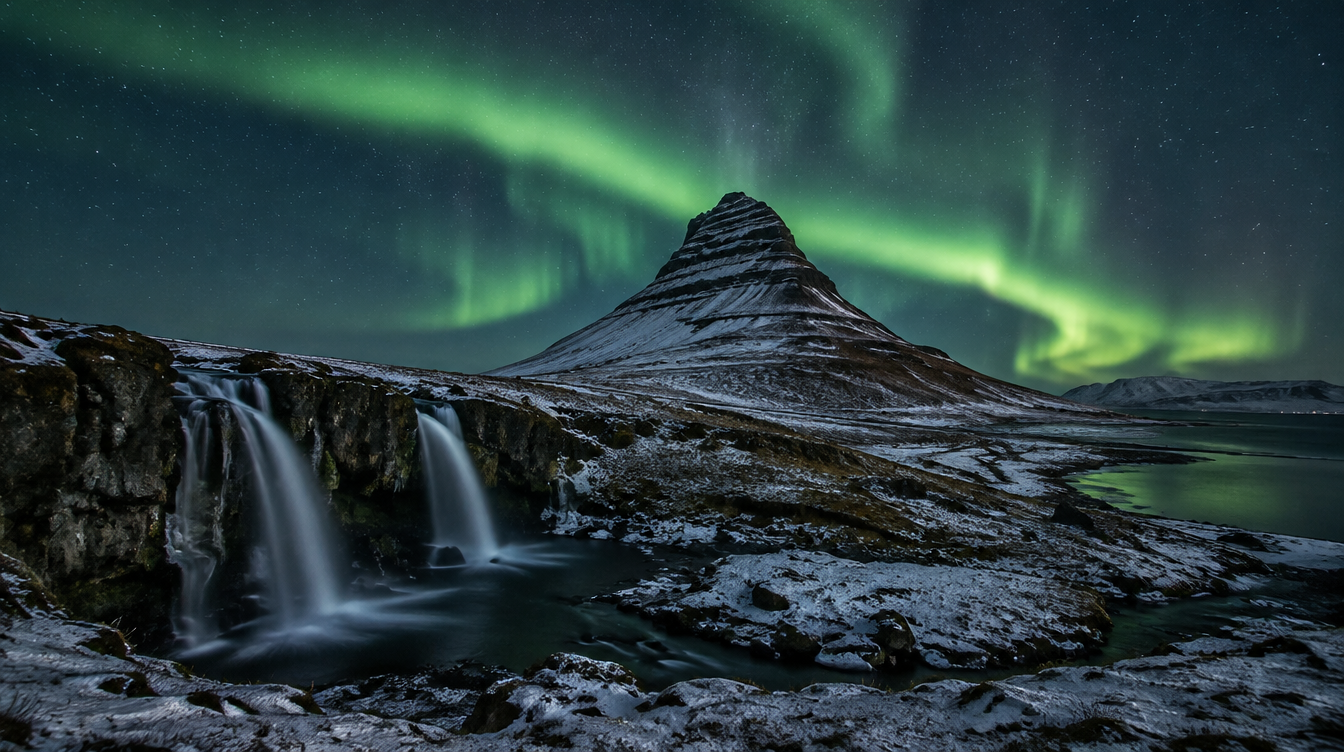
| Snæfellsnes Peninsula (Kirkjufell, Arnarstapi, Hellnar) | Dark rural skies with dramatic foreground shapes like Kirkjufell mountain, useful if the capital region's weather is clouded over |
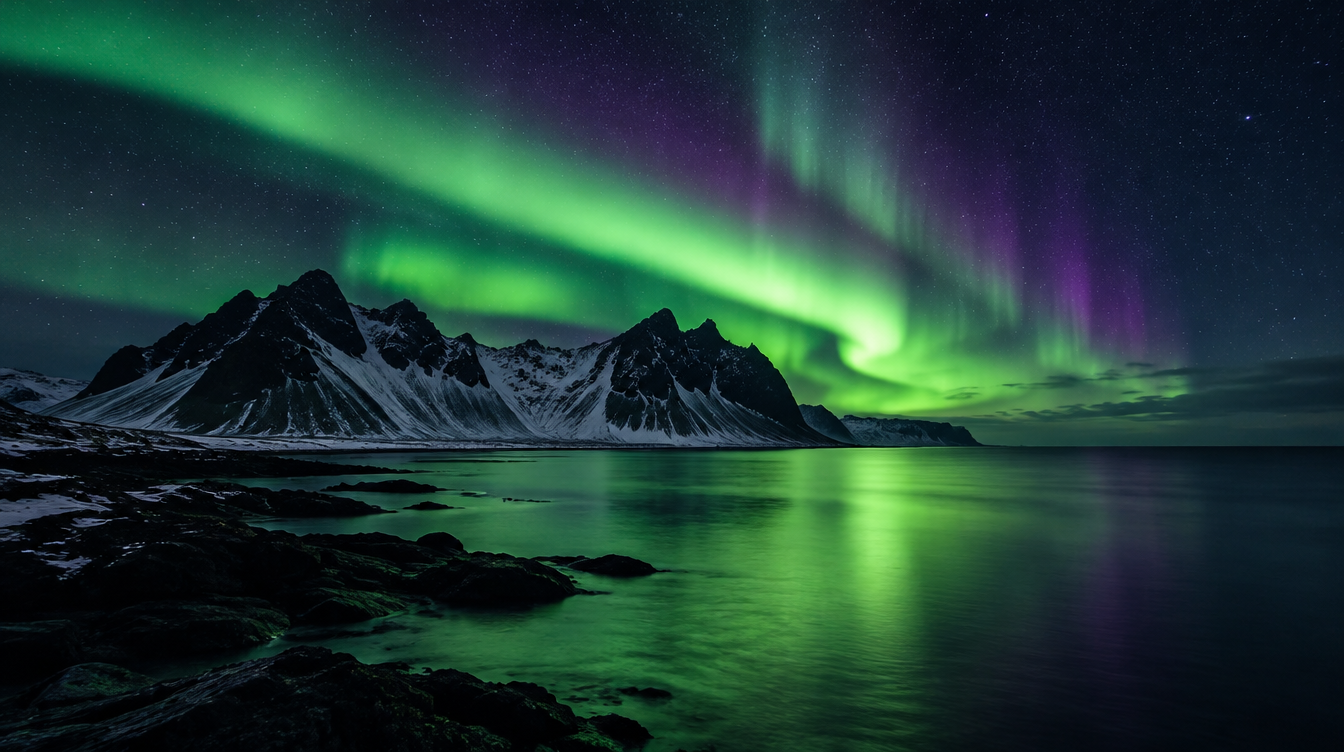
| Vestrahorn and Stokksnes | Remote black sand coastline backed by jagged mountains, consistently one of the darkest skies on the whole route |
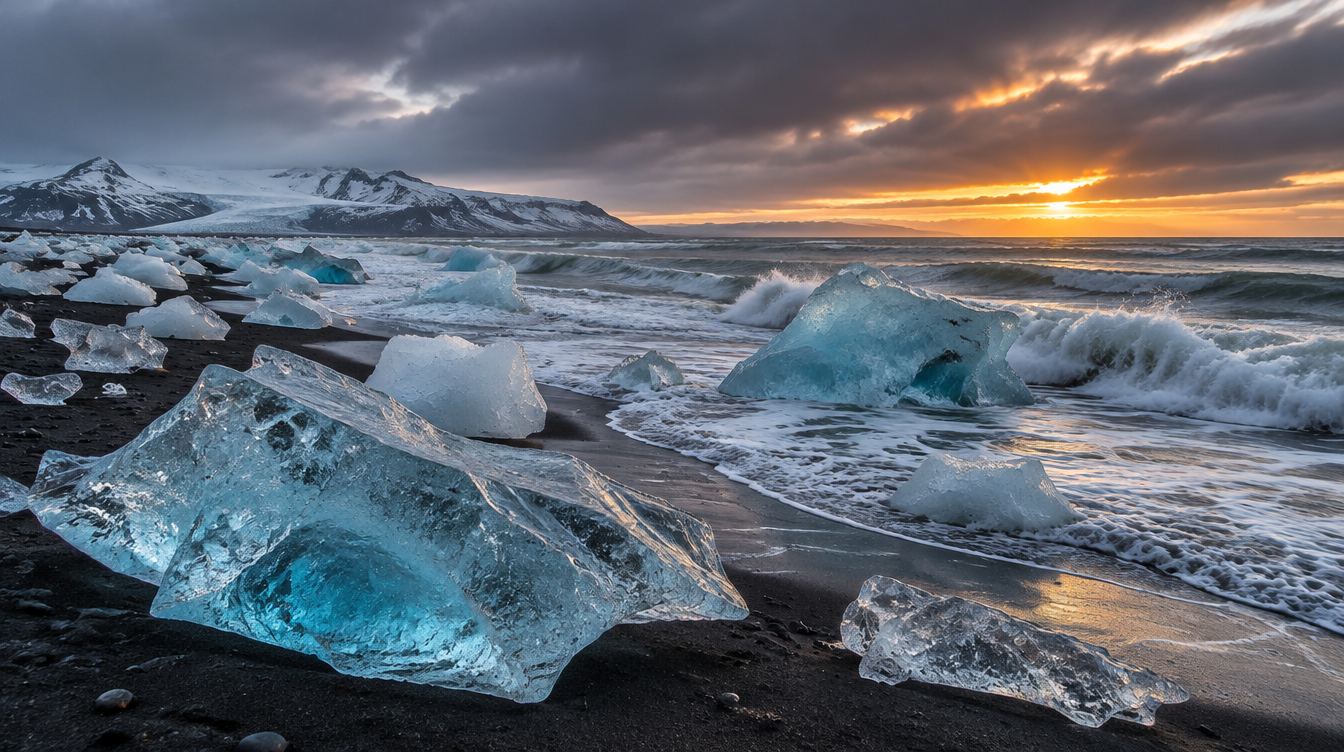
| Jökulsárlón glacier lagoon | Floating icebergs give the aurora something genuinely unique to reflect off, when the lagoon is calm |
| Vík and the south coast | Open coastal horizons near Dyrhólaey and Reynisfjara, far enough from any town to stay dark on clear nights |
What makes this list useful is not the individual entries, it is the geographic spread. These locations sit across the south, southeast, and west of the country, which matters enormously once you understand that Iceland's weather can be clear in one region and completely socked in two hours' drive away. A fixed single base cannot take advantage of that. A route that moves through all of these over several nights can.
Month by month: September, deep winter, and March compared
If you are choosing when within that long season to actually book your trip, here is how the three broad windows compare in practice.
| Period | Darkness window | Typical weather | Why choose it |
|---|---|---|---|
| Late August to September | Shorter, but real darkness returns after the bright summer nights | Milder temperatures, less snow and ice on roads | Easier driving conditions and a gentler introduction to night shooting before full winter |
| December to January | Longest nights of the year, darkness for most of the afternoon and morning | Coldest, with the highest chance of storms and road closures | Maximum hours of darkness per day, if you can handle the weather risk |
| February to March | Nights still long but noticeably longer days returning by March | Often more stable than deep winter, still properly cold | A practical middle ground many experienced aurora chasers favor, balancing darkness with fewer severe storm days |
None of these windows guarantees a sighting on any single given night, because clear sky and real-time geomagnetic activity still decide the outcome more than the month does. What the month does control is how much dark time you have available each day to work with, and how much weather risk you are taking on in exchange for it.
Pro Tip: Do not plan your entire trip around a single "aurora night" near the end of your itinerary. Treat every clear night from day one as a potential opportunity, because a route that reaches the right dark, remote location on your first evening can pay off before you have had time to get nervous about running out of chances.
Why a mobile itinerary beats a fixed base
This is the piece that most generic guides miss entirely, because most of them are written for independent travelers staying in one hotel for a week, and the advice naturally stays limited to "drive somewhere dark from wherever you are already staying." A guided, multi-stop itinerary works completely differently, and it is the actual logistical argument for traveling with a photography-focused tour rather than self-driving from a single base.
On our own Iceland Winter Aurora departures, the seven night loop moves through the Keflavík area, the Snæfellsnes Peninsula, the south coast waterfalls, the Vestrahorn and Jökulsárlón region, and back through Vík, which means that on any given night the group is already positioned somewhere different than the night before. If the forecast and the cloud map show the southeast is clear while the west coast is socked in, a route built around reaching multiple regions over the week has a real chance of being in the right place when it matters, rather than hoping the one place you booked happens to have clear skies on your one scheduled night out.
This is also where traveling with an experienced guide pays off beyond just carrying the right gear. Reading the Met Office's forecast and cloud map, knowing which of the route's stops has the best access and the safest footing in the dark, and being ready to adjust the evening's plan on short notice if conditions shift, is genuinely easier with someone who has made that call dozens of times before. Our Iceland Winter Aurora photo tour is built around exactly this logic: seven nights and seven days routed through Kleifarvatn and the Garður lighthouse, Kirkjufell and the Snæfellsnes Peninsula, Seljalandsfoss, Skógafoss and Kvernufoss, Vestrahorn and Fjallsárlón, Jökulsárlón and Diamond Beach, and the Vík area around Dyrhólaey, with a maximum of 10 participants and one dedicated photographer guide, Lorenzo Ranieri Tenti or Marco Carotenuto depending on the departure, every step of the way. The price is 4,500 US dollars per person with a 1,350 dollar deposit, covering all ground transportation, airport transfers, breakfasts and five dinners, professional coaching, image review sessions, and a post-processing workshop built right into the trip, with international flights and travel insurance arranged separately. If you want the bigger picture of what a full Iceland winter trip covers beyond just the aurora, our complete Iceland winter photography guide is the right next stop.
Frequently asked questions about Iceland's aurora season
Is September too early to see the northern lights in Iceland? No. Real darkness returns to Iceland's nights by September, and the weather is often milder and more stable than deep winter, which makes it a genuinely good month rather than just an early consolation prize.
Can you see the northern lights from Reykjavík? Occasionally, on a strong night, but city light pollution usually drowns out anything short of that. Getting well away from the capital region improves your odds dramatically.
What month has the most auroras in Iceland? There is no single clear winner. Darkness is available from roughly late August through April, but cloud cover and real-time geomagnetic activity vary night to night far more than they vary month to month, which is why checking the forecast matters more than picking a specific month.
Do you need to be far from Reykjavík to see the northern lights well? For a strong, photographable display, yes. Moving away from any town's light dome markedly improves contrast and visible detail, which is why a real itinerary routes through places like Kleifarvatn, Snæfellsnes, Vestrahorn, and the Vík area rather than staying near the capital.
Does a full moon ruin the northern lights? Not usually. A bright moon can wash out a faint, low-activity display, but it will not meaningfully dim a strong one, and it has the side benefit of lighting up your foreground landscape for a more complete photograph.
How cold does it need to be to see the northern lights in Iceland? Temperature has nothing to do with it. A clear, mild September night will show you the aurora exactly as well as a clear, freezing January night. Darkness and clear sky are what matter.
What time of night are the northern lights most active in Iceland? Activity tends to cluster around local magnetic midnight, commonly cited as roughly 9pm to 2am, though checking the Met Office's hourly activity forecast for that specific night is more reliable than any fixed rule of thumb.
Is a guided tour better than self-driving for aurora viewing? A guided, multi-stop itinerary can reposition toward whichever region has the clearest forecast overnight, which a trip based out of a single fixed location cannot do. That flexibility is the main structural advantage, beyond simply having a guide who knows the terrain and the forecast.
Sources
- Icelandic Meteorological Office: live aurora forecast and cloud cover map
- Icelandic Meteorological Office: Kp index and the auroral oval over Iceland
- NOAA Space Weather Prediction Center: live planetary Kp index data
- Wikipedia: geomagnetic storm classification and the Kp to G-scale mapping
- Wikipedia: the auroral zone and oval
- NASA: how auroras form