How to Choose a Wide-Angle Lens for Landscape Photography
A brand-neutral guide to choosing a wide-angle lens for landscape work: real focal length and weight numbers, prime vs zoom trade-offs, filter threads vs bulbous front elements, and what actually matters for night-sky shooting.
How to Choose a Wide-Angle Lens for Landscape Photography
I get asked some version of "what lens should I actually buy" on almost every tour I lead, usually somewhere around the second morning, right after someone has watched a fellow guest get a dramatically different shot of the exact same scene. The honest answer is rarely a single product name. It is a set of trade-offs, and the right wide-angle lens depends on what you are willing to give up: aperture, weight, filter access, or money. This guide walks through those trade-offs the way I actually think about them in the field, with real specs pulled from manufacturer and review databases rather than a ranked "top 10" list that tells you which one to buy without explaining why.
Most buying guides for this topic are affiliate-driven product roundups: a table of lenses, a star rating, and a "buy now" button. They are not useless, but they rarely explain the one thing that actually decides whether you will be happy with a wide-angle lens a year in, which is how it fits the specific kind of landscape photography you do. Someone shooting filter-heavy long exposures at Bagno Vignoni has different needs than someone chasing the Milky Way over a dark desert dune field in Tunisia. This article treats that as the organizing question, not an afterthought.
Key Takeaways
There is no single best wide-angle lens for landscape photography. There is a best wide-angle lens for the specific trade-off you are willing to make between aperture, weight, filter access, and cost.
| Point | Details |
|---|---|
| Practical wide-angle range | 14mm to 35mm on full frame, with 16-24mm covering most landscape work and 14mm reserved for the widest, most exaggerated compositions |
| Prime vs zoom | A fast 14mm prime buys a wider aperture at one focal length and often a heavier build; a 16-35mm style zoom buys flexibility and usually a lighter, more filter friendly package |
| The real deciding factor | Filter access, not focal length, is what most long-time landscape shooters say actually decides between a prime and a zoom |
| Night-sky suitability | Look for f/1.8 to f/2.8 maximum aperture and strong corner sharpness, since coma turns pinpoint stars into comet shaped smears toward the edge of the frame |
| Crop sensor shooters | Multiply your lens's focal length by your camera's crop factor (roughly 1.5x to 1.6x for APS-C, 2x for Four Thirds) to know what full-frame field of view you are actually getting |
Table of Contents
- Why landscape photography leans wide-angle
- Focal range explained with real numbers
- Full-frame vs crop-sensor equivalent focal lengths
- Prime vs zoom: what you actually trade
- Filter threads vs bulbous front elements
- Weight and travel considerations
- Night-sky and Milky Way suitability
- Weather sealing and build for the field
- A comparison table by use case
- Frequently asked questions about wide-angle landscape lenses
- So which wide-angle lens should you actually buy
Why landscape photography leans wide-angle
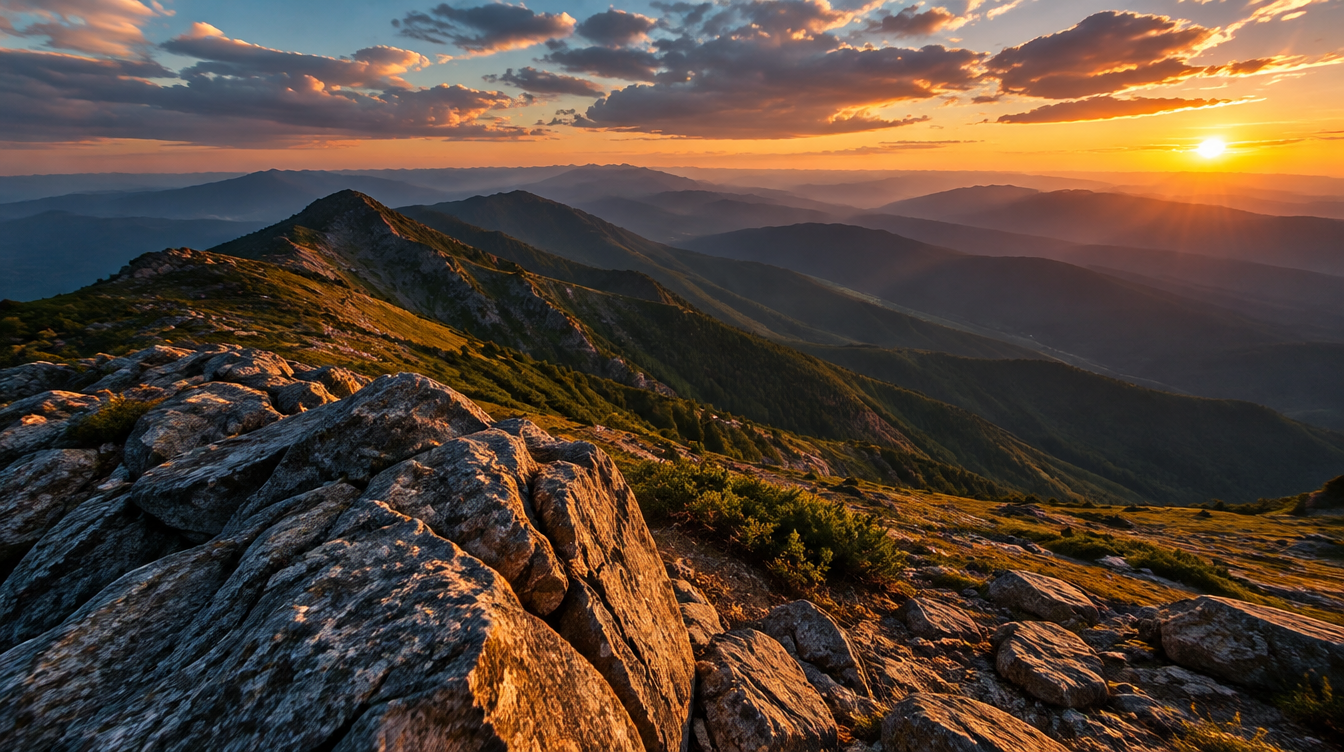
A wide-angle lens does one thing a standard or telephoto lens cannot do nearly as well: it lets you place something close and dramatic in the foreground while still holding the horizon and sky in the same frame. That is the entire appeal. A boulder, a cluster of wildflowers, or a cracked stretch of dry lakebed a few feet from your tripod can feel enormous against a distant mountain range, because the wide field of view stretches the apparent distance between near and far. Shoot the same scene with a 50mm lens and that foreground element shrinks to a minor detail.
Wide lenses also swallow more sky, which matters more than people expect. A dramatic sunrise with broken cloud cover and strong color needs room to breathe in the frame, and a narrower lens crops that drama down to a sliver. None of this means you should only own a wide-angle lens, but if you are buying your first dedicated landscape lens, this is almost always where the money should go first.
Focal range explained with real numbers
"Wide-angle" is not a marketing term with a fuzzy definition. By convention, on a full-frame (35mm format) camera, any lens with a focal length of 35mm or shorter counts as wide-angle, and the ultra-wide category begins once the focal length drops below the sensor's short dimension, which works out to under 24mm on full frame (Wikipedia, "Wide-angle lens"). That puts the entire 14mm to 24mm band, where most dedicated landscape and astro lenses live, firmly in ultra-wide territory, while 24mm to 35mm is "wide" but noticeably less extreme.
In practice, the numbers that matter for landscape work run from about 14mm at the extreme end to roughly 35mm at the mild end, with most of the lenses photographers actually reach for clustering in two bands: a 14mm to 16mm band for maximum drama and night-sky work, and a 16mm to 35mm zoom band that covers the bulk of everyday landscape shooting without forcing you to change lenses constantly. A 14mm lens has a noticeably wider field of view than a 16mm lens, roughly 12 to 13 percent more horizontally, which sounds small until you are standing at the edge of a cliff trying to fit in a foreground rock and a full sky in the same frame.
Full-frame vs crop-sensor equivalent focal lengths
If you shoot a crop-sensor camera, the number printed on the lens barrel is not the field of view you actually get. Crop factor is calculated by dividing the full-frame sensor's diagonal measurement by your own sensor's diagonal, and that number tells you how much "tighter" your lens behaves compared to full frame (Wikipedia, "Crop factor"). A 50mm lens on a Canon APS-C body with its 1.6x crop factor frames a scene like an 80mm lens would on full frame, and on the more common 1.5x APS-C crop used by Nikon, Sony, and Fujifilm, a 50mm lens matches roughly a 75mm full-frame field of view. The lens itself has not changed. The smaller sensor is simply using a smaller slice of the same image circle the lens projects.
Run that math backward for wide-angle lenses and the gap becomes significant. To match the field of view of a true 16mm lens on full frame, a 1.5x crop-sensor shooter needs roughly a 10 to 11mm lens, not a 16mm one. This is why a "16mm" APS-C kit lens never feels nearly as dramatic as a 16mm full-frame lens in practice, and it is worth checking before you buy, since several manufacturers sell genuinely ultra-wide primes and zooms built specifically for crop sensors at shorter stated focal lengths to compensate.
Pro Tip: Before buying anything, multiply the focal length by your own camera's crop factor and compare that number against the full-frame examples in this article, not the number printed on the box. It is the single most common mistake I see new landscape shooters make when upgrading their first wide-angle lens.
Prime vs zoom: what you actually trade
This is the decision most readers actually came here for, and it genuinely is a trade-off rather than one option being objectively better. Looking at real specs makes the trade concrete. The Sigma 14mm F1.8 DG HSM Art is a 14mm prime with a very wide f/1.8 maximum aperture, and it weighs 1,170 grams (DPReview, Sigma 14mm F1.8 DG HSM Art specifications). Compare that to the Nikkor Z 14-30mm F4 S, a zoom covering roughly the same focal range at a slower f/4 maximum aperture, which weighs 485 grams (DPReview, Nikkor Z 14-30mm F4 S specifications). The prime is more than double the weight for a lens that only covers a single focal length, in exchange for two full stops of extra light-gathering aperture.
That extra aperture barely matters for most daytime landscape work, since you are usually stopping down to f/8 or f/11 for depth of field regardless of what the lens is capable of wide open. It matters enormously once the sun goes down. A zoom buys you the ability to reframe without swapping lenses, genuinely useful when you are moving fast between compositions, say hiking a ridge line in the Dolomites chasing changing light, where stopping to change lenses can cost you the shot entirely. Neither is a wrong answer. Buy the zoom if you are not sure yet what kind of landscape photography you will end up doing most, and buy the prime once you know you need the aperture for something specific, usually night photography.
Filter threads vs bulbous front elements
This is the trade-off that competing buying guides mention as a spec-sheet footnote and that experienced landscape photographers will tell you is actually the deciding factor. If you use a circular polarizer or a graduated neutral density filter, which most tripod-based landscape photographers do for water, sky, and reflection control, a lens with a standard front filter thread is dramatically more practical day to day than a lens with a bulbous front element and no thread at all.
Looking at real lenses again: the Tamron 16-30mm F2.8 Di III VXD G2 takes a standard 67mm front filter, and the Sony FE 16-35mm F2.8 GM II takes an 82mm thread, both perfectly compatible with ordinary screw-on polarizers and ND filters (DPReview, Tamron 16-30mm F2.8 G2 specifications, DPReview, Sony FE 16-35mm F2.8 GM II specifications). The Sigma 14mm F1.8 Art, by contrast, has a bulbous front element with no filter thread listed at all. Lenses built this way exist because an unrestricted, curved front element lets designers correct distortion and vignetting more aggressively at ultra-wide focal lengths, but it forces you into workarounds: rear gel filter slots built into some primes, oversized filter systems mounted behind the lens hood on lenses like Nikon's 14-24mm family, or dedicated third-party filter holder systems built specifically for bulbous ultra-wides.
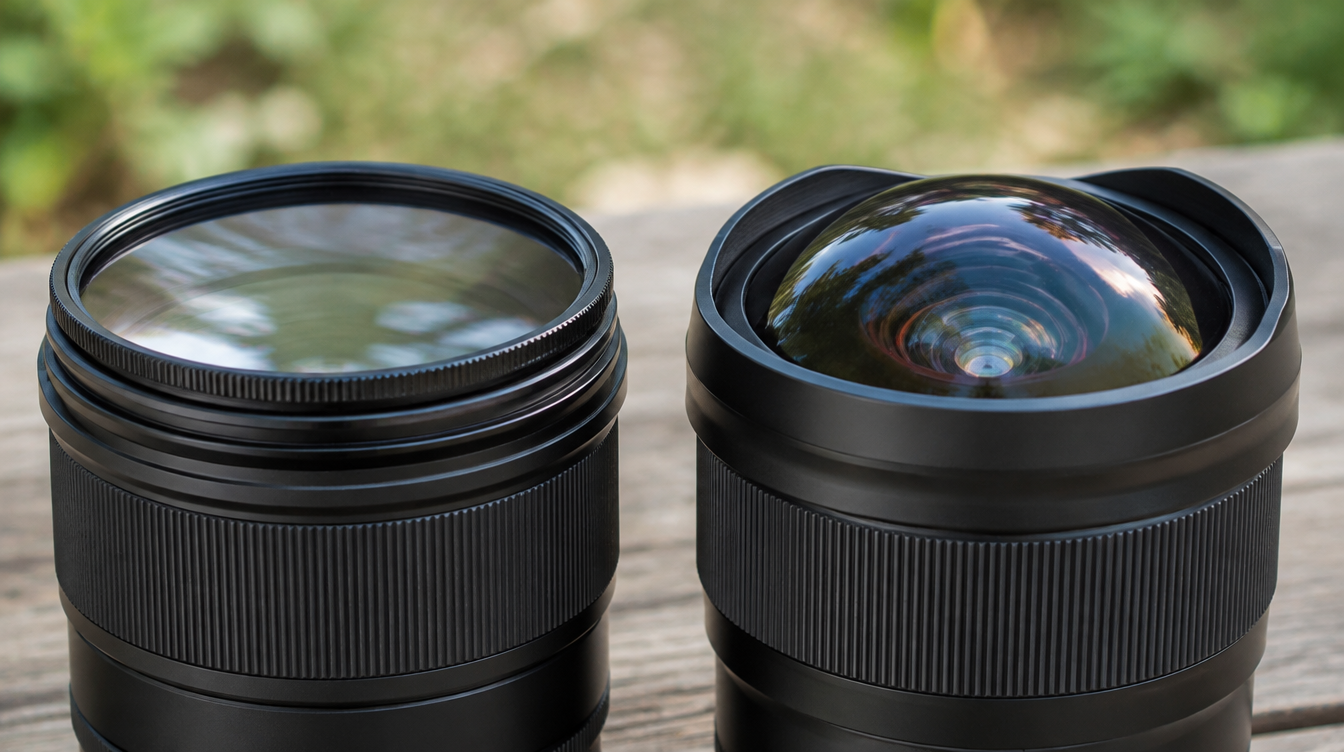
Filter thickness itself is also a real optical concern at these focal lengths, not just a mounting inconvenience. Nikon's own filter documentation notes that its ARCREST II filters are built roughly 30 percent thinner than conventional filters specifically to reduce the risk of vignetting "even with ultra-wide-angle lenses" (Nikon USA, ARCREST filters), which is a manufacturer confirming that a thick, ordinary filter can visibly darken the corners of an ultra-wide frame in a way it never would on a standard lens. If filters are a regular part of your workflow, and for long-exposure work in places like Val d'Orcia or around Lofoten's coastline they usually are, a standard filter thread in the 67mm to 82mm range should weigh heavily in your decision, arguably more than the extra stop or two of aperture a bulbous prime offers.
Weight and travel considerations
Weight differences between wide-angle lenses are larger than most buyers expect, and they compound fast once you are packing for an international trip with a carry-on weight limit. On the compact end, the Canon RF 16mm F2.8 STM weighs just 165 grams, while the Sigma 14mm F1.8 Art weighs 1,170 grams, more than seven times as much, for a very different kind of lens aimed at a different job (DPReview, Canon RF 16mm F2.8 STM specifications). Among the zooms, the Tamron 16-30mm F2.8 G2 comes in at 440 grams and the Canon RF 15-35mm F2.8L IS USM at 840 grams, both covering a similar focal range but built to very different standards of weather sealing and stabilization.
For a trip where you are carrying one bag through airport security and then hiking with it for a week, one zoom covering 14mm to 35mm is usually more practical than two primes, simply because of the combined weight and the number of lens changes you will make in the field, each one a chance to get dust on a sensor or miss a fast-changing light window. If your trip is built specifically around night photography, the weight trade-off is usually worth accepting for that one specialized lens.
Night-sky and Milky Way suitability
Night work is where the prime versus zoom decision actually bites hardest, because the extra light-gathering aperture of a fast prime translates directly into a cleaner, lower-noise image of a genuinely dim subject. Coma is the other major factor competing buying guides tend to skip. Coma is an optical aberration that happens because light from points off the center of the frame strikes the lens elements at an angle and does not converge to a single clean point, which makes pinpoint light sources, stars included, look stretched into small comet-like shapes toward the corners of the frame, growing worse the further from the center you look (Wikipedia, "Coma (optics)"). A lens that is otherwise sharp can still produce disappointing star fields if its coma control is weak, which is why dedicated astro shooters care about corner performance specifically, not just center sharpness.
Fast 14mm primes and f/2.8 constant-aperture zooms in the 16-35mm class are the two families that repeatedly show up as night-sky recommendations, because they combine a wide enough aperture to gather light from a genuinely dark sky with reasonably controlled coma toward the edges. The practical trade is the same one covered above: a prime buys roughly a stop or more of extra light at a real weight cost, often two to three times heavier than a comparable f/2.8 zoom. On a trip built around a genuinely dark sky, like a Milky Way shoot over the dune fields of the Tunisian or Algerian desert, that extra stop of light can be the difference between a clean, low-noise frame at ISO 3200 and a noisy one pushed to ISO 6400 to compensate for a slower lens.
Pro Tip: If you are buying a lens specifically for a night-sky trip, test it at home first on streetlights or distant porch lights at night, wide open, and check the extreme corners of the frame at full zoom on your camera's screen. A lens with bad coma will show it clearly on ordinary point lights, and it is a lot cheaper to find out before a once-in-a-while desert trip than during it.
Weather sealing and build for the field
Landscape photography happens outdoors, often in conditions that would make most people put their camera away. Shooting through blowing sand on a Sahara dune, standing in sea spray on a Lofoten beach, or working through a sudden squall of rain in the Dolomites are all realistic scenarios on a dedicated photography trip, and a lens without real weather sealing will eventually let in moisture or dust through its zoom or focus mechanisms. Several of the zooms in the comparison below, including the Canon RF 15-35mm F2.8L IS USM and the Sony FE 16-35mm F2.8 GM II, are built to a sealed, professional standard for exactly this kind of use, and it is worth checking directly against the manufacturer's own listing, since "weather resistant" is used loosely across the industry.
A comparison table by use case
Rather than ranking lenses against each other, here is how the trade-offs above map onto the kind of shooting you are actually planning to do. This is the question worth answering before you look at a single product page.
| Use case | Focal range type | Prime or zoom | Filter situation | Typical weight |
|---|---|---|---|---|
| Fast hiking between compositions (ridge lines, changing light) | 16-35mm or 15-35mm zoom | Zoom | Standard thread, 67-82mm | 440-840g |
| Filter-heavy long exposure (waterfalls, coastlines, graduated ND skies) | 14-30mm, f/4 to f/2.8 | Zoom | Standard thread essential | 440-840g |
| Milky Way and night sky in genuinely dark locations | 14-16mm, fastest aperture available | Prime | Often no thread; rear gel or oversized hood filter | 300-1,170g |
| One-lens travel kit for a mixed daytime trip | 16-35mm zoom | Zoom | Standard thread | 547-840g |
| Ultra-light, minimalist kit, daytime only | 16mm compact prime | Prime | Small standard thread, 43-67mm | 165-304g |
Notice that the "fast hiking" and "filter-heavy long exposure" rows land on nearly the same answer. That is not a coincidence. For most landscape photographers who are not specifically chasing night skies, a weather-sealed 16-35mm class zoom with a standard filter thread is the lens that gets reached for on the largest number of actual shooting days, even if a prime looks more impressive on paper.
This is exactly the kind of decision we talk through with guests before every departure on a WeShoot photo tour, because the right lens genuinely depends on where you are going. We currently run six tours spanning two continents, from classic daytime landscape work in Tuscany and the Dolomites to dedicated night-sky trips chasing the Milky Way over the deserts of Tunisia and Algeria and the aurora over Iceland and Lofoten, priced roughly between $3,800 and $4,800 per person. If you already own a 16-35mm style zoom, you are set for the daytime destinations. If a night-sky trip is on your list, that is the specific case where paying for a faster prime, or at minimum renting one, actually pays off in the photographs you bring home.
Frequently asked questions about wide-angle landscape lenses
Is a 16-35mm lens wide enough for landscape photography? Yes, for the large majority of landscape work. 16mm on full frame covers a field of view wide enough for dramatic foreground-to-horizon compositions in nearly every situation, and it is consistently the most common recommendation as the practical all-rounder, especially for photographers who use filters regularly. A 14mm prime is wider still, roughly 12 to 13 percent more field of view than 16mm, and is worth the jump mainly when you specifically want tighter canyon walls, denser star fields, or more exaggerated foreground scale, not as an automatic upgrade.
Do you need a prime or a zoom lens for landscapes? Neither is strictly necessary. A prime like the Sigma 14mm F1.8 Art buys a much wider maximum aperture at one focal length, useful mainly for night work, but weighs roughly 1,170 grams and locks you to one field of view. A zoom like the Nikkor Z 14-30mm F4 weighs under half that, at 485 grams, and lets you reframe without changing lenses, at the cost of a slower aperture that matters far less for daytime work, where you are usually stopped down to f/8 to f/11 regardless.
What is the best wide-angle lens for astrophotography or the Milky Way? Look for the widest practical maximum aperture, in the f/1.8 to f/2.8 range, combined with strong corner sharpness, since coma turns pinpoint stars into comet-shaped smears toward the edges of the frame on lenses with weak corner performance. Fast 14mm primes and f/2.8 constant-aperture zooms in the 16-35mm class are the two families that repeatedly show up as night-sky picks, with the prime buying roughly a stop or more of extra light at a real weight cost.
Full frame versus crop sensor: what wide-angle focal length do I actually need? Multiply the lens's stated focal length by your sensor's crop factor to get the full-frame-equivalent field of view. On a 1.5x APS-C body, a 10mm lens gives roughly the same field of view as a 15mm lens on full frame, so you need a genuinely shorter focal length on a smaller sensor to get the same dramatic wide-angle look.
Do I need filters on a wide-angle lens, and does that limit my lens choice? If you use a polarizer or graduated ND filter, which most tripod-based landscape photographers do, a lens with a standard front filter thread, most commonly found on f/4 and f/2.8 zooms in the 67mm to 82mm range, is far more practical day to day than a bulbous-front prime with no thread at all, which forces you into rear gel filters or dedicated bolt-on filter-holder systems. This is repeatedly cited as the single deciding factor between a 14mm prime and a 16-35mm zoom.
So which wide-angle lens should you actually buy
If you only shoot during the day and use filters regularly, buy a weather-sealed 16-35mm class zoom with a standard front filter thread. It is the lens that will spend the most days actually mounted on your camera. If night photography, and specifically the Milky Way, is a real part of your plans, budget separately for a fast 14mm to 16mm prime and accept the extra weight and the filter workaround as the cost of the images you are actually trying to get. If you are not sure yet which category you fall into, start with the zoom and add a specialized prime later once you know exactly what you are missing.
Our own guides carry both kinds of lenses on different departures, and one of the things we talk through with every guest before a trip, covered in more detail in our guide to what camera gear you actually need for a photography tour, is which lens to prioritize for the specific locations and light on that itinerary.
Sources
- DPReview: Sony FE 16-35mm F2.8 GM II specifications
- DPReview: Sony FE 16mm F1.8 G specifications
- DPReview: Sigma 14mm F1.8 DG HSM Art specifications
- DPReview: Canon RF 16mm F2.8 STM specifications
- DPReview: Canon RF 15-35mm F2.8L IS USM specifications
- DPReview: Nikkor Z 14-30mm F4 S specifications
- DPReview: Tamron 16-30mm F2.8 Di III VXD G2 specifications
- Nikon USA: ARCREST filters
- Wikipedia: Crop factor
- Wikipedia: Wide-angle lens
- Wikipedia: Coma (optics)