The Cypress Road: How to Photograph Tuscany's Most Iconic View
A location guide to the famous cypress lined driveways and farm roads near San Quirico and Monticchiello, with the best light direction, timing, and etiquette for shooting on private Tuscan farmland.
The Cypress Road: How to Photograph Tuscany's Most Iconic View
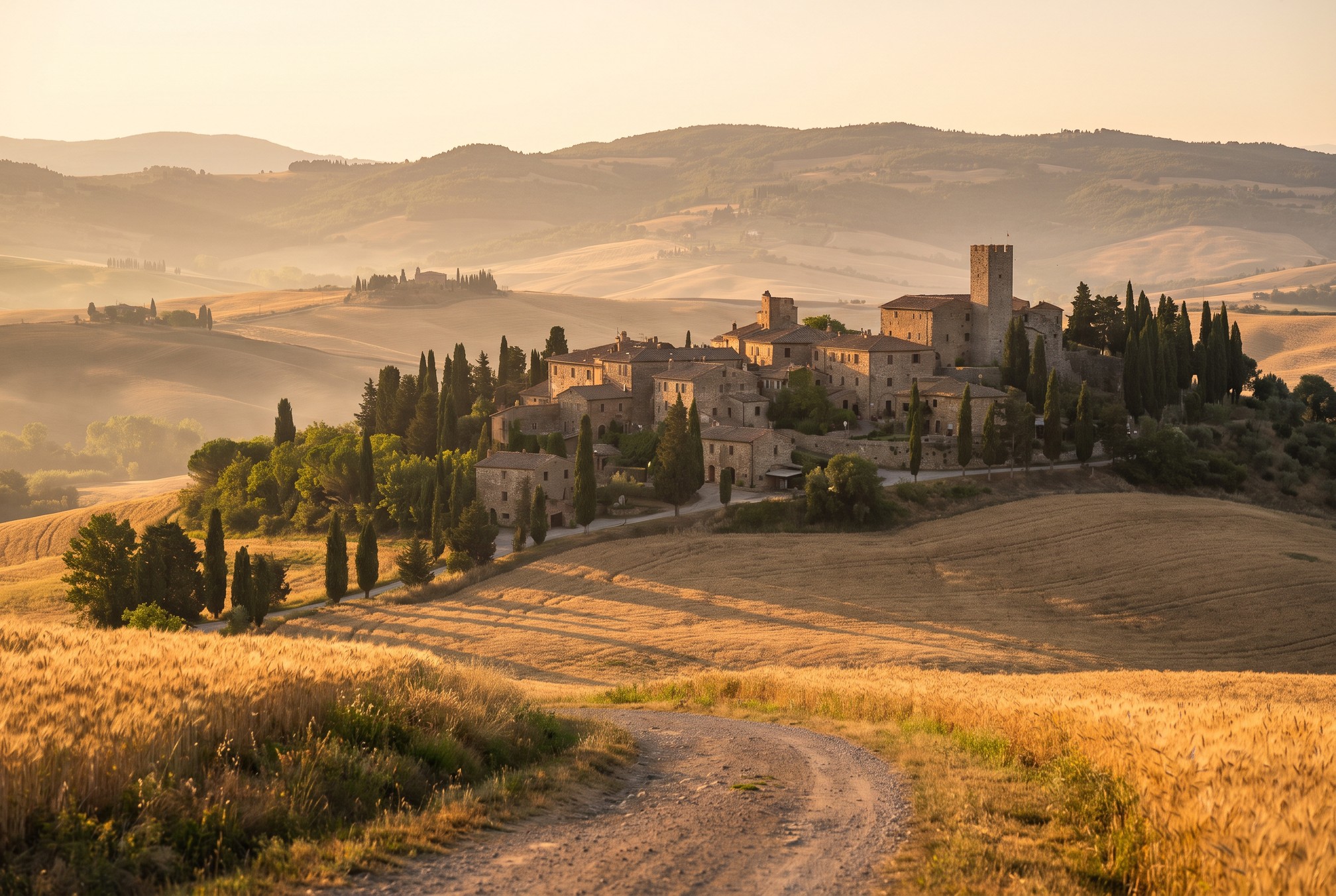
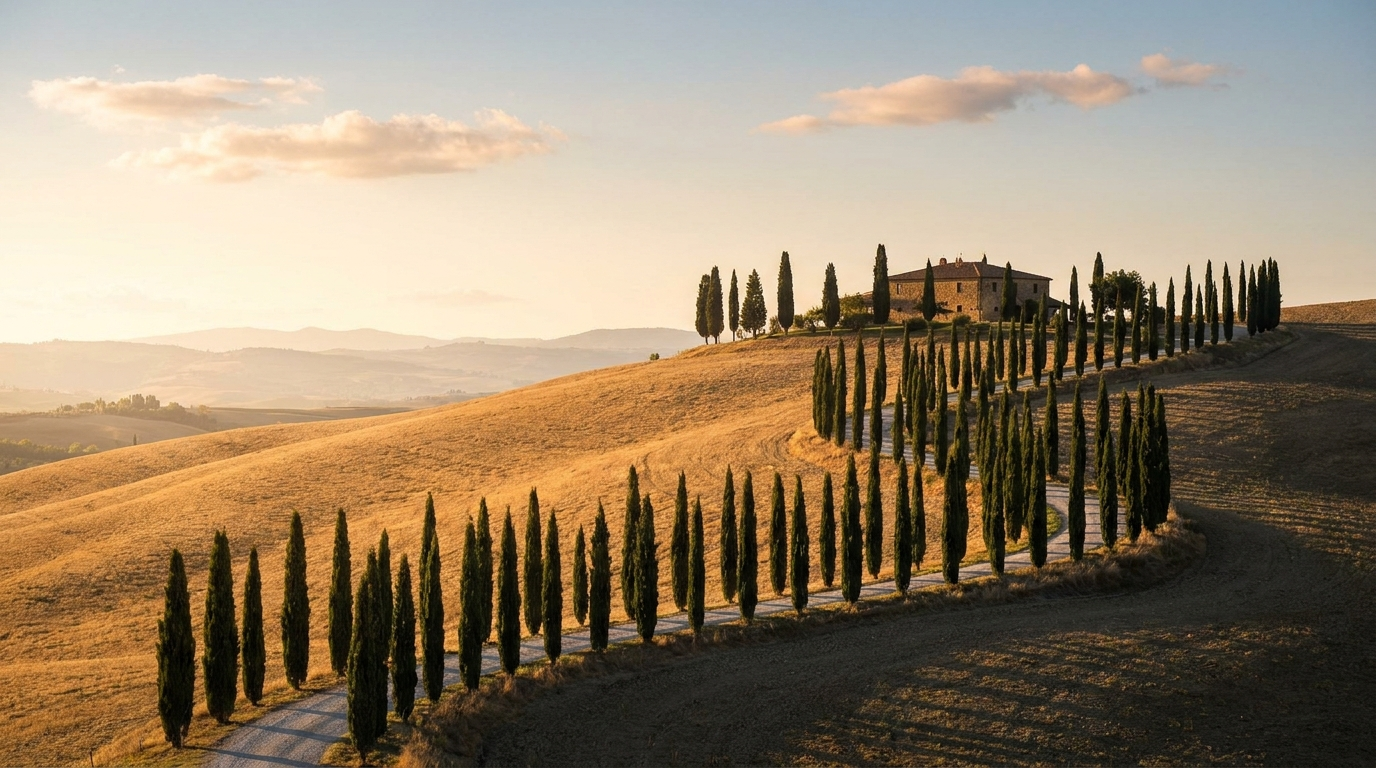
If you have ever seen a single photograph of Tuscany before setting foot in the region, there is a strong chance it was this one: a narrow dirt driveway climbing a bare hillside in a lazy S curve, lined on both sides with tall, dark cypress trees, leading up to a lone farmhouse silhouetted against the sky. It is one of the most reproduced landscape images in the world, printed on calendars, screensavers, and stock photo libraries so many times that most people who recognize it could not tell you where it actually is.
It is in Val d'Orcia, and it is more specific than most visitors realize. There is not one single cypress road but a handful of them scattered around San Quirico d'Orcia and Monticchiello, each with its own character, its own best light, and its own etiquette rules because nearly every one of them runs through working private farmland. This guide covers where they are, how to photograph them properly, and how to do it without damaging the crops or the goodwill of the farmers who actually own the land you are shooting.
Key Takeaways
The cypress roads near San Quirico and Monticchiello are private farmland, not public parks, so photographing them well means combining good light with genuine respect for the property.
| Point | Details |
|---|---|
| Most famous stretch | The winding driveway near Terrapille, just southeast of San Quirico d'Orcia |
| Second location | The straighter cypress rows on the approach roads to Monticchiello |
| Best light direction | Side light in early morning or late afternoon, which separates each tree and reveals the curve of the hill |
| Access rule | Shoot from the public road edge; do not walk onto the private driveway or surrounding fields |
| Best season | Winter and early spring, when the bare hillside shows the road's shape most clearly |
| Common mistake | Arriving at midday, when flat overhead light flattens the hill and removes all sense of depth |
Table of Contents
- Where the cypress road actually is
- The Terrapille driveway near San Quirico
- The cypress rows around Monticchiello
- Reading the light on a curved hillside
- The private farmland question
- Best season and time of day
- Gear and composition notes
- Comparing the main cypress spots
- Frequently asked questions about the cypress roads
Where the cypress road actually is
Search "Tuscany cypress road" and you will find the same handful of images circulated endlessly, most of them taken from roughly the same pull off on a minor provincial road southeast of San Quirico d'Orcia. The driveway itself belongs to a working farm and leads up to a private house, so the photograph everyone recognizes was taken from public land looking across at private land, not by walking up the drive itself. That distinction matters more than most guides mention, and it shapes almost everything else in this article.
A second, less photographed but equally strong set of cypress rows sits closer to Monticchiello, a few minutes further south. Those roads tend to run straighter across gentler terrain rather than climbing a single dramatic curve, which makes them a good second stop if you want variety without driving far. Between the two areas, you can build a full morning or evening of cypress photography without repeating a single composition.
The Terrapille driveway near San Quirico
The single most photographed cypress driveway in Tuscany sits on the hillside near Terrapille, a small cluster of farmhouses along the provincial road that runs southeast out of San Quirico d'Orcia toward Pienza. The road bends in a shallow S shape as it climbs, and roughly a dozen cypress trees line each edge of the gravel drive, spaced with a regularity that almost looks planted for a photograph, which in a sense it was, since Tuscan farmers have planted cypress avenues as windbreaks and property markers for centuries.
You do not need to leave the paved provincial road to get the classic shot. A small pull off area on the roadside gives a clean, elevated view straight across the valley to the driveway, with enough distance for a mid range telephoto to compress the curve and stack the cypress trees against each other. Arrive early, because this specific spot has become well known enough that a handful of other photographers often have the same idea at sunrise, especially in spring and autumn.
Pro Tip: Bring a telephoto zoom in the 70 to 200mm range if you own one. A wide angle lens standing at the roadside pull off tends to shrink the driveway into a small, unremarkable detail in the frame. A longer lens compresses the S curve and makes the cypress rows the clear subject of the photograph.
The cypress rows around Monticchiello
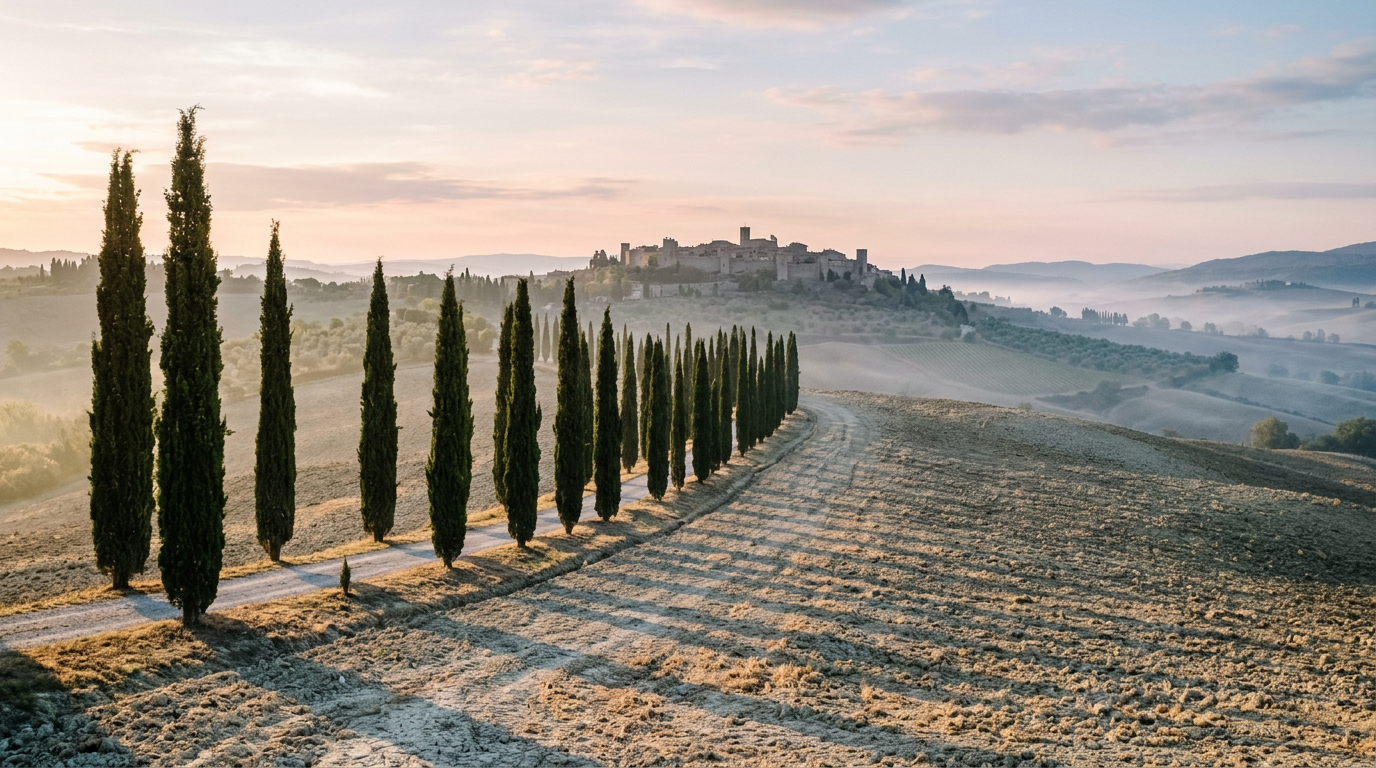
South of Pienza, the road toward Monticchiello passes several stretches of cypress lined farmland that rarely show up in the same volume of photographs as the San Quirico driveway, mostly because they are slightly harder to explain to someone who has not driven the route themselves. Rather than one dramatic curve, these rows run alongside straighter farm tracks and property boundaries, framing distant views of the walled hilltop village itself.
This area rewards a slower approach. Instead of hunting for one iconic frame, drive the minor roads around Monticchiello at a walking pace with your window down, and stop wherever a row of cypress lines up with the village silhouette or a farmhouse in the middle distance. Because these compositions are less well known, you are far more likely to have them entirely to yourself, even during the busier spring and autumn seasons.
Reading the light on a curved hillside
Cypress trees are essentially dark, narrow vertical shapes, and the entire photograph lives or dies on how much separation you can create between each tree and the hillside behind it. Flat, overhead midday light turns the whole scene into a single dark green mass with almost no depth. Low angle side light, arriving from either the left or right rather than from directly behind you, rakes across the hill and throws a thin shadow behind each tree, which is what gives the classic photograph its three dimensional, almost sculptural look.
Early morning light tends to work best at the Terrapille driveway specifically, because the hillside faces in a direction that catches strong side light shortly after sunrise. The Monticchiello rows, running in a different orientation, often photograph better in the last hour before sunset. If you only have time for one location on a given morning, check which direction the specific row of trees is facing before committing, since the difference between good side light and flat backlight can be the entire photograph.
The private farmland question
Every cypress road covered in this guide runs through, or leads to, land that belongs to a working farm. These are not municipal parks or protected viewpoints with a designated overlook. They are driveways, field boundaries, and access roads that happen to be extraordinarily photogenic, and the families who own them are trying to run a farm, not host a photo shoot. Val d'Orcia's UNESCO World Heritage status covers the working agricultural landscape itself, which is part of why the region still looks like this today, and part of why the etiquette around it matters more than it might in a purely scenic location.
The simplest rule is also the most reliable one: shoot from the public road or a designated pull off, and do not walk up the private driveway or into the surrounding fields, even if a gate looks open or no one appears to be around. Crops get damaged by foot traffic more easily than most visitors expect, and a farmer who has had repeated problems with photographers wandering onto the property is far more likely to fence off or otherwise obstruct a view that used to be freely photographable from the road. Every closed gate at a once open Tuscan photo spot has the same basic backstory.
Pro Tip: If you want a closer or more elevated angle than the public road allows, ask rather than assume. Many agriturismo properties in the area sit close to well known cypress rows, and staying at one for a night or two often comes with informal permission to photograph the grounds that a day tripper would never be offered.
Best season and time of day
Cypress trees stay green through every season, which makes this one of the few Val d'Orcia subjects that photographs reasonably well year round, but the surrounding hillside changes dramatically. In winter and early spring, before the wheat and cover crops fill in, the hill is a bare, pale ochre or green that puts maximum contrast against the dark cypress trunks, which is exactly the look in most of the famous reference images. By early summer, taller grass and crops soften that contrast and can partly obscure the base of the trees, and by late summer the same hillside often turns a dusty gold that changes the color story completely.
Time of day matters as much as season. Aim to be in position within the first ninety minutes after sunrise or the last ninety minutes before sunset, whichever direction gives you side light on the specific row you are shooting. A foggy autumn morning is the rare exception where flat, diffused light still works, since fog replaces the need for directional shadow with its own kind of separation between the trees and the background.
Gear and composition notes
A telephoto zoom is the single most useful lens for the Terrapille driveway shot, since compression is what turns a distant hillside into a graphic, layered composition. A mid range zoom in the 24 to 70mm range covers most of the Monticchiello rows well, where you are often standing closer to the trees rather than photographing them from across a valley. A polarizer helps cut glare on the pale hillside and deepens the green of the cypress foliage, though it has less effect at the low sun angles that work best for this subject anyway.
Compositionally, resist the urge to center the driveway or row of trees in the frame. Placing the curve or line along a third of the image, with open sky or hillside filling the rest, generally reads as more natural than a dead center composition. A single cloud, a distant hill town, or even another line of cypress trees in the background all help avoid the flat, postcard sameness that this subject can easily fall into if shot too literally.
Comparing the main cypress spots
| Location | Best light | Lens | Crowd level |
|---|---|---|---|
| Terrapille driveway, San Quirico | Early morning | 70 to 200mm telephoto | Busy at sunrise in peak season |
| Monticchiello approach roads | Late afternoon | 24 to 70mm standard zoom | Usually quiet |
| SR2 rows near San Quirico walls | Either, depending on the specific row | Wide to standard zoom | Moderate |
The three areas above cover most of what a single day trip through the cypress roads can reasonably include. Pairing an early morning session at Terrapille with a late afternoon stop near Monticchiello gives you two genuinely different looks from the same subject without wasting the flat midday hours in between, which are better spent scouting on foot, eating lunch in San Quirico or Pienza, or simply resting before the evening shoot.
Frequently asked questions about the cypress roads
Can I walk up the famous driveway near San Quirico? No. It leads to a private working farm, and the classic photograph is taken from the public road looking across at it, not by walking the drive itself.
Is there an official viewpoint or parking area? There is an informal roadside pull off near the Terrapille driveway that most visiting photographers use, but it is not a signed or maintained viewpoint, so park considerately and be mindful of other traffic on the narrow provincial road.
What time of year has the best contrast between the cypress trees and the hillside? Late winter through early spring, before crops and grass fill in the bare hillside, tends to give the strongest visual separation between the dark trees and the pale ground.
Do I need a drone for this shot? No, and current EU drone regulations add real restrictions around this kind of privately owned agricultural land in any case. Every classic reference photograph of the cypress roads was taken from the ground.
Are the Monticchiello cypress rows as photogenic as the San Quirico driveway? They are different rather than lesser. The San Quirico spot has one dramatic curve that reads well from a distance. The Monticchiello rows are straighter but offer more variety across several stops, with far fewer other photographers around.
Sources
- Visit Tuscany: guidance on driving Tuscany's countryside and rural roads
- Improve Photography: tips for photographing Tuscany, including private property etiquette