How to Choose a Tripod for Landscape Photography
Load rating, height without the center column, carbon fiber versus aluminum, and the leg locks and heads that actually hold up on windy beaches and alpine ridges.
How to Choose a Tripod for Landscape Photography
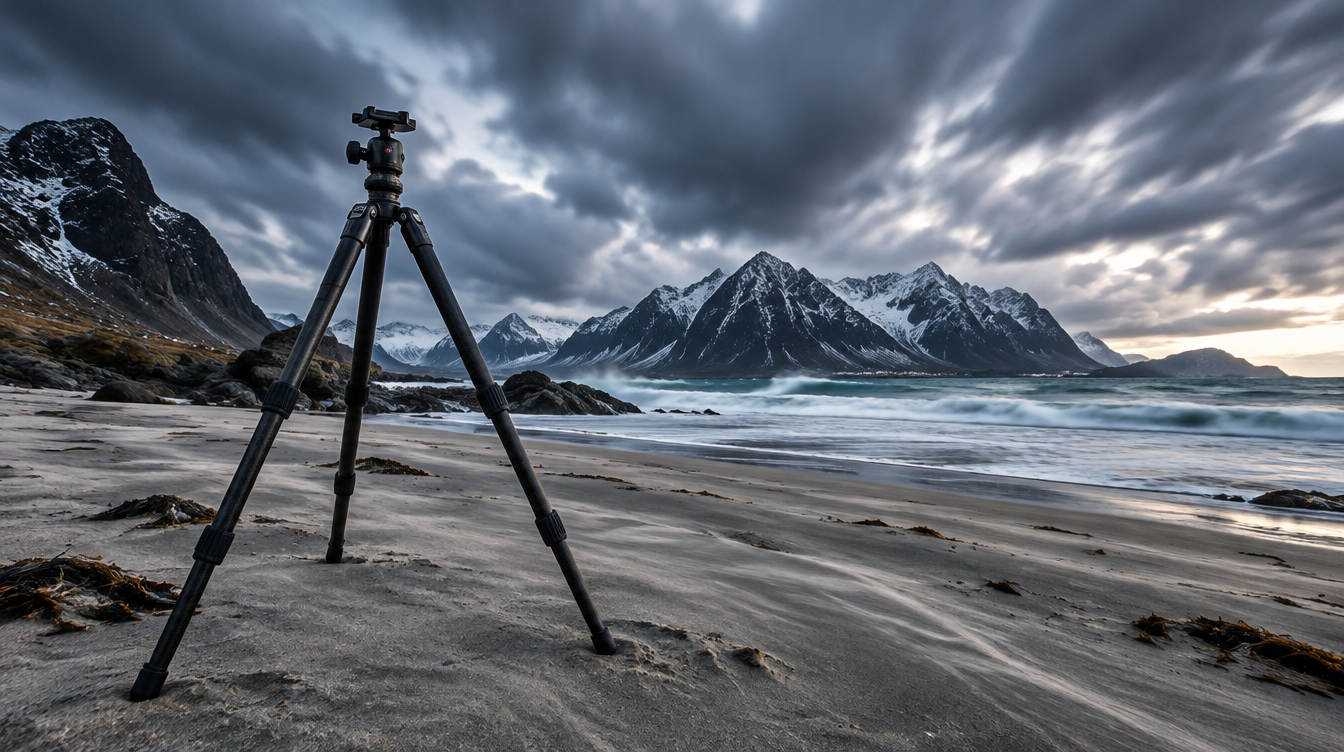
I have watched a brand new, expensive tripod get walked backward across a Lofoten beach by nothing more than a gust of wind, camera still mounted, while its owner lunged for it in the surf. I have also watched a battered, ten year old aluminum tripod shrug off the same wind without moving a centimeter, simply because its owner knew how to splay the legs and load it properly. The tripod itself only tells half the story. The other half is knowing what actually matters when you buy one and how to use it once the wind, the sand, or the altitude starts working against you.
This guide walks through the decisions that genuinely change how a tripod performs in the field: load rating, height without the center column, carbon fiber versus aluminum, leg lock design, and the head you put on top. Every section is grounded in the two kinds of terrain where a weak tripod gets exposed fastest on our own itineraries, the open Atlantic wind hitting Lofoten's beaches and the exposed ridge air up in the Dolomites, so the advice is specific rather than generic.
Key Takeaways
There is no single best tripod. There is a right combination of load rating, height, material, and head for the conditions you actually shoot in, and most buying guides skip straight past that.
| Point | Details |
|---|---|
| Load rating rule of thumb | Look for a rated capacity roughly two to three times your actual camera, lens, and head weight combined, not just enough to match it |
| The height spec that matters | Maximum height without the center column raised, since extending the column adds a flex point right where you least want one |
| Carbon fiber vs aluminum | Carbon fiber is stiffer for its weight and does not pull heat out of bare hands as fast; aluminum is cheaper and more tolerant of hard knocks |
| Leg locks in the field | Lever locks are fast in gloves but their cam mechanism can jam with grit; twist locks are simple to clean but can gall if over-tightened for years |
| Ball head vs geared head | Ball heads reposition faster; geared heads hold a locked composition more precisely for panoramas and long exposures |
| Flying with a tripod | Permitted in both carry-on and checked bags under current TSA guidance, with final discretion left to the screening officer |
Table of Contents
- Why tripod choice matters more on a Lofoten beach than in your backyard
- Load rating: what the number means and the 2 to 3x rule
- Height without the center column: the spec that actually matters
- Carbon fiber vs aluminum: stiffness, weight, and cold weather handling
- Leg locks: twist vs lever in sand, salt spray, and sub-zero temperatures
- Ball head vs geared head: speed vs precision
- The travel vs stability trade-off
- Flying with a tripod: what TSA actually says
- Field notes: Lofoten beaches and Dolomite ridges
- Frequently asked questions about choosing a landscape tripod
Why tripod choice matters more on a Lofoten beach than in your backyard
Most tripod reviews are written in a living room or a quiet studio. That is a fine place to test whether a head locks smoothly, but it tells you almost nothing about how the same tripod behaves on Haukland or Skagsanden beach in Lofoten at sunset, with onshore wind pushing against every square inch of your legs, your camera, and your own body. Lofoten sits far enough north and exposed enough to the open Atlantic that strong winds are a normal part of late autumn and winter there, not a rare event, and a tripod that feels perfectly stable in a shop can start to hum and judder the moment a gust hits it broadside on an open beach.
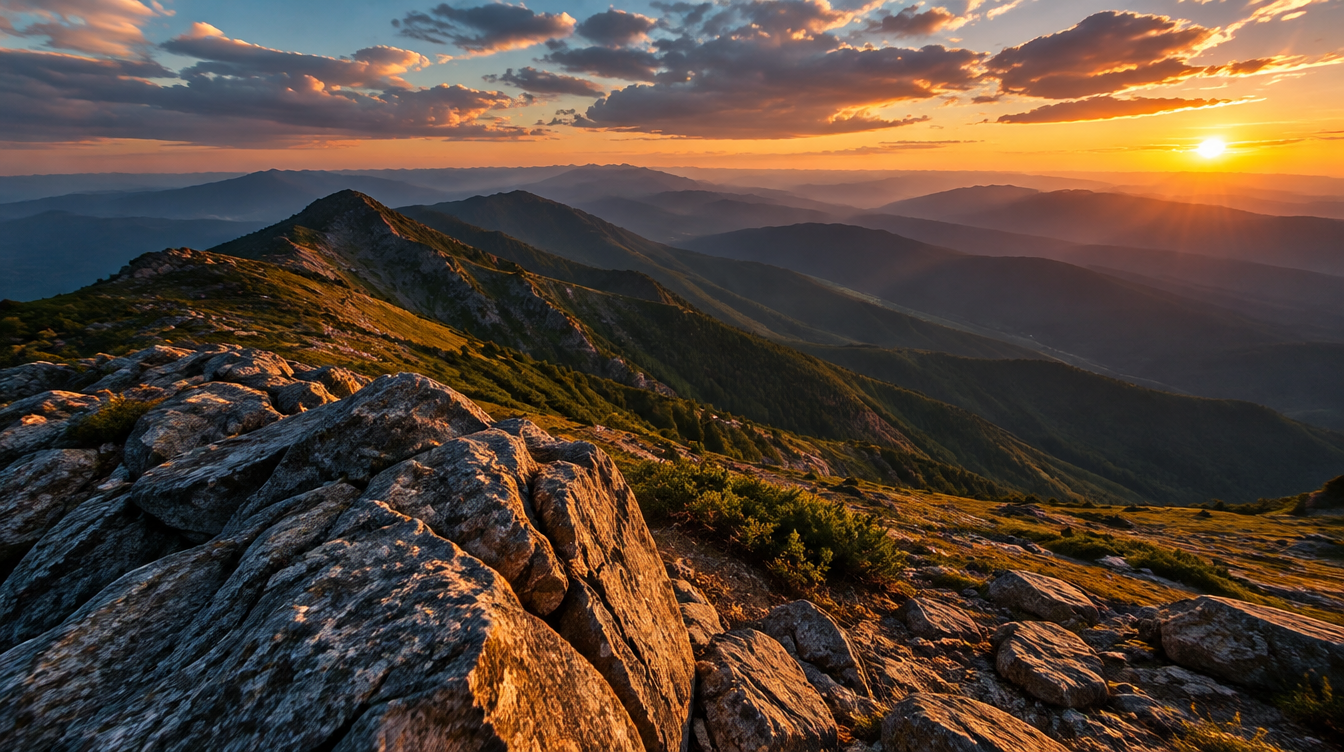
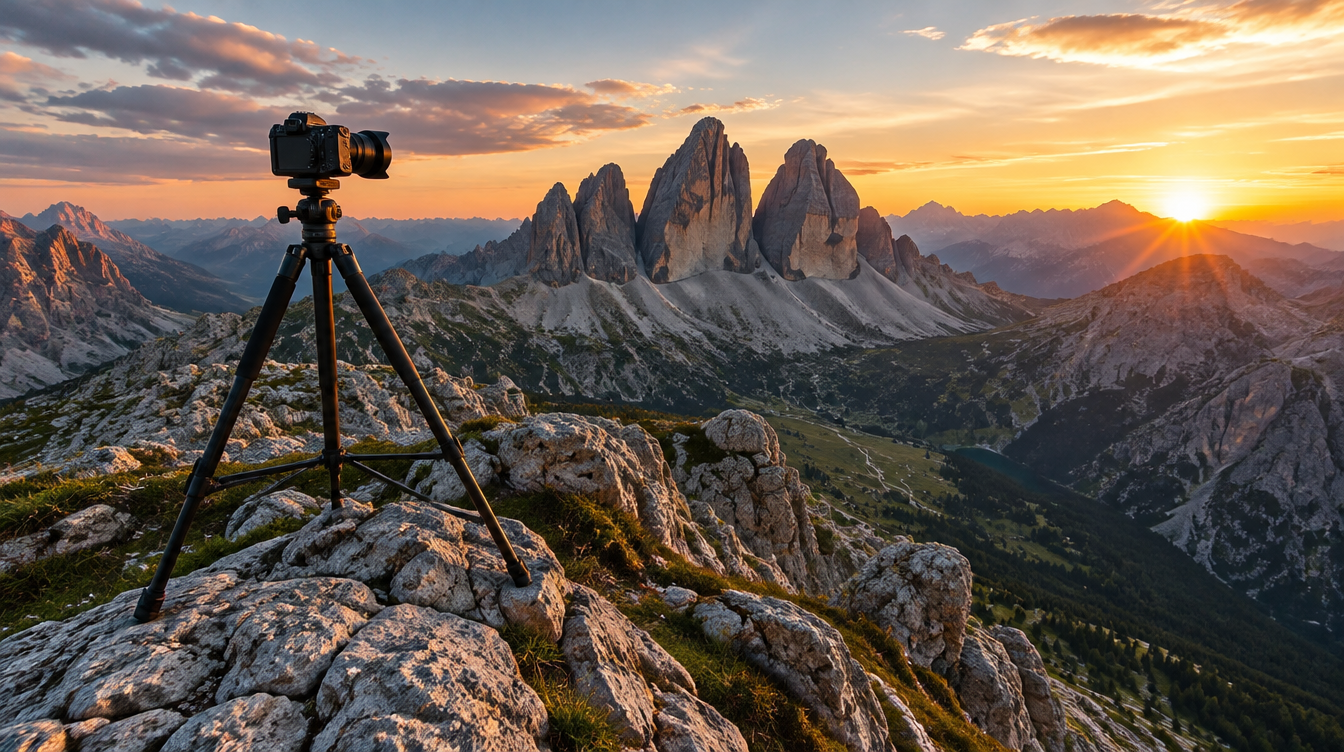
The Dolomites present a different version of the same problem. Up on an exposed ridge near one of the range's protected via ferrata routes, well above tree line in a landscape where the highest peaks push past 3,300 meters, there is nothing to block the wind and often very little flat, soft ground to plant a leg into. A tripod that only has to resist its own weight on a studio floor is being asked a completely different question once gravity, wind load, and uneven rock all act on it at once.
That gap between showroom testing and field reality is exactly where this guide is aimed. Our Landscape Photography Guide covers the broader toolkit for reading light and planning a shoot. This article goes deep on one piece of that toolkit that most people underthink until it fails them in the wind.
Load rating: what the number means and the 2 to 3x rule
Every tripod lists a maximum load rating, usually somewhere between 4 and 25 kilograms. The instinct is to add up your camera body, lens, and head, find a tripod rated just above that number, and call it done. That instinct is the single most common mistake in tripod shopping. A rating is the weight a leg set can technically hold upright without collapsing, not the weight it can hold steady in wind, on an angle, or during a long exposure. Once you load a tripod anywhere near its stated maximum, every bit of dampening capacity it has is already spent on simply not falling over, leaving nothing left to resist vibration from wind or from your own hand touching the shutter button.
A widely used rule of thumb among working photographers is to look for a rated capacity roughly two to three times your actual combined camera, lens, and head weight, not just a number that matches it. A full frame body, a 16-35mm lens, and a ball head might weigh somewhere around 2.5 to 3 kilograms together. Under the 2 to 3x rule, that kit wants a tripod rated for at least 6 to 9 kilograms, with the higher end of that range preferred if you regularly shoot in wind. The extra margin is not wasted capacity, it is the reserve the tripod uses to stay rigid rather than simply stay upright.
Pro Tip: If you cannot find your exact combined kit weight on a manufacturer spec sheet, weigh it yourself on a kitchen scale before you shop. Guessing low is the single most common reason photographers end up disappointed by a lightweight travel tripod in the field.
Height without the center column: the spec that actually matters
Marketing materials love to quote a tripod's maximum height, and that number almost always includes the center column fully extended. The spec that actually determines how usable and how stable a tripod is in the field is its maximum height with the column left down, legs only. A tripod's legs, when properly spread and locked, form a genuinely rigid tripod shape. A raised center column adds a single thin post above that structure, and a single thin post is exactly the kind of flex point that starts to resonate once wind or a heavy lens is involved.
In practice, this means two tripods that both advertise a "maximum height" of 165cm can behave very differently. One might reach 150cm on its legs alone and only need 15cm of column to finish the job on a calm day indoors. The other might only reach 120cm on its legs and rely on 45cm of extended column to hit the same number, which is a genuinely wobblier setup the moment you are shooting outdoors in any wind at all. When you are comparing tripods, ask for leg only height before you look at the quoted maximum, and treat the column as a convenience for calm, low stakes situations rather than a feature you plan to rely on for a sharp long exposure.
Carbon fiber vs aluminum: stiffness, weight, and cold weather handling
The carbon fiber versus aluminum debate gets reduced to "carbon is lighter and more expensive" more often than it deserves. The real difference that matters in the field is stiffness relative to weight, which is what actually determines how quickly a tripod damps out vibration from wind or from your hands. Aluminum has a well established Young's modulus, the standard engineering measure of stiffness, of roughly 70 gigapascals. Carbon fiber reinforced polymer typically runs from about 150 to 250 gigapascals depending on how the fibers are laid up, with specialist ultra-high-modulus carbon fiber reaching 420 gigapascals or more in the right orientation. In plain terms, a well built carbon fiber leg can be noticeably stiffer than an aluminum leg of the same weight, which is exactly the property that helps a tripod shrug off wind rather than transmit it straight into your sensor during a multi-second exposure.
That stiffness advantage is real, but it is not the only factor worth weighing. Aluminum tripods are generally cheaper for the same load rating and tend to tolerate a hard knock against rock better than carbon fiber, which can crack under a sharp impact rather than bending. Carbon fiber also has a smaller but genuinely useful advantage in cold weather handling: it does not pull heat out of bare skin as quickly as aluminum does, which matters more than it sounds like it should when you are adjusting leg locks with bare fingers on a freezing Dolomite ridge before sunrise. Neither material is unsafe or unusable in the cold. The difference is comfort, not function.
Leg locks: twist vs lever in sand, salt spray, and sub-zero temperatures
Leg lock design is the detail that almost never shows up in a spec sheet comparison but matters constantly in the field, especially on a coastal or desert trip. Lever locks, the flip style clamps common on many travel tripods, are fast to open with gloves on, which is genuinely valuable at five in the morning on a cold beach. The trade-off is that their cam mechanism can jam if sand or grit gets inside it, which is a real risk on a beach like Skagsanden where fine sand gets into everything. Twist locks, the collar style you rotate to loosen and tighten, are simpler mechanically and easier to strip down and clean in the field, but they can gall or loosen their grip over years of repeated over-tightening.
Near salt water specifically, rinse your tripod's lower leg sections with fresh water after a beach session whenever you can, and try to keep the locks themselves above the spray line by only extending the sections you actually need. Saltwater and fine sand are a genuinely harder environment on moving mechanical parts than most buying guides acknowledge, and a tripod that has only ever seen a dry studio floor is being tested for the first time the moment it touches a Lofoten beach.
Ball head vs geared head: speed vs precision
The head you mount on top of your legs changes how the whole system behaves almost as much as the legs themselves. A ball head uses a single ball joint and a single lock, which makes it fast: loosen one control, swing the camera to roughly where you want it, lock it down. The trade-off is that because one control locks every axis at once, tightening the lock can nudge the camera slightly off the angle you had just composed, which is a small but real annoyance during a careful panorama or a long exposure where framing precision matters.
A geared head, or a pan-tilt head with separate controls for each axis, trades speed for precision. Each axis locks independently, so you can nudge pan, then tilt, then level, without disturbing the other two, and the composition holds exactly where you set it for the full length of a bracketed exposure or a multi-frame panorama. The cost is weight, bulk, and a slower workflow when you need to make a big, fast reframe, like swinging from a wide establishing shot to a tighter composition in changing light. Most landscape photographers settle on a ball head as their default and reach for a geared head specifically for panorama heavy or architecture heavy work where locked precision matters more than speed.
| Situation | Better choice |
|---|---|
| Fast changing golden hour light, lots of reframing | Ball head |
| Multi-row panoramas, architectural lines | Geared head or pan-tilt head |
| Long exposures on a windy beach | Either, paired with a properly weighted tripod (see field notes below) |
| Fast hiking approach, weight matters most | Ball head, lighter overall system |
| Studio or tabletop product work | Geared head |
The travel vs stability trade-off
A tripod that is light enough to carry comfortably for an entire multi-location tour is, almost by definition, thinner in the legs and lighter overall than the sturdiest tripod you could buy. That trade-off is unavoidable, not a sign you bought the wrong gear. The question worth asking is not "which tripod is objectively the most stable" but "which tripod will I actually carry on every single shoot of this trip, rather than leave in the van because it is too heavy." A slightly less rigid tripod that comes out of the bag every morning beats a bomber tripod that stays behind because it adds another kilogram to an already full pack.
Our own packing list guide for a photography trip covers this same principle for the rest of your kit: decide what earns its place in the bag based on how often you will genuinely use it, not based on a spec sheet. A tripod is the single heaviest, most awkward item most photographers pack, so it deserves that same honest audit more than anything else in the bag.
Flying with a tripod: what TSA actually says
This question comes up constantly from US based travelers planning an international shoot, and the answer is simpler than most forum threads make it sound. According to current TSA guidance on tripods, tripods are permitted in both carry-on and checked baggage. The one caveat worth remembering is that TSA's own page notes the final decision always rests with the screening officer at the checkpoint, so a tripod with sharp spiked feet is occasionally the item that draws a second look. If your tripod has removable spike feet, swapping them for the rubber feet before you fly, and packing the spikes in checked luggage, removes that friction point entirely.
Field notes: Lofoten beaches and Dolomite ridges
The clearest way to see all of this come together is in the field, not on a spec sheet. On an exposed beach like Haukland or Uttakleiv in Lofoten, the move that actually works when wind picks up is spreading the legs wider than their default angle to lower the whole rig's center of gravity, then adding weight low, not high. If your tripod has a hook under the column, resist the urge to simply hang your bag from it. A bag swinging freely from a hook turns into a pendulum that adds motion rather than removing it. Instead, set the bag on the ground next to the tripod and run a bungee cord or strap from the hook down to the bag, pulling the whole system downward without letting anything swing. It is a small trick that almost never appears in a buying guide, but it is the difference between a tripod that holds dead still through a six second exposure of waves pulling back off the sand and one that blurs the whole frame.
On a Dolomite ridge, the challenge shifts from wind alone to wind combined with uneven, often bare rock where you cannot simply push a leg spike into soft ground. Splaying the legs to match the terrain rather than forcing a symmetrical stance, and choosing a planted rock over a loose one even if it means a slightly less perfect composition, matters more up there than any spec on the tripod itself. This is exactly the kind of location-specific judgment a guide builds over repeated trips, and it is a meaningful part of what you are paying for on a guided shoot rather than a solo one. On our own Lofoten Northern Lights phototour, the gear list specifically calls for a wind-resistant tripod for exactly this reason, and the guiding photographers adjust the day's shooting locations around the wind forecast rather than fighting it head on. It is an eight day, seven night small group trip capped at six participants, based around the beaches of Haukland, Skagsanden, and Uttakleiv along with the dramatic coastline near Reine and Hamnøy, and it is a genuinely useful way to see how a properly chosen tripod performs against real Arctic coastal wind rather than a studio fan.
Pro Tip: Keep only the thickest leg sections extended when wind picks up. Thinner lower leg sections flex more per unit of force, so retracting them and shooting a little lower to the ground is often a better trade than staying at full height and fighting a shaking frame.
Frequently asked questions about choosing a landscape tripod
Do I need a carbon fiber tripod, or is aluminum good enough? Aluminum is genuinely good enough for most landscape photographers. Carbon fiber's real advantages are lower weight for the same stiffness and more comfortable handling in cold weather, not a fundamental capability aluminum lacks.
What load rating do I need for my camera and lenses? Use the 2 to 3x rule: weigh your combined camera, lens, and head, then look for a tripod rated at two to three times that number, not simply equal to it.
Ball head or geared head, which is better for landscape photography? Ball heads are faster to reposition and suit most general landscape work. Geared heads hold a locked composition more precisely, which matters more for multi-row panoramas and long exposures than for a typical single frame shot.
Can I bring a tripod on a plane? Yes. Current TSA guidance permits tripods in both carry-on and checked bags, though the screening officer has final discretion, and removable spiked feet are the most common source of a second look.
What height tripod do I actually need? Aim for a tripod that reaches close to your eye level using the legs alone, with the center column left down, rather than relying on the column to make up the difference.
Does the center column actually hurt stability? It can. A raised column adds a single thin flex point above an otherwise rigid leg structure and raises the camera's center of mass, both of which make a tripod more sensitive to wind and vibration.
How do I stop my tripod from blowing over in strong coastal wind? Spread the legs wider than their default angle to lower the center of gravity, retract the thinnest leg sections when possible, and anchor extra weight to the ground near the tripod with a bungee or strap rather than hanging it from the column hook.
Will sand and salt water damage my tripod? Not immediately, but rinse the lower leg sections with fresh water after a beach session, extend only the sections you need so the locks stay above the spray line, and clean grit out of lever lock mechanisms regularly if you shoot on sand often.
Sources
- TSA: official guidance on carrying tripods in carry-on and checked baggage
- Wikipedia: Tripod (photography), including ball head, pan-tilt, and gimbal head mechanics
- Wikipedia: Carbon fiber reinforced polymer, including stiffness (Young's modulus) figures
- Wikipedia: Aluminium, including Young's modulus for the stiffness comparison
- Wikipedia: Lofoten, including climate and wind patterns
- Wikipedia: Dolomites, including elevation and via ferrata terrain