Camera Gear for Iceland in Winter: Batteries, Condensation, and Weather Sealing
Why camera batteries lose power faster in Icelandic cold, how to avoid condensation moving between a frozen overlook and a warm van, and what weather sealing actually promises against wind driven sea spray.
Camera Gear for Iceland in Winter: Batteries, Condensation, and Weather Sealing
Every photographer who has shot an Icelandic winter has a version of the same two stories. The first is about a battery that showed two bars on the glacier lagoon and died ten minutes later. The second is about a lens that fogged solid the moment it came back into the van, staying useless for the rest of golden hour. Neither story is about bad luck. Both are predictable problems with specific causes, and once you understand the causes, both are almost entirely avoidable.
This guide is not another generic "cold weather photography tips" list. It is built around what happens to a camera on a guided Iceland winter itinerary: repeated trips from subzero black sand beaches and glacier lagoons into a heated van, then a heated hotel room, several times a day, for a week. That cycle is the real source of most gear trouble in Iceland, different from a single cold ski day or a polar expedition, which is what most cold weather camera advice online is actually written for.
Key Takeaways
Three mechanisms cause almost every camera problem photographers run into in Iceland: batteries losing usable power in the cold, warm humid air condensing on a cold camera, and water resistance claims not covering what people assume they cover.
| Point | Details |
|---|---|
| Why batteries die faster | Internal resistance rises as lithium-ion cells get cold, which reduces the power they can deliver in that moment, even when stored charge is still there |
| The single best habit | Keep spare batteries in an inner coat pocket against your body, not in an outer bag pocket exposed to the air |
| Charging rule | Let a cold battery warm to roughly room temperature before plugging it in; charging a near frozen cell can plate the anode with metallic lithium |
| Condensation cause | Warm, moisture heavy indoor air condenses on a cold camera body and lens the instant it comes inside, unless you slow that transition down |
| Weather sealing reality | Sealing specs are tested in fresh water, so a rating never promises protection against the salt spray at coastal shoot locations |
Table of Contents
- Why generic cold weather advice falls short here
- Why your battery drains faster in the cold
- How much battery life you should realistically expect to lose
- The one habit that matters more than any battery brand
- Charging batteries in a van, a hotel room, or a power bank
- The condensation risk nobody warns you about
- How to move your camera from cold to warm without fogging it
- Weather sealing: what the label actually promises
- Salt spray vs dry snow: why the coast is harder on gear
- A realistic Iceland winter camera bag
- Frequently asked questions about Iceland winter camera gear
Why generic cold weather advice falls short here
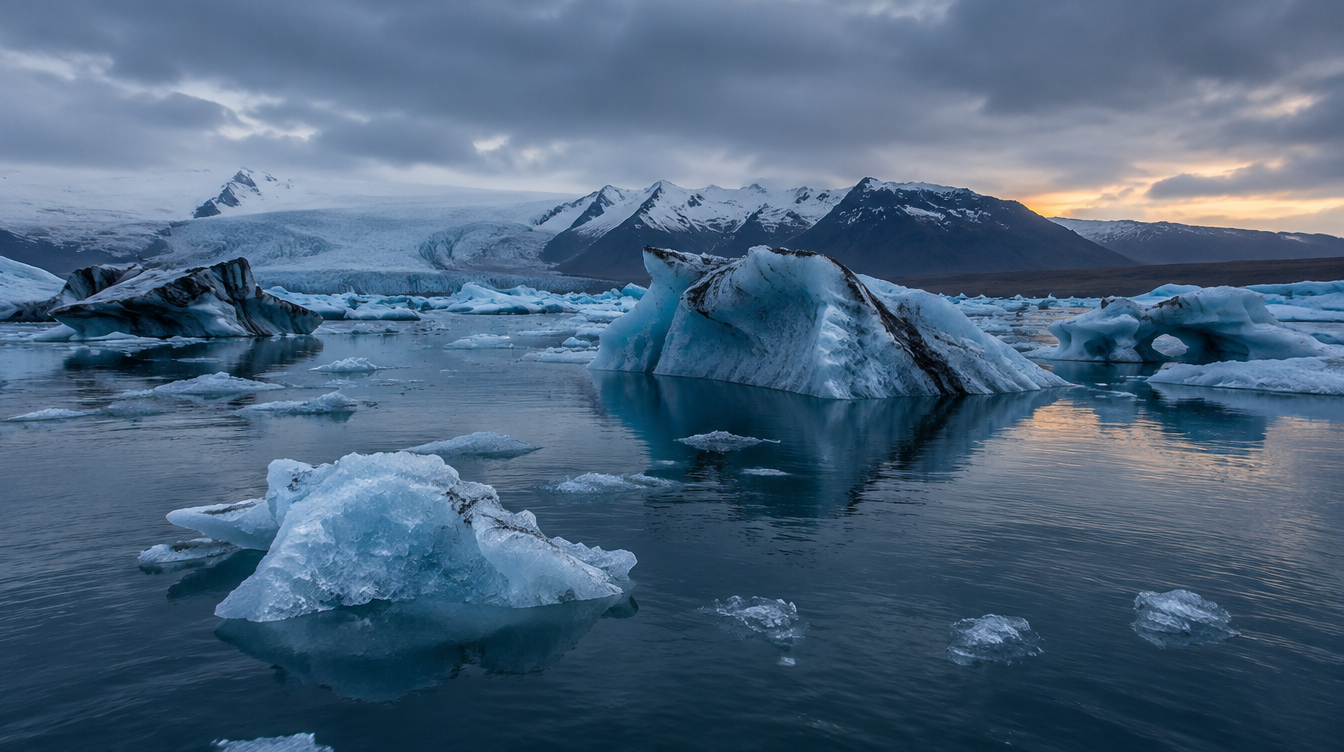
Search "cold weather camera tips" and you will get a reasonably consistent list: carry spare batteries, watch out for condensation, consider a weather sealed body. All true. What that advice rarely addresses is the specific pattern of a multi stop Iceland winter tour, where your gear does not sit in one cold environment for a day. It moves repeatedly between extremes: a freezing, windy overlook at Jokulsarlon glacier lagoon, a heated tour van for the drive to the next stop, a warm hotel room that evening, then back outside before sunrise the next morning. That repeated cycle, not a single cold afternoon, is what actually wears down batteries and triggers condensation on a weeklong trip.
It also matters where in Iceland you are shooting. Southern coastal lowlands, where a typical winter itinerary spends most of its time, average around 1 degree Celsius (34 degrees Fahrenheit) in winter, milder than most people expect, while the inland highlands can drop to minus 25 to minus 30 degrees Celsius, with a record low of minus 39.7 degrees Celsius recorded in the country's interior. The lowlands also see sustained winds of 18 meters per second (about 40 mph) on ten to twenty days a year, and Reykjavik logs snow on roughly twelve to thirteen days in each of December, January, and February. None of that is extreme by polar expedition standards, but it is more than enough wind, cold, and moisture to cause real gear problems if you are not ready for it.
Why your battery drains faster in the cold
Nearly every camera on an Iceland tour runs on a lithium-ion battery, and cold weather affects every lithium-ion cell the same way. As the temperature drops, the internal resistance of the battery rises, which reduces how much power the cell can deliver at any given moment, even though the stored energy inside it has not actually gone anywhere (Wikipedia, Lithium-ion battery). That is why a battery that shows two bars at the glacier lagoon can die within minutes, then come back to life showing more charge once it warms back up in your pocket. The electricity was never fully gone. The cold cell simply could not push it out fast enough to keep the camera running.
Nikon's own cold weather guidance confirms the practical result without overcomplicating the chemistry: "the cold can often drain batteries of any kind," which is why the company tells photographers heading into winter conditions that "you'll want to bring an extra battery or two with you" (Nikon USA, Tips for Shooting in Cold Weather). This is physics that applies to every mirrorless or DSLR battery, regardless of what the label says.
How much battery life you should realistically expect to lose
I want to be honest here rather than quote a number that sounds authoritative but is not actually verified. A lot of gear sites throw out a specific percentage for cold weather battery loss, and the figures online are wildly inconsistent from one article to the next, which tells you most of them are guessing. What is verifiable is the mechanism explained above: colder cells deliver less usable power in that moment. In practice, plan to shoot through noticeably more batteries per day than you would at home, especially during long aurora sessions after dark when the camera stays on and the cold has the most time to work against you.
The honest, actionable version of this advice is simple. Bring more spare batteries than feels necessary. The cost of carrying one extra battery is nothing compared to missing the aurora because your last one died at minus five degrees on a dark beach.
Pro Tip: A battery that reads dead on a freezing overlook is often not actually dead. Swap it into an inner coat pocket for ten or fifteen minutes while you shoot on a warm spare, then try it again later. More than once it will have recovered enough charge to get you through another set of frames.
The one habit that matters more than any battery brand
Photographers spend a surprising amount of energy debating which battery brand or which aftermarket grip handles cold the best. The far bigger factor is not the battery itself, it is where you keep it when it is not in the camera. Nikon's cold weather guidance is direct on this point: keep spare batteries "inside your coat, in an inner pocket if possible," rather than in an outer jacket pocket or a camera bag's side pouch that sits exposed to the ambient temperature (Nikon USA).
This single habit, batteries against your body rather than batteries in a bag, does more for your shot count on an Iceland winter trip than any other piece of gear advice. It costs nothing and works regardless of which camera system you shoot. Build a simple rotation: one battery in the camera, one warm spare in an inner pocket, and a third further back in reserve. When the active battery starts to struggle, swap it for the warm one and move the cold one to the inner pocket to recover.
Charging batteries in a van, a hotel room, or a power bank
A warm hotel room overnight is the easiest and safest place to recharge, and it is standard practice on any multi day trip. The part worth being careful about is charging a battery that is still cold. Lithium-ion cells need reduced charging current near freezing, and the broadly accepted ideal charging range sits around 20 to 25 degrees Celsius, with charging below freezing carrying a specific risk: it can plate the negative electrode with metallic lithium, which can compromise the safety of the whole battery pack (Wikipedia, Lithium-ion battery).
In practice, that means one simple rule: let a battery that has been riding in an outer pocket or sitting in a cold van warm up to roughly room temperature before you plug it into a charger, whether that charger is a hotel outlet, a car adapter, or a power bank. A few minutes on a dresser or in an inner pocket before charging protects both your charge time and the battery's long term health. A power bank and a car charger are both worth packing for exactly this reason: more charging options through the day means less reliance on a single overnight window.
The condensation risk nobody warns you about
Condensation is the other major gear risk in Iceland, and it is arguably more dangerous to your camera than battery drain, because it can cause actual internal damage rather than just a missed shot. The physical cause is straightforward: condensation forms when warmer, moisture heavy air meets a cooler surface, because cooler air cannot hold as much water vapor as warm air, and the excess moisture has nowhere to go except onto whatever surface cooled it down (Wikipedia, Condensation).
Your camera, after half an hour at a windy, subzero overlook, is exactly that kind of cool surface. Carry it straight into a heated van or hotel room, and the warm, humid indoor air condenses on every cold surface it touches, inside the lens, around the sensor, inside the viewfinder, not just on the outside where you can see it and wipe it off. That internal moisture is what can actually damage electronics over repeated exposure, not just fog up your next shot.
How to move your camera from cold to warm without fogging it
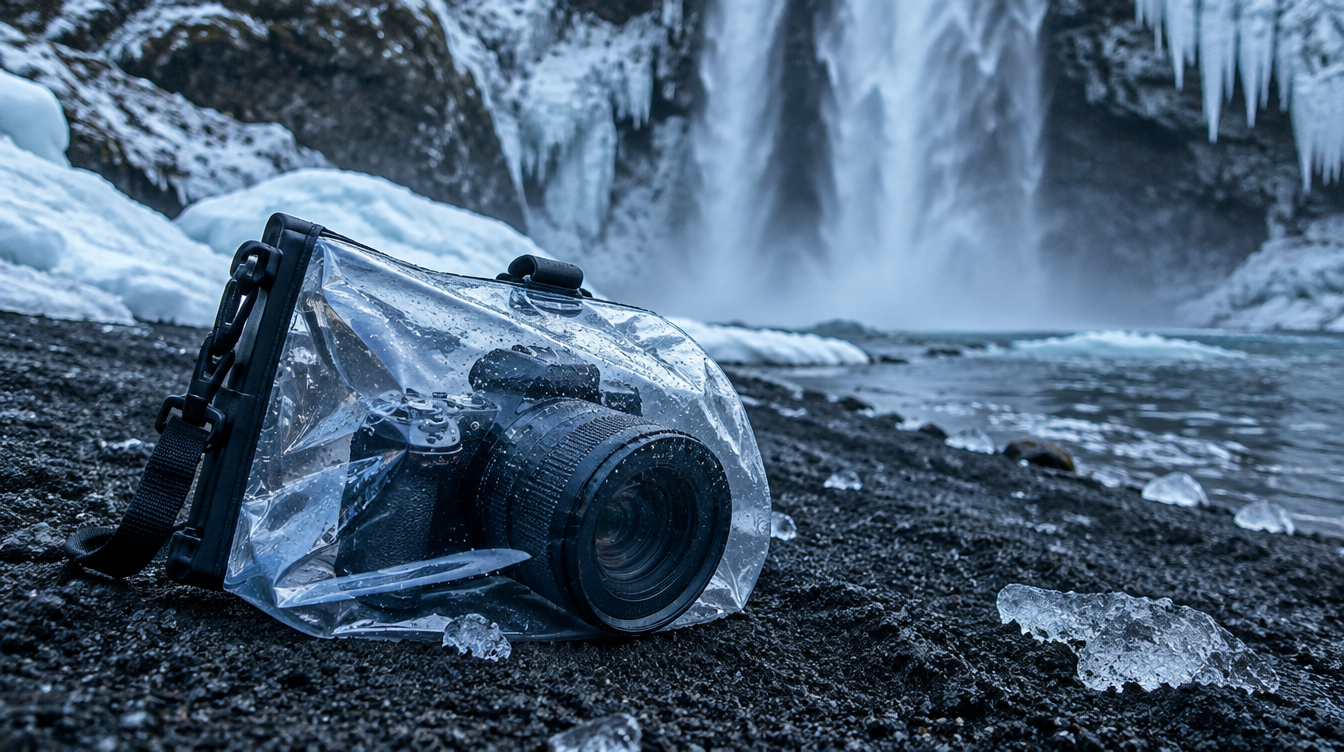
The fix is simple and costs you a zip top bag or a dry bag, which you should already be packing for an Iceland trip anyway. Before you leave a cold exterior location, seal your camera inside the bag while it is still cold, squeezing out as much air as you can. Carry it inside the sealed bag into the van or the hotel room, and leave it sealed while it gradually warms to the ambient indoor temperature. Any condensation that would have formed on your camera instead forms on the outside of the bag, where it does nothing but evaporate.
Nikon's own guidance describes exactly this approach: place the camera in a bag before bringing it indoors and "allow it to gradually warm up," warning that "if it warms too quickly, it will fog up" (Nikon USA). Importantly, Nikon does not commit to a specific number of minutes, and neither will I. Competing advice online ranges from ten minutes to two hours, and most of it is uncited guesswork. The honest answer is that you wait until the camera has acclimated to the room temperature before you open the bag and start shooting or swapping lenses again, which in practice is usually somewhere in the range of twenty minutes to an hour depending on the temperature swing.
Pro Tip: Pack two sizes of dry bag or a couple of large zip top freezer bags specifically for this. One for the camera body with a lens attached, one smaller one for a spare lens. You will use both daily on a week long winter itinerary that bounces between glacier lagoons, coastal overlooks, and a heated van.
Weather sealing: what the label actually promises
A weather sealed camera body is genuinely useful in Iceland, but it is worth understanding exactly what that label does and does not promise before you rely on it. The terms "waterproof" and "water resistant" are not precisely or consistently defined across the industry, and a camera becomes genuinely waterproof only through full encapsulation, not simply a protective coating (Wikipedia, Weather sealing). Several manufacturers apply a nano coating to cameras and other electronics for water protection, but a coating alone is a different, lesser level of protection than full encapsulation.
Where a camera is formally rated, that rating usually follows the IP, or Ingress Protection, system defined under the IEC 60529 standard, which scores dust and water protection separately as two digits (Wikipedia, Ingress protection rating). An IPX4 rating means splashing water from any direction causes no harmful effect, covering rain and incidental splashes well. An IPX7 rating means the device survives immersion up to one meter for thirty minutes, a different and much higher bar. These ratings are not automatically cumulative: a device can pass a higher numbered test without necessarily passing a lower one.
| Rating | What it actually certifies |
|---|---|
| IPX2 | Dripping water at an angle has no harmful effect; does not cover horizontal rain or spray |
| IPX4 | Splashing water from any direction has no harmful effect; this is the realistic bar most "weather resistant" mirrorless bodies are built around |
| IPX6 | Powerful water jets from any direction have no harmful effect, a meaningfully higher standard than splash resistance |
| IPX7 | Survives immersion up to one meter of water for thirty minutes, a different test entirely from splash or jet resistance |
The detail that matters most for Iceland is this: testing for these ratings uses fresh water, and the rating does not guarantee protection against salt water (Wikipedia, Ingress protection rating). A camera rated to handle a splash of rain in a lab test was never evaluated against the corrosive spray coming off the North Atlantic.
Salt spray vs dry snow: why the coast is harder on gear
This is the gap most generic cold weather camera advice misses, because most of it is written with snow in mind, not salt spray. Dry snow landing on a sealed camera mostly just sits there until it melts and runs off, close to the fresh water conditions these ratings are tested against. Wind driven sea spray at coastal stops like Reynisfjara or Diamond Beach near Jokulsarlon is a different kind of exposure, carrying salt and mineral content that is more corrosive to metal contacts, hinges, and seams than an equivalent amount of fresh water or snow.
The practical takeaway is not to panic about shooting at the coast, since these are some of the most rewarding locations on the itinerary. It is to treat any wind driven spray you pick up at a beach or waterfall stop as something worth wiping off promptly, rather than assuming your weather sealing has it covered the way it might cover a passing rain shower at home. A microfiber cloth used right after you leave the spray zone, not back at the hotel that evening, costs seconds and meaningfully extends the life of your gear.
A realistic Iceland winter camera bag
Pulling all of this together, here is what actually earns a place in your bag for a week shooting Iceland's winter light, waterfalls, and aurora, as opposed to gear that sounds good in a listicle but rarely changes anything on the ground.
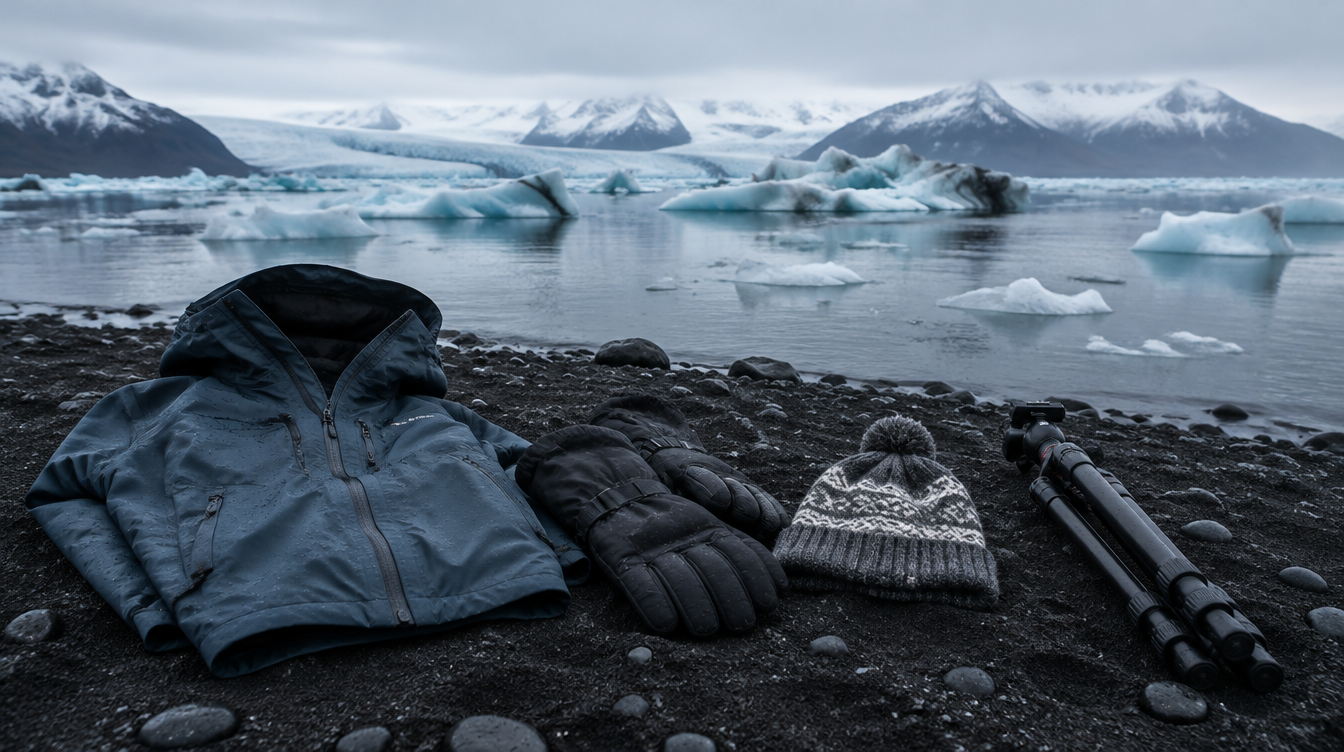
Worth packing: more spare batteries than you think you need, ideally four or five rather than the two that might cover a Tuscany trip, as our companion piece on gear differences between Tuscany and Iceland covers in more depth. Also worth packing: a charger with a car adapter, a power bank as backup, at least one sturdy dry bag or several large zip top bags sized for a camera body and a separate lens, a simple rain cover, and a wind resistant tripod given how often Icelandic lowland winds pick up during a shoot.
Less essential than the marketing around it suggests: a top end weather sealing rating by itself. A careful shooter with an unsealed body, a rain cover, and good condensation habits will often get through an Iceland winter week in better shape than a careless shooter with a sealed body who skips the bag method and leaves gear exposed to coastal spray.
If you are weighing all of this against actually booking a trip, WeShoot's own Iceland Winter Aurora photo tour already builds several of these habits into the itinerary rather than leaving you to figure them out alone on location. It runs seven nights in luxury accommodation with a maximum of ten participants and one professional photographer guide per departure, priced at $4,500 per person with a 30 percent deposit to book, and includes ground transportation, airport transfers, breakfasts plus five dinners, professional coaching, image reviews, and a post processing workshop. International flights and travel insurance are not included. The tour's own packing guidance already flags spare batteries, a car charger, and a power bank as essentials, which lines up with the habits in this guide, and having a guide who already knows how fast the weather and light change at each stop takes a lot of the guesswork out of when to risk pulling your camera out in the first place.
Frequently asked questions about Iceland winter camera gear
How much camera battery life do I actually lose shooting in Iceland in winter? There is no single verified percentage worth quoting as fact, since cited figures online vary wildly. What is verifiable is the mechanism: lithium-ion batteries have higher internal resistance at low temperatures, which reduces the power they can deliver at any given moment. Expect to burn through noticeably more batteries per day than you would at home, and pack more spares than feels strictly necessary.
Should I keep spare batteries in my camera bag or on my body? On your body. Keep spares inside your coat in an inner pocket rather than in an outer bag pocket exposed to the cold, which is the single most effective habit for maximizing usable battery life in the field.
Can I charge my camera battery in the tour van or in my hotel room overnight? A hotel room overnight is fine and standard practice. The thing to avoid is charging a battery that is still cold. Let it warm to roughly room temperature first, since charging a near frozen lithium-ion cell can plate the negative electrode with metallic lithium and compromise the pack.
Why does my camera show the battery as dead in the cold when it was nearly full an hour earlier? That tracks with the internal resistance mechanism above. A cold cell delivers less usable power in that moment, even though stored charge has not actually disappeared. Warming the battery against your body typically restores usable capacity, which is why rotating it back into an inner pocket and swapping in a warm one is standard practice.
How do I stop my camera from fogging up when I get back in the van or into my hotel room? Seal the camera in a dry bag or a zip top bag before bringing it from cold outside air into a warm interior, and let it warm up gradually inside the sealed bag rather than taking it straight out. Fogging happens specifically because the camera warms too quickly in humid indoor air.
How long do I actually have to wait before I can use my camera again after moving indoors? Be skeptical of any article that gives you an exact number, since no manufacturer source commits to one. Wait until the camera has fully acclimated to the new temperature, which in practice tends to land somewhere between twenty minutes and an hour depending on the size of the swing.
Do I need a weather sealed camera for an Iceland winter tour? It helps, but the terms "waterproof" and "water resistant" are not standardized across brands, and sealing specs are typically tested against splashing or jets of fresh water, not full submersion and not salt water. For a trip built around waterfalls, glacier lagoons, and coastal beaches, pairing a sealed body with a simple rain cover and good handling habits is a more realistic standard than trusting any single spec sheet claim on its own.
Is sea spray at places like Reynisfjara or Diamond Beach worse for my gear than dry snow? Yes. Snow on a sealed camera mostly sits there until it melts, closer to the fresh water conditions these ratings are tested against. Wind driven salt spray off the Atlantic is more corrosive, so wiping gear down promptly after a coastal stop is worth the extra few seconds.
Sources
- Nikon USA: Tips for Shooting in Cold Weather
- Wikipedia: Lithium-ion battery
- Wikipedia: Condensation
- Wikipedia: Ingress protection rating
- Wikipedia: Weather sealing
- Wikipedia: Climate of Iceland